1. Executive summary
Introduction
A circular economy is part of the solution to the global climate emergency, ensuring that nothing goes to waste and everything has value. Previous research has shown that Scotland’s economy is far from circular, with people in Scotland consuming more than double the sustainable level of material use required for a high quality of life. It is clear that action is required to reduce consumption, to extend the life of consumer goods, increase their reuse and ensure that value is extracted from material components at the end of life.
The Scottish Government is committed to delivering a more circular economy, and is taking action to improve re-use, recycling and repair. Measures include the proposed charge on single use drinks cups, the upcoming deposit return scheme for single-use drinks containers, and proposed measures to increase the repair and reuse of items. Successful delivery of these policies is, however, reliant on action across a number of levels, most notably from consumers who will be required to change their behaviours.
To support the delivery of circular economy policy, Consumer Scotland undertook survey research to identify the key factors that affect consumer willingness and ability to engage in specific circular economy measures, and how barriers to consumer engagement differ across demographics. This research builds on our previous work by Consumer Scotland and other stakeholders. It provides further insight on the factors which can promote or reduce consumer engagement with some of the specific measures that the Scottish Government has committed to introducing with the aim of transitioning to a circular economy, and identifying any barriers to effective implementation of these measures.[1]
Frequency of repair, recycling and throwing away
Within a circular economy, the ideal waste hierarchy is for repair behaviours to sit above recycling and throwing away to be a last resort. However, our research found recycling, rather than repairing or throwing away, is currently the dominant consumer behaviour in Scotland for all material types.
Recycling is particularly common for high volume items that can be recycled at home, such as plastic bottles and cans (82% reported frequently recycling these items) and food waste (53% regularly recycle).
Recycling is less frequent where products are more challenging to recycle or where these habits are less strong, most notably for clothing with significant damage (36% regularly recycle) and small electrical items with either minor or significant damage (for each category 42% regularly recycle).
Consumers in Scotland report undertaking repair of items less frequently than recycling. Levels of repair vary according to the severity of damage, declining as the level of damage increases. Clothing with minor damage had the highest reported level of repair, with 33% of consumers stating that they do this, and the lowest level was small electrical items with significant damage, at 9%.
Consumer behaviour also varies notably by age. Younger adults more likely to report throwing items away and older adults more likely to report repairing.
In order to move consumer behaviour up the waste hierarchy, policy measures in Scotland should focus on moving beyond well-established recycling behaviours, towards supporting increased levels of reuse and repair. Measures must tackle common barriers and enable consumers not only to consume less, but also repair and reuse items more frequently. To support this, policymakers should utilise Consumer Scotland’s Consumer Framework for Addressing Climate Change[2] to assess the impact of circular economy policies and ensure that any barriers to consumer participation are fully considered and addressed.
Although throwing items away is not the most frequently reported consumer behaviour for any material type, it is still taking place frequently. Throwing away is most frequently reported for clothing with significant damage (26% frequently doing this). However, consumers also report discarding items for which recycling options are widely available. Around a quarter of consumers in Scotland report that they frequently place plastic bottles and cans (24%) and food waste (23%) into general waste.
Consumers must be able to understand what items can be repaired, re-used and recycled and where and how they can do this. To help avoid both contamination of waste streams or items being unnecessarily landfilled, we recommend that the Scottish Government delivers a targeted behaviour change campaign, focussing on materials which are currently more likely to be incorrectly disposed of via landfill.
Perceived barriers to recycling and repair
Barriers to recycling that consumers in Scotland experience vary substantially by item type, with small electrical items standing out as the most challenging to recycle, and plastic bottles and cans the least. For most items, the most common barrier to recycling is the lack of a suitable local service or facility, followed by uncertainty about where or how to recycle. However, consumer barriers are slightly different for food waste, and plastic bottles or cans, where a lack of time or inconvenience are more prominent challenges.
The barriers that consumers face to repairing items are high for both small electrical items and for clothing and textiles, with a large share of consumers reporting at least one barrier to repair. Across all demographic groups, the most common barrier that consumers experience in repairing items is cost. Many respondents say that repairing costs more than buying new. Knowledge and access barriers are also prominent, with many respondents reporting that they do not know how to repair items or where to get them repaired.
To improve recycling and repair behaviours, consumers must also be able to access facilities in a convenient way. The Scottish Government should act to ensure that consumers across Scotland have equitable access to repair, reuse and recycling facilities. This should include action to:
- Assess where repair and recycling facilities are currently unavailable or sparsely provided and consider allocating local or national funding streams to support the startup or scaling up of services to fill these gaps
- Promote available repair and recycling facilities, through targeted information or public awareness campaigns to raise awareness as part of wider net zero communications work. This campaign should include a focus on ensuring that these behaviours are ingrained with young people
- Identify a range of measures to increase availability of recycling infrastructure to support increased consumer engagement. This could include expanding materials collected at kerbside and increasing provision of hubs at local recycling facilities or in community centres such as libraries or other municipal buildings
- Develop and implement the upcoming Code of Practice on household recycling in a way that meets the diverse needs of consumers in a range of circumstances, such as those living in flats and those in rural areas
- Address the disparities in food waste collection through the review of the rural food waste exemption, with revised collections in place by the end of 2027
Successfully increasing the number, and geographic coverage, of repair businesses in Scotland will be key to supporting consumer take-up of these practices. Action should focus on providing targeted business development support to these businesses and working with partners to ensure consumers can gain skills to help them repair and reuse items.
Consumer awareness and confidence in reuse and repair practices must also be improved if participation is to be increased. The Scottish Government should put in place measures to increase consumer confidence in the quality and cost-effectiveness of repairs and to raise awareness of these models.
Policy scenario: A 20p Deposit Return Scheme
In addition to general questions about recycling, repair and throw away behaviours, we also asked respondents to consider the impact of two specific schemes currently under consideration by Scottish Government. When asked about how they would engage with a deposit return scheme where a 20p deposit is added to the price of plastic bottles and cans, two thirds of consumers in Scotland said that they would frequently return their container, including just over a third saying they always would. However, willingness to engage with such a scheme is primarily shaped by convenience and how easily returns can be integrated into everyday routines.
Scenarios that minimise additional effort, such as proximity of return points or the ability to return containers as part of regular trips, are associated with higher stated engagement, while time, effort and uncertainty are the main deterrents.
As the practical demands of returning containers rise, certain groups, including older adults, people with limiting long-term health conditions, and those with fewer transport options appear more likely to face barriers and less likely to engage.
For the upcoming deposit return scheme to have the best chance of success, it must be designed in a way that addresses consumer priorities and barriers to take-up. To maximise take-up the scheme must prioritise:
- Ease and speed of return of materials
- The ability to integrate returning containers into everyday consumer routines
- Certainty for consumers about scheme rules
Policy scenario 2: A 25p Charge on Single-Use Cups
When asked how their behaviour might change if a 25p charge were introduced on single‑use takeaway cups, around 48% of consumers in Scotland who currently purchase takeaway drinks anticipate maintaining or increasing their purchasing frequency (40% no change, 8% buy more), while 45% expect to reduce or stop it (28% buy fewer, 17% stop buying), indicating mixed behavioural intentions.
Consumers from particular demographic groups were more likely to anticipate stopping purchases – most notably those with long-term health conditions were more likely than those without to anticipate they would stop purchasing takeaway drinks altogether.
Nearly half (47%) of regular purchasers said they would frequently bring a reusable cup if a charge was introduced. A further 23% say they would do so sometimes. Only 23% of regular purchasers say they would rarely or never bring a reusable cup. As with purchase behaviours, we saw some demographic differences in anticipated behaviour, with older age groups and those in rural areas the least likely to predict they would make frequent use of reusable cups.
Due to the demographic differences identified, we recommend that, if the Scottish Government proceeds with implementing a charge on single-use cups, the impact on consumers in vulnerable circumstances should be fully considered through robust stakeholder engagement and impact assessments, to ensure that those who are least able to pay are not disproportionately impacted.
Our recommendations
We recommend that policymakers should utilise Consumer Scotland’s policymakers toolkit to assess the impact of circular economy policies on consumers, including those in vulnerable circumstances, and ensure that the barriers the consumer participation are fully considered and addressed.
We recommend that the Scottish Government delivers a targeted consumer behaviour change campaign focussing on materials which are currently more likely to be incorrectly disposed of via landfill. This campaign should focus on the provision of clear information about:
- the benefits of repair and reuse practices, such as saving money and supporting the local economy
- the availability of repair, reuse and recycling facilities for these items
- correct disposal options for items such as single-use cups, textiles and electrical items
We recommend that the Scottish Government should put in place measures to:
- encourage repair businesses to provide consumers with a warranty on repaired items to encourage consumer confidence in and use of these services
- raise consumer awareness of their rights across these new and emerging markets
We recommend that the Scottish Government should act to ensure that repair, reuse and recycling facilities are accessible and available for consumers across Scotland. The Scottish Government should work with partners such as local authorities, consumer bodies and Zero Waste Scotland to:
- Assess where facilities are currently unavailable or sparsely provided and consider allocating local or national funding streams to support the startup or scaling up of services to fil these gaps
- Identify a range of measures to increase availability of recycling infrastructure so support increased consumer engagement
- Develop and implement the upcoming Code of Practice on household recycling in a way that meets the diverse needs of consumers in a range of circumstances
- Address the disparities in food waste collection through the review of the rural food waste exemption, the intervention plan on household food waste reduction behaviour change, detailed in the Circular Economy and Waste Routemap
- Promote available repair and recycling facilities, through targeted information or public awareness campaigns to raise awareness as part of wider net zero communications work
We recommend that the Scottish Government works with stakeholders such as Circular Communities Scotland to provide targeted small business development support to repair businesses.
We recommend that the design of the DRS scheme maintains a clear focus on making access as convenient as possible and ensuring that and the information surrounding its use is clear and consistent.
If the Scottish Government proceeds with implementing a charge on single-use cups, we recommend that the impact on consumers in vulnerable circumstances is fully considered through robust stakeholder engagement and impact assessments, to ensure that those who are least able to pay are not disproportionately impacted.
We recommend that the Scottish Government works with industry and other partners to provide consumers, and businesses, with clear and consistent messaging about the appropriate disposal of single-use cups.
We recommend that the Scottish Government should also use other methods to take action on single-use cups, including:
- Working with manufacturers to drive improvements in materials used for single-use cups
- Facilitating greater consumer awareness about the impact of single-use cups and reduction in consumption through sustained behaviour change campaigns
- Supporting further development and trials of cup hire and take back schemes at both a local and national to reduce the use of single-use cups
2. Background
Introduction
Scotland’s transition to a circular economy is essential to addressing the global climate emergency, and shifting away from the long established “make, use, dispose” model of consumption towards a more sustainable system. A circular economy aims to ensure that nothing goes to waste and that materials are kept in use for as long as possible through practices such as reuse, repair and recycling.
However, evidence suggests Scotland is currently only 1.3% circular, with more than 98% of materials derived from virgin resources.[3] Moving towards circularity could reduce carbon emissions in Scotland by up to 43%.[4]
The importance of the issue is reflected within the evolving legislative landscape in Scotland. The Circular Economy (Scotland) Act 2024 establishes a statutory framework requiring the Scottish Government to publish a circular economy strategy, set circular economy targets, and take actions to reduce waste. The Circular Economy and Waste Route Map to 2030 sets strategic direction for reducing emissions associated with materials use, emphasising the importance of shifting consumer behaviours towards prevention, reuse, repair and high quality recycling.
Consumers are at the heart of the circular economy challenge. While recycling is now well established for many materials, this alone is insufficient to meet Scotland’s ambitions. Repair and reuse behaviours remain less common, and consumers face financial, practical and informational barriers that limit their ability to change habits. Without appropriate support, policies designed to encourage consumers to engage in circular economy behaviours may lead to consumer detriment in the form of increased costs, inconvenience or lack of access to suitable facilities, undermining both individual wellbeing and policy effectiveness.
To support policymaking in this evolving landscape, Consumer Scotland – the statutory, independent body representing consumers in Scotland – undertook a representative survey of 1,000 consumers in Scotland, to understand their attitudes and behaviours in relation to various circular economy behaviours.
The overarching aim of the research is to understand the factors that promote or reduce consumer engagement with circular economy measures. The survey aims to:
- explore consumer engagement with behaviours such as repairing goods, recycling textiles and electricals, disposing of food waste, and using reusable cups or the upcoming deposit return scheme
- identify practical, informational and attitudinal barriers to engagement, and how these vary across demographic groups
- provide insight on how forthcoming policy measures can be designed in ways that maximise participation and minimise consumer detriment
The research focuses on materials identified by the Scottish Government as priorities due to their environmental impact:
- textiles
- small electrical items
- food waste
- plastic bottles and cans
- single-use cups
It also examines consumer attitudes to two specific policy proposals:
- the upcoming deposit return scheme for single use drinks containers
- a potential charge on single use takeaway cups
By providing an evidence-based understanding of consumer experiences and constraints, this report aims to support the development of circular economy policies that are accessible, equitable and effective for consumers in Scotland.
Transitioning to a circular economy
A circular economy is part of the solution to the global climate emergency, ensuring that nothing goes to waste and that everything has value. Zero Waste Scotland describes it as adopting 'make, use, remake' behaviours rather than 'make, use, dispose'.[5]
The Circularity Gap Report suggests that Scotland is currently only 1.3% 'circular', with more than 98% of materials extracted from virgin resources. Around four-fifths (82%) of Scotland’s carbon footprint comes from the products and services we manufacture, use, and throw away, and action to increase circularity could help to reduce emissions in Scotland by up to 43%.
On average, people in Scotland consume more than double the sustainable level of material use which evidence suggests is required to allow a high quality of life - around 8 tonnes per person per year.[6] Action is required to reduce consumption, to extend the life of consumer goods, increase their reuse and ensure that value is extracted from material components at the end of life.
Transitioning to a more circular economy can bring many positive impacts, including reducing waste and pollution, conserving resources, creating jobs and fostering economic growth, lowering greenhouse gas emissions, improving social outcomes and fostering innovation.[7]
The Scottish Government has committed to delivering a more circular economy and taking action on a range of products and materials, including:
- tackling the problem of single-use cups
- delivering a deposit return scheme for plastic bottles and cans
- improving recycling and repair of a range of materials, such as electrical items, textiles and food
Delivering this objective depends on action across a number of levels - government, businesses, communities and consumers.
Supporting consumers to understand the changes that are required, and putting the right mechanisms in place to enable them to change consumption habits, will be critical to the transition to a circular economy. Our previous research has shown that consumers need more leadership and support from policy makers to create an enabling environment where sustainable choices are more convenient and affordable, turning these into the default choices.[8]
If consumers are not sufficiently supported to engage with the transition to a circular economy, then it will be difficult to achieve the intended benefits. Interventions may instead risk causing consumer detriment, such as:
- increased cost,
- increased inconvenience,
- poor protection from bad actors,
- limited redress
- inability to access products that meet consumer needs
Policy makers require a clear understanding of the needs and priorities of consumers to ensure that future legislation and policy have a strong focus on consumer needs, impacts and priorities. We therefore sought to support policy makers by undertaking specific survey research on consumer behaviours around recycling, reuse and repair and barriers to engagement.
Impactful materials and the circular economy
Zero Waste Scotland’s Scottish Waste Environmental Footprint Tool has identified textiles, food, and waste electrical and electronic equipment (WEEE) as three of the waste types that contribute the most to climate change. Food waste is the largest contributor to biodiversity loss, while textiles, food and WEEE are the most significant contributors to air pollution and water use impacts.[9] We were guided by this analysis in focusing on these items alongside plastic bottles and cans (commonly recycled) and takeaway cups (the subject of a specific policy change) in our research which contributes to an existing extensive evidence base on impactful materials and the circular economy.
This evidence base includes:
- A range of reports produced by Zero Waste Scotland relating to textiles, including the Product Stewardship Considerations for Textiles in Scotland report which included insight on textiles purchase frequency and disposal approaches including awareness of recycling options for textile products[10] and insight into second hand shopping, covering motivators and barriers on second hand purchasing, rental and repair.[11]
- A number of reports on textiles produced by the Waste and Resources Action Programme (WRAP) , including their Displacement Rates Untangled report, which provides insight into the impact of a range of circular business models on stopping the purchase of new clothes, and the UK Textiles Pact Annual Progress Report, which provides insight into textiles industry progress with reducing environmental impact.[12] [13]
- A substantial volume of research produced by Zero Waste Scotland on food waste, including a report on understanding values and belief changes in relation to food waste behaviours, exploring how food waste beliefs change over time and how people frame understanding of food waste in the context of wider environmental issues and considering the role of frugality in shaping values and beliefs.[14] Zero Waste Scotland has also produced a report on trialling recycling interventions to increase engagement and change behaviours with household food waste.[15]
- A range of reports by WRAP on food waste, including research on the volume of food waste produced in the UK and reasons, patterns and opportunities for change in UK household food waste.[16]
- A rapid review by the Expert Panel on Environmental Charging and Other Measures on charging for disposable coffee cups and other waste minimisation measure in 2019. The report recommended the introduction of a national charge for single-use beverage cups.[17]
- Research by Zero Waste Scotland on single-use cups which focussed on perceptions of single-use items and measures to tackle them. This research found over half of respondents were in favour of additional measures to reduce single-use cups, with 60% saying they would buy fewer drinks in single-use cups if these were charged for and 74% said a single-use cups charge would encourage them to use a reusable cup more.[18]
- Research on Deposit Return Schemes, including UK level research by Reloop into levels of support and perceptions of responsibility for recycling and levels of and motivation for support for a Deposit Return Scheme, which found that over two thirds of respondents were supportive of a Deposit Return Scheme.[19]
- Reports by Zero Waste Scotland on recycling infrastructure, including on the feasibility of introducing new kerbside collections for flexible plastics, textiles, small WEEE (Waste Electrical and Electronic Equipment), and household batteries across Scotland, highlighting the impact of introducing these measures, estimating that the combined collections of textiles, small WEEE, and batteries could divert 1,126 tonnes of waste annually, with carbon savings of 8,528 tonnes CO₂e.[20]
- A survey by Zero Waste Scotland on public attitudes towards recycling with the aim to shape a more user-friendly recycling system. The research aims to understand barriers such as convenience, awareness and motivation. The research found that recycling behaviours are driven by habit and routine and that many respondents feel under-informed about waste disposal, what is recyclable and what happens to recycling after collection.[21]
From examining this wealth of existing evidence, we identified that more detailed insight on the range of factors which might promote or reduce consumer engagement with specific recycling, reuse and repair measures was required. Identifying and tackling barriers to the effective implementation of measures will be critical to the transition to a circular economy for Scotland.
Legislative context
Action on delivering a circular economy and reducing emissions associated with waste is driven by the waste hierarchy, a framework to guide the overall approach to managing Scotland's waste. The waste hierarchy identifies the prevention of waste as the highest priority, followed by reuse, recycling, recovery of other value such as energy, with disposal as the least desirable option.[22] Supporting consumers to buy and waste less and to move their actions further up the waste hierarchy will help to reduce the carbon footprint of people in Scotland.
The Circular Economy (Scotland) Act 2024 sets the legislative framework and requires the Scottish Government to take certain actions to help develop a circular economy.[23] This includes publishing a circular economy strategy, developing circular economy targets and reducing waste.
Regarding waste, the Scottish Government has:
Consulted on changes to waste management services[24], including on the current rural food waste exemption, where some rural areas are exempt from having to provide a food waste collection service
Consulted on implementing a charge for single-use disposable beverage cups in 2024. While not implemented at this time, the Scottish Government is working with stakeholders to further develop its approach to single-use cups, including through the Single-Use Disposable Cups Charge Advisory Group[25]
Included waste policies in consultations on its Circular Economy Strategy and its draft Climate Change Plan [26] [27]
Published its Circular Economy and Waste Routemap to 2030, which aims to set the strategic direction for Scotland’s circular economy, accelerate sustainable use of resources across the waste hierarchy and reduce emissions associated with resources and waste.[28]
3. Research aims and methodology
Research aims
In order to design effective circular economy policies that deliver better outcomes for consumers in Scotland, we need to understand consumer views and behaviours. The aim of this research is to improve understanding of the factors that promote or reduce consumer engagement with specific policy measures that contribute to a more circular economy, such as repairing goods, recycling textiles at end of life, disposing of food waste, using a reusable cup and participating in a deposit return scheme.
The materials that this research focused on were selected due to their inclusion in the Circular Economy and Waste Routemap and draft Circular Economy Strategy and being identified as priorities for the Scottish Government due to their significant environmental impact. The policy measures examined in this research mirror the upcoming deposit return scheme for cans and plastic bottles and a proposed charge on single-use cups consulted on by the Scottish Government.
This research builds on our previous work,[29] providing further insight on the factors which might promote or reduce consumer engagement with some of the measures that the Scottish Government has committed to introducing with the aim of transitioning to a circular economy.
This research had several core objectives:
- To explore consumer engagement with behaviours central to the circular economy, including repairing household items, recycling textiles and small electrical goods, disposing of food waste, using reusable cups, and taking part in a deposit return scheme
- To identify the nature of the barriers, consumers face to recycling or repairing items, whether they relate to convenience, lack of access or awareness, attitudes towards recycle/repair etc
- To examine how these barriers differ across demographic groups, recognising that age, income, long-term limiting health conditions, location and other circumstances shape consumers’ ability to engage
Methodology
Consumer Scotland commissioned IFF Research to undertake a survey exploring consumer engagement with circular economy measures, focusing on some of the areas that the Scottish Government has committed to action on.
Building on our previous research, this work provides more detailed insight on the factors which might promote or reduce consumer engagement with specific recycling, reuse and repair measures. It identifies barriers to effective implementation of measures, including the proposed charge on single-use drinks cups, the upcoming deposit return scheme, and measures to increase levels of repair.
The research incorporated survey questions into Yonder Consulting’s Scottish omnibus, a nationally representative online survey of Scottish adults.
Fieldwork took place between 3rd and 10th November 2025, with a total sample size of 1,007 adults aged 18 and over. The survey was conducted online and weighted by age, gender, and region to ensure findings are representative of the Scottish population.
4. Frequency of repair, recycling and throwing away
Across all item types, recycling is the most frequently reported behaviour by consumers in Scotland. Repair is reported less frequently and it declines as the severity of damage to the item increases.
Reported behaviours also vary most notably by age, particularly for throwing away and repair, with younger adults more likely to report throwing items away and older adults more likely to report repairing.
To understand how people manage items at the end of their useful life, our survey asked respondents how often they recycle, repair (or have repaired), and throw away certain items in general waste. We covered a range of products, including clothing and textiles, small electrical items, food waste, plastic bottles and cans, and single-use cups.
For ease, percentages of those saying they do an activity “always” or “very often” have been aggregated under “frequently” while “rarely” and “never” responses have been aggregated under “infrequently”. The findings are based on self-reported behaviour, which may be influenced by recall and how respondents interpret terms such as “recycle” or “repair”. Nonetheless, we consider that they are indicative of general behaviour.
Table 1: Recycling is the most common behaviour, especially for items easy to recycle at home
Proportion of respondents reporting frequent recycling, repairing or throwing away, by item type.
|
Item type |
Frequently recycled |
Frequently repaired |
Frequently thrown away |
|
Clothing (minor damage) |
44% |
33% |
12% |
|
Clothing (significant damage) |
36% |
11% |
26% |
|
Small electrical (minor damage) |
42% |
23% |
9% |
|
Small electrical (significant damage) |
42% |
9% |
16% |
|
Food (cooked or raw) |
52% |
N/A |
23% |
|
Plastic bottles and cans |
82% |
N/A |
24% |
|
Single-use cups |
49% |
N/A |
23% |
Source: Consumer Scotland circular economy polling: How often, if at all, do you recycle / (get) repair(ed) / throw away the following types of items? Base = 1007.
Recycling is the most reported behaviour
The UK Government’s UK Statistics on waste show that progress on household recycling has been gradual but sustained, with the provisional UK recycling rate for waste from households rising to 45% in 2023, up from 44% in 2022. This national figure masks notable variation between the devolved nations: Wales continues to lead with a 57% recycling rate, followed by Northern Ireland (50%), while England (44%) and Scotland (42%) fall behind. These official statistics provide the most reliable baseline for contextualising household recycling behaviour in the UK and for understanding how policy interventions interact with long‑term performance trends.[30]
In our survey, we found recycling (as opposed to repairing or throwing away) to be the dominant consumer behaviour across all items we asked about. This was especially the case for plastic bottles and cans, which can be easily recycled through household waste collection.
This illustrates the importance of convenience and clear guidance (clarity) to support consumers to take climate change action, in line with our Consumer Framework for Addressing Climate Change. It is also consistent with previous research by Consumer Scotland[31] which found that straightforward, low effort recycling behaviours are well established and ingrained into the lives of consumers. With recycling of these items well embedded, attention should now be focused on other waste streams, ensuring consumers across Scotland can access infrastructure and are supported by the provision of targeted information and support to maximise their participation.
For all items that we asked consumers about, recycling frequently (ranging from 36% for clothing with significant damage to 82% for plastic bottles and cans) is much more common than either throwing away (ranging from 9% for small electrical items with significant damage to 26% for clothing with significant damage) or repairing (ranging from 9% for small electrical items with significant damage to 33% for clothing with minor damage).
Recycling is particularly dominant for high volume items that can be recycled at home, such as plastic bottles and cans (82% recycle frequently vs 8% infrequently) and food waste (52% recycle frequently vs 34% infrequently). This is a positive finding because it suggests that, where convenient and well-understood options are available, many consumers do engage with more sustainable waste routes.
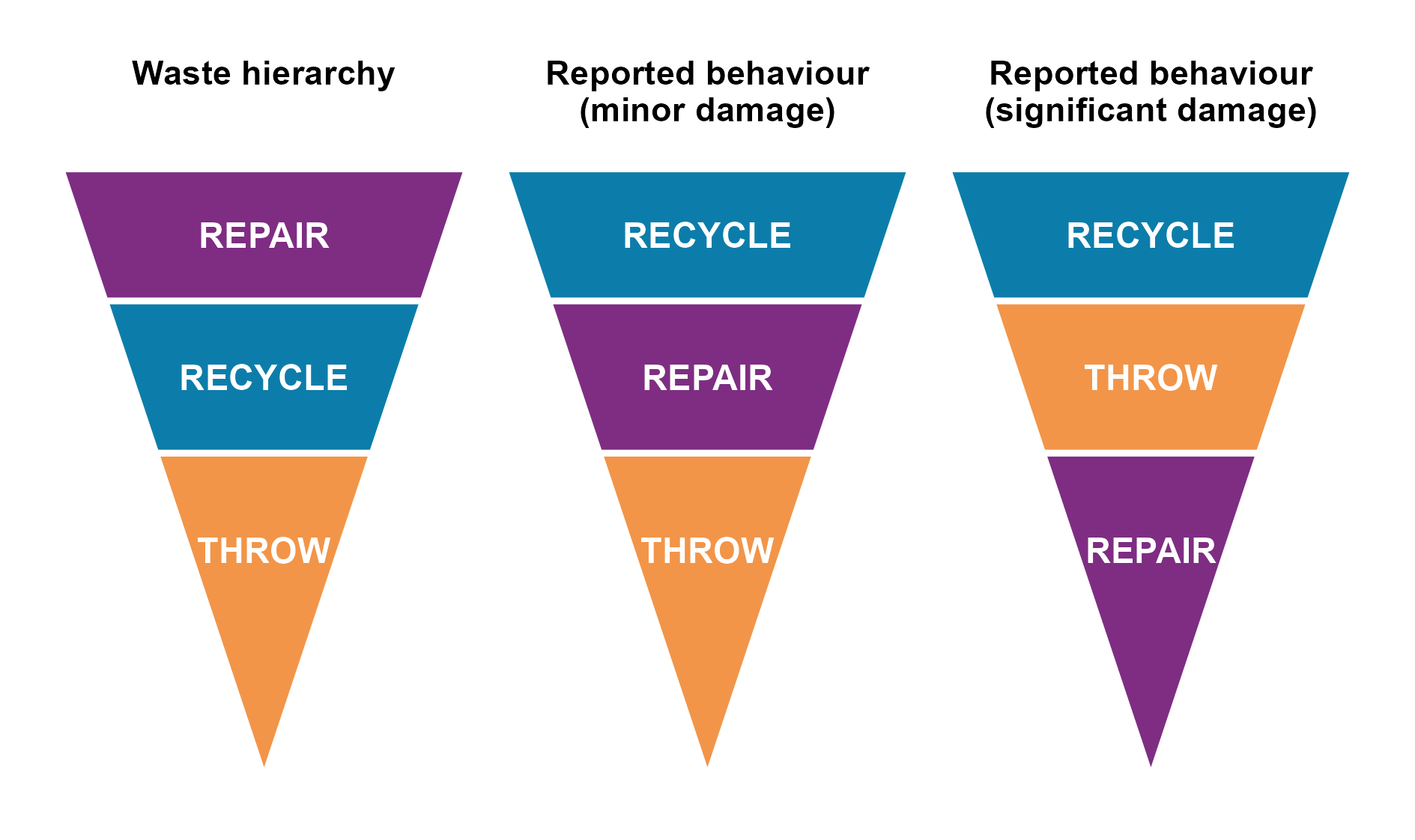
However, from a waste hierarchy perspective, repair should be prioritised ahead of recycling, as this keeps products in use for longer and reduces the need for new materials. Our research found comparatively lower levels of consumers undertaking repair (9% to 33%) for items with minor damage, while items with major damage were more likely to be thrown away than repaired. While we consider potential consumer barriers to repair in more detail later in this report, the difference in take-up between repair and recycling suggests that increasing availability, affordability and visibility of repair options for consumers could help shift behaviour further up the waste hierarchy.
Figure 1: Repair sits lower in practice than is ideal under the waste hierarchy
Comparison of ideal waste hierarchy with respondents’ behaviours for items with minor and significant damage
Source: Waste hierarchy is a simplified version adapted from Scottish Government (2024) Scotland’s Circular Economy and Waste Route Map to 2030 Consultation.
Figure 1 highlights that repair sits lower in practice than is ideal under the waste hierarchy sourced from the Scottish Government's Circular Economy and Waste Route Map to 2030 Consultation.[32]
Our research also identifies a potential perception vs reality gap amongst consumers relating to single-use cups. Although 49% of respondents say they frequently recycle single-use cups, these cannot be easily recycled in most cases. This category also has a higher percentage of people choosing ‘Not sure’ (8% vs 1%-3% for all other items). This indicates many people believe they are recycling, but in practice, these items often contaminate recycling streams.
Repair is relatively uncommon and declines with more severe damage
Repair was reported less frequently by consumers than recycling and levels varied according to the severity of damage. It should be noted that “minor” and “significant” damage may be interpreted by respondents differently, so these figures should be interpreted as indicative rather than precise measures of repair activity.
The highest likelihood for consumers frequently repairing an item was for clothing with minor damage at 33%. However, this decreases to just 11% for clothing with significant damage. A similar pattern was seen for small electrical items, where frequent repair declined from 23% (minor damage) to 9% (significant damage).
Conversely, the proportion of consumers who report infrequently repairing clothing and electricals with significant damage reaches 68% (clothing) and 70% (electricals) from 30% and 42% respectively for items with minor damage.
Overall, this suggests that repair is more likely to be considered for smaller or simpler issues. This is an intuitive pattern: small issues such as loose seams or minor faults are typically quicker and easier to fix oneself or may be more cheaply fixed, whereas more serious damage may require specialist skills, replacement parts or higher costs. However, from a circular economy perspective, it is precisely these more substantial faults that are most important to address. The sharp fall in reported repair for significantly damaged items suggests there may be practical or financial barriers that are preventing consumers from undertaking repair in these cases.
Making more complex repairs easier, more affordable and more visible to consumers, so that repair becomes a realistic option even when damage is not minor is likely to be necessary if rates of repair are to be increased. This is discussed in more detail in the next sections.
Throwing away remains common for some items
Consistent with our findings above on repair and recycling for clothing and textiles, throwing away occurs most commonly for clothing with significant damage (26%).
However, respondents also reported discarding items for which recycling options are widely available. Around a quarter of respondents report that they frequently place plastic bottles (24%) and food waste (23%) into general waste. One explanation for this could be that these are items easy to recycle when at home but more difficult when out of the home. While these proportions for throwing away are lower than those reporting frequent recycling for these materials, they nonetheless represent a substantial minority.
This suggests that even for items with established recycling or separate collection routes, a sizable proportion of recoverable material may still be entering the residual waste stream. According to official Scottish Government and SEPA household waste statistics for 2024[33], Scotland still disposes of a notable volume of waste despite high levels of recycling engagement. In 2024, 254,000 tonnes of household waste were sent to landfill, the lowest amount ever recorded, yet still representing a substantial stream of material that bypasses recycling altogether. Although landfill use has declined dramatically (an 82.5% reduction since 2011) much of the waste diverted from landfill is instead treated through incineration, which accounted for 82.3% of other diversion in 2024.
These trends show that while Scotland has made major strides in reducing reliance on landfill, a considerable amount of household waste is still being thrown away or incinerated rather than recycled, repaired, or reused. Zero Waste Scotland estimates that around 52% of what we throw away could be recycled,[34] illustrating the importance of tackling the barriers to incorrect disposal of materials.
The significant proportion of consumers in Scotland who state that they throw away clothing and textiles, particularly those with significant damage, illustrates the need for these items to be a priority for the Scottish Government. A recent report by Zero Waste Scotland has found that although textiles make up only 3.5% of household waste by weight, they account for 19.4% of climate change impacts from household waste in Scotland.[35]
In relation to food, Zero Waste Scotland have estimated that around one million tonnes of food is thrown away every year in Scotland, equating to 4.74 million tonnes of CO2.[36] There is not a consistent approach to collecting food waste in Scotland, with some areas without food waste collection as a result of the current rural food waste exemption.
Our survey did not ask respondents directly about why they disposed of items in general waste, nor did it capture the practical circumstances influencing these decisions (such as access to food collection services). As a result, it is not possible to determine the reasons behind consumer disposal behaviours from the data alone. The following section explores differences by demographic group, which may offer some indicative insight into patterns associated with these behaviours, though these should not be interpreted as direct explanations.
Demographic considerations
This section describes how reported behaviours vary between demographic groups. The analysis considers each characteristic separately, meaning that multiple factors were not analysed together in a single statistical model. Therefore, these findings show associations only and should not be interpreted as indicating that any one factor is more influential than another, or as explaining why differences occur. Age is reported in depth as this is where there is the highest level of variation between consumer groups.
Age differences
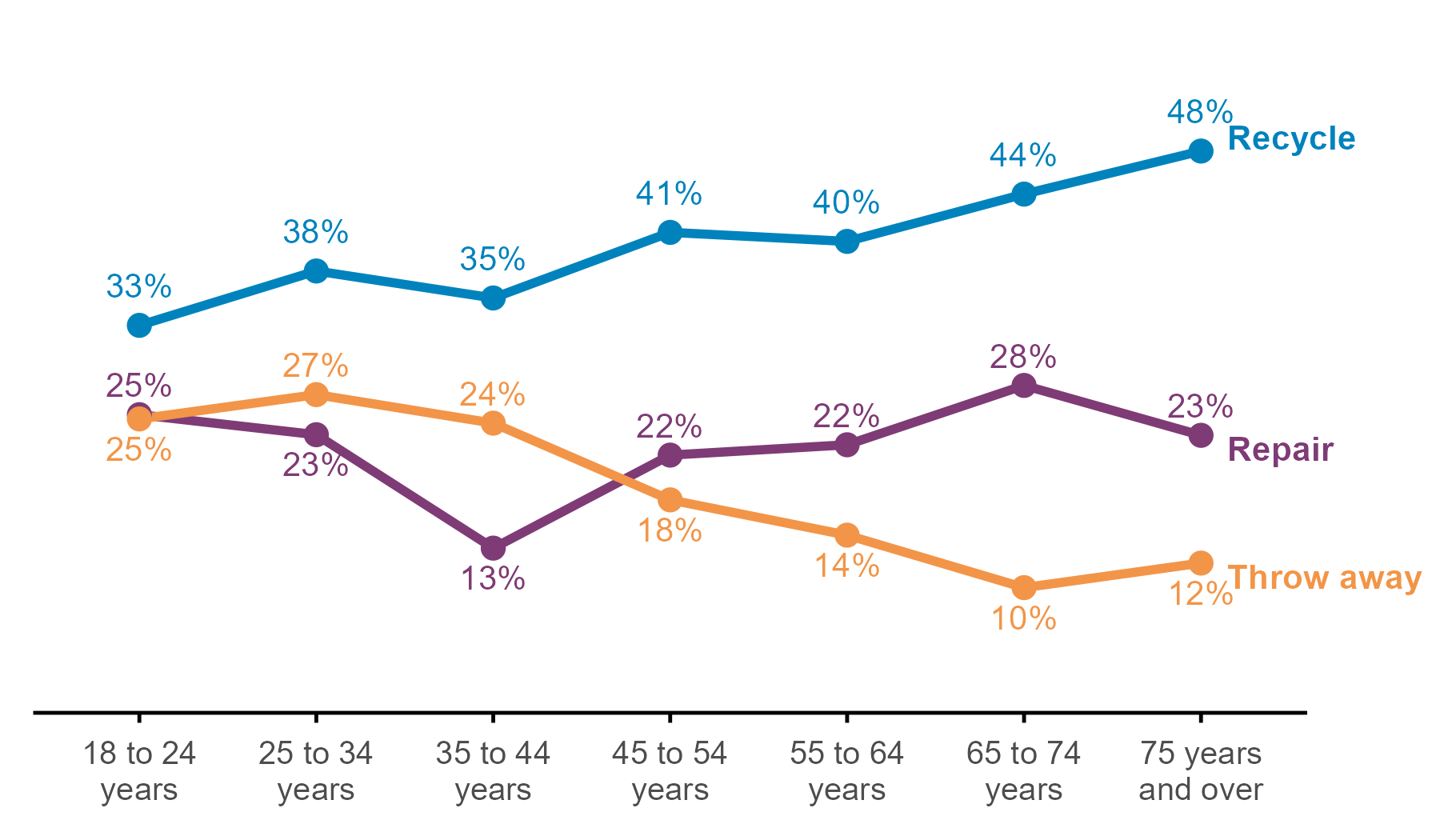
Chart 1: For clothing and textiles, recycling is the most common behaviour, but repair is more common with older adults while throwing away is more common with younger ones
Proportion of respondents reporting frequent recycling, repairing or throwing away clothing and textiles, by age.
Source: Consumer Scotland circular economy polling: How often, if at all, do you recycle / (get) repair(ed) / throw away clothing and textiles? The survey asked this separately for clothing and textiles with minor and significant damage, with results averaged in this chart. Base = 1007
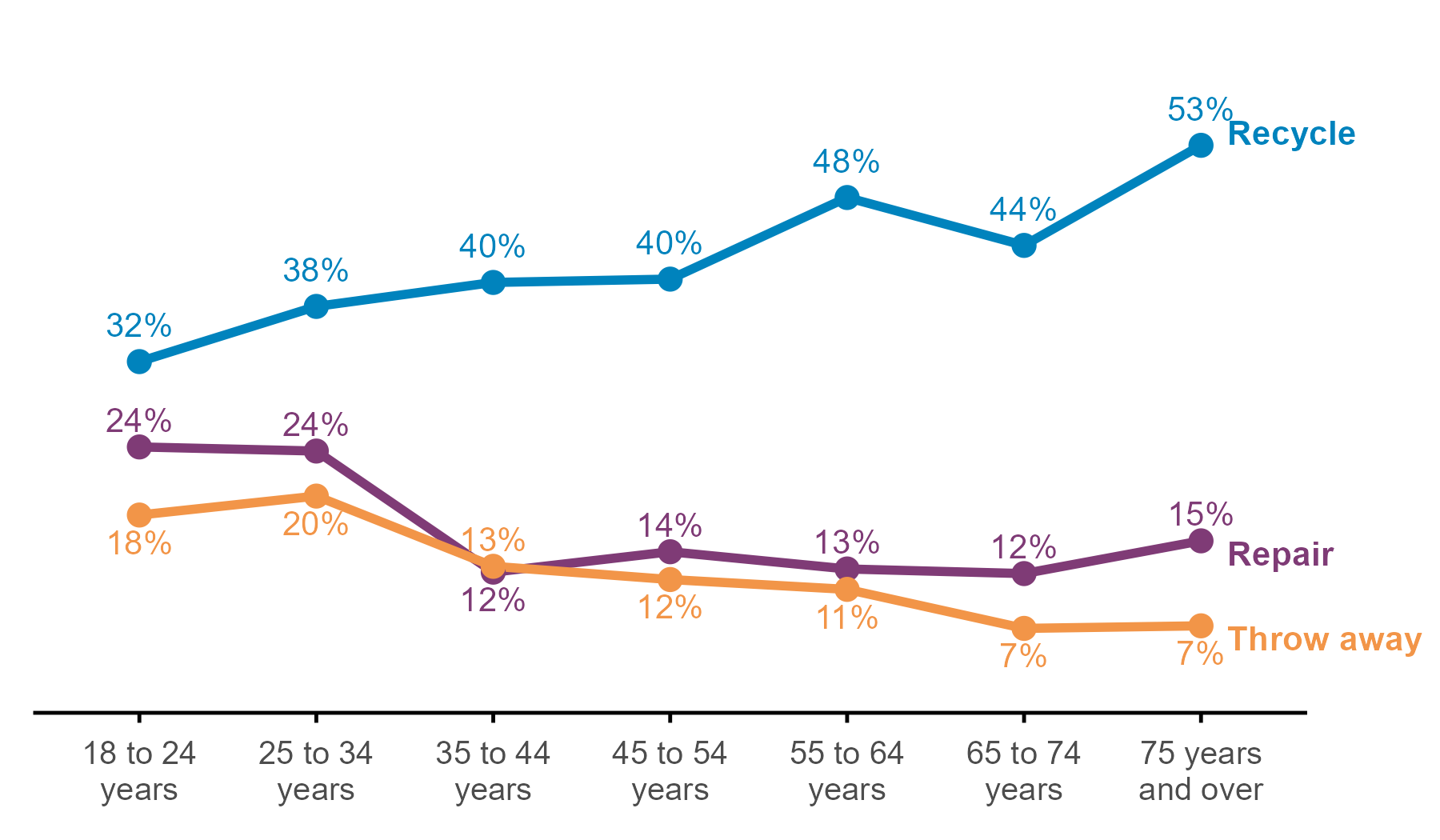
Chart 2: For small electricals, recycling is the most common, but repair is more common with younger adults while throwing away is more common with older ones
Proportion of respondents reporting frequent recycling, repairing or throwing away small electricals, by age.
Source: Consumer Scotland circular economy polling: How often, if at all, do you recycle / (get) repair(ed) / throw away small electricals? The survey asked this separately for small electricals with minor and significant damage, with results averaged in this chart. Base = 1007
Recycling is the most common behaviour among all demographics, but younger groups do this less often
Recycling is the most commonly reported behaviour by consumers in Scotland regardless of the type of item, and is also the most common behaviour across all demographics. Frequent recycling of plastic bottles and cans is near-universal at 82% overall, suggesting recycling norms are strong and facilities are widespread. Nonetheless, there are demographic differences. It is highest among the older age groups with 92% of over 75s saying they frequently recycle bottles and cans, while 18 to 24 year olds are the least likely to frequently recycle bottles and cans (61% say they do this).
The same pattern is also found for items where overall recycling rates are lower. In each case, although recycling is the most common behaviour for the younger respondents, it is at lower level than amongst older consumers. For every item type, the younger age groups are the least likely to frequently recycle, with the frequency increasing with age. For example, for clothing and textiles the increase is from 33% for 18 to 25 year olds, rising to 48% for 75 and over, while for small electricals the increase is from 32% to 53%.
Repair behaviour varies by age and item type, with older and younger adults reporting repair for different items
Repair behaviour varies across age groups and item types. For clothing and textiles, older consumers are more likely than younger consumers to report repairing items. For example, around 28% of those aged 65 to 74 report frequently repairing clothing, compared with around 23% of those aged 18 to 24, and 13% among those aged 35 to 44.
In contrast, for small electrical items, repair is more commonly reported by younger age groups. Around 24% of consumers aged 18 to 34 report frequently repairing small electricals, compared with around 12 to 15% among those aged 65 and over. These patterns indicate that while repair behaviour differs by age, the direction of this difference varies depending on the type of item.
Across all age groups, repair is reported less often when damage is described as significant rather than minor, particularly for clothing. Among adults aged 65 to 74, frequent repair drops from 42% for clothing with minor damage to 14% for significantly damaged clothing. A similar pattern is seen among younger adults aged 18 to 24, where repair falls from 34% to 16%.
The likelihood of consumers repairing electrical items also declines according to the severity of damage, although the change is smaller. Among those aged 75 and over, frequent repair falls from 23% for minor faults to 8% for major faults, while among 18 to 24 year olds it falls from 31% to 18%. This suggests that complexity of damage is a key barrier for people when it comes to repairing, regardless of their age.
One possible explanation for the pattern in repair behaviour is generational differences in skills and familiarity with behaviours. Older age groups may have had greater exposure to sewing and clothing repair earlier in life, while younger people may feel more confident handling small electrical devices they use regularly. Behaviours may also reflect cumulative exposure over the life course. Older adults have had more time to establish routines around recycling and repair and may be more familiar with local systems and practices. Differences in the length of time spent managing households and domestic responsibilities may also contribute to these observed patterns.
Throwing away is more common among younger age groups across all items
For both clothing and textiles and small electrical items, younger consumers are more likely than older consumers to report they frequently throw items away. For clothing and textiles, around 25% to 27% of those aged 18 to 34 report doing this, compared with around 10% to 12% among those aged 65 and over. A similar, though lower-level, pattern is observed for small electrical items, where frequent throwing away is relatively uncommon across all age groups but remains slightly higher among younger consumers than older consumers. This suggests that age-related differences in throwing away behaviour are present for both item types, though overall levels are lower for small electrical items than for clothing and textiles.
Throwing away is also more common for younger age brackets for easy to recycle at home items such as food and plastic bottles and cans. For those 18 to 25 years old, 41% report frequently throwing food and 51% plastic bottles and cans. This is only 8% and 16% respectively for those aged over 75.
Though the survey did not explore the reasons behind these patterns, several explanations are possible. Variation in housing circumstances might be one explanation for the difference in behaviour for easy to recycle at home items like food, plastic bottles and cans. Data from Scotland’s 2022 Census show that home ownership increases markedly with age: among adults under 35, around 40% of households owned their accommodation, and around 70% or more among those 50 and over.[37] Younger adults are more likely to live in rented or temporary accommodation, where access to storage space, repair tools or consistent recycling systems may be less readily available.
Differences between demographics illustrates the need for targeted engagement, such as communications focussing on the ‘co-benefits’, or wider benefits of actions. Focussing on the wider benefits of action, such as saving money and supporting the local economy will help to appeal to consumers with a wide range of motivators.
Our previous research found that consumers are more motivated by the cost and convenience of their actions than by environmental benefits. Environmental factors were a notable secondary motivator, and primarily due to a desire to be more generally environmentally-friendly, rather than as part of a wider net zero framework or contributing to emissions reduction.[38] Governments and other stakeholders are more likely to encourage behaviour change through promoting the wide range of positive outcomes and co-benefits that can flow from behaviours being adopted.
5. Perceived barriers to recycling
Barriers to recycling vary substantially by item type, with small electrical items standing out as the most challenging to recycle, and plastic bottles and cans the least difficult.
For most items, the most frequently reported barrier is the lack of a suitable local service or facility, followed by uncertainty about where or how to recycle. This indicates that both service availability and information gaps limit recycling.
Food waste differs from other materials, with a relatively higher share of respondents reporting a lack of interest in recycling, while barriers for plastic bottles and cans are comparatively low and relate more to convenience than access or knowledge.
Respondents were asked to think specifically about occasions when they do not recycle and to indicate the main reasons why. The response options focused on practical, knowledge-related and attitudinal barriers, such as the availability of suitable facilities, understanding of how or where to recycle, and issues of time or convenience. As with all questions of this type, the findings are based on self-reported perceptions and behaviours. They therefore describe how people understand and explain their own recycling decisions, which may not always align perfectly with local service provision or observed behaviour in practice.
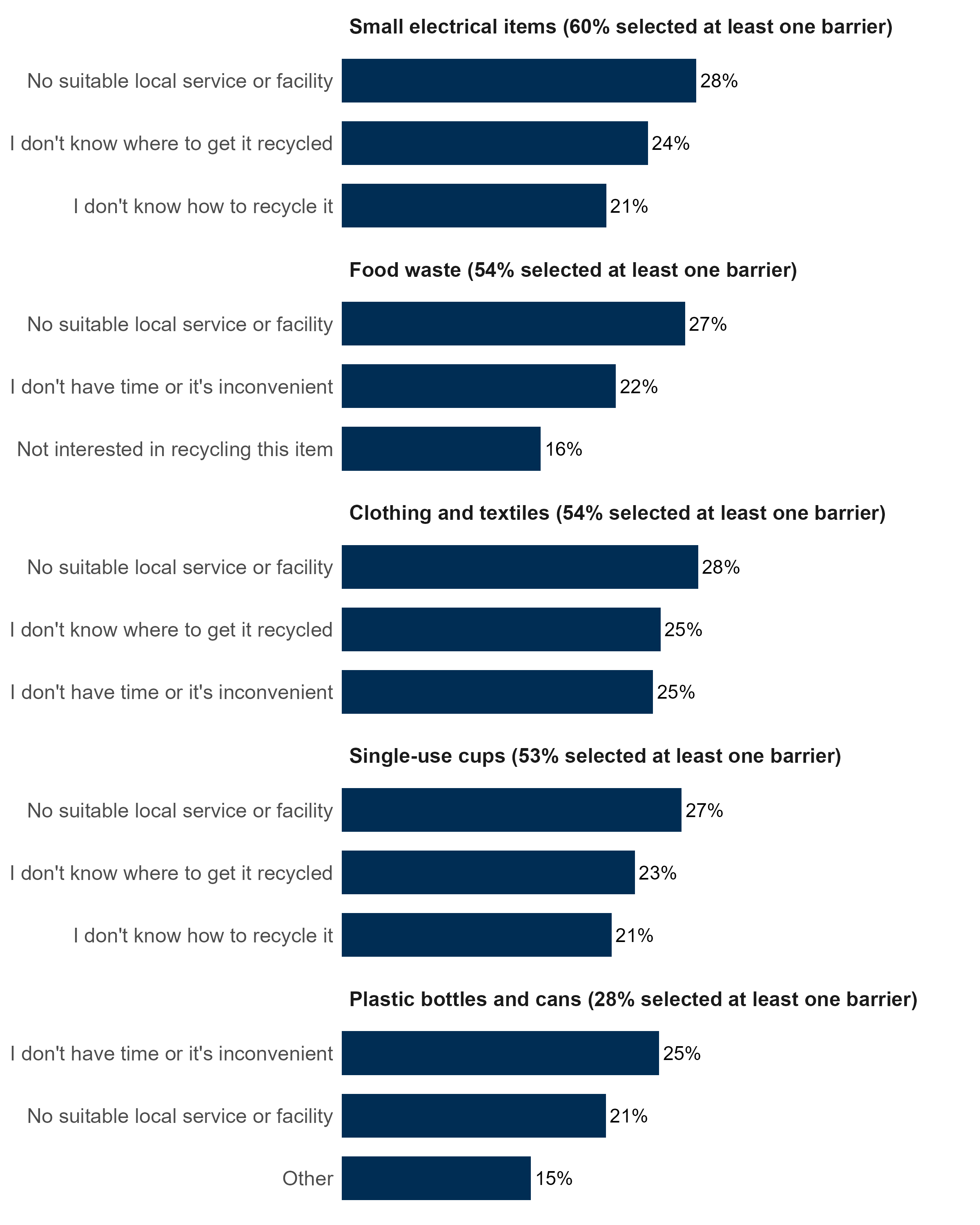
Chart 3: Lack of suitable local services is the most common barrier to recycling for most item types
Percentages show top 3 barriers to recycling, by item type
Source: Consumer Scotland circular economy polling: For each of the following item types, are there any reasons why you might not recycle them when they are no longer needed or usable? Base: Weighted responses for those who reported one or more barriers for the items shown (Small electricals base = 603; Food waste base = 544; Clothing and textiles base = 543; Single-use cups base = 534; Plastic bottles and cans = 287). Percentages inside the parentheses indicate proportion of respondents who have ticked at least one barrier to recycling for that item.
The burden of recycling is not equally distributed across item types
Small electrical items emerge as the most challenging to recycle, with 60% of consumers identifying at least one barrier to doing so, compared with only 28% for plastic bottles and cans. This indicates that consumers are substantially more likely to encounter difficulties when attempting to recycle small electrical items than more routinely recycled materials.
Food waste, clothing and textiles, and single-use cups fall between these two extremes, with around half of consumers experiencing at least one barrier to recycling these items (54% for food waste, 54% for clothing and textiles, and 53% for single-use cups). This suggests that, while recycling these items is not as challenging as small electricals, there are more frequent obstacles to recycling these materials compared to more established collection systems.
Similar to our findings highlighting the difficulty of recycling by item type, research by Zero Waste Scotland found that people dispose of their waste correctly when it involves easily recyclable items like paper, cardboard, glass bottles and jars, and food or drink cans. However, difficulties persist with larger items such as furniture and with materials that are less commonly recycled, including clothing, foil, and soft plastics.[39]
Taken together, these findings point to a clear gradient in the likelihood of consumers encountering recycling barriers across item types, rather than differences in the nature of the barriers themselves. Some materials are consistently more likely than others to pose difficulties for consumers, indicating that the overall burden of recycling barriers is unevenly distributed across the items examined.
The pattern of perceived barriers is broadly consistent, but with notable exceptions
The pattern barriers reported by consumers suggests that access to appropriate facilities or a lack of knowledge are more prominent than lack of interest across most items, albeit the balance varies across categories. For small electrical items, the leading barrier for consumers is the absence of a suitable local service or facility (28%), followed by not knowing where to recycle the item (24%) and not knowing how to recycle it (21%). A similar access and knowledge gap is evident for clothing and textiles, where 28% of consumers cite lack of a suitable local service and 25% respectively report not knowing where to recycle or lacking time/inconvenience. Single-use cups follow the same pattern, with 27% reporting no suitable local facility, 23% not knowing where to recycle, and 21% not knowing how.
For food waste, the pattern of barriers experienced by consumers departs slightly from the general access-and-information profile observed for most items. While the lack of a suitable local service remains the most reported barrier (27%), time and inconvenience (22%) are more prominent than uncertainty about how (14%) or where to recycle (16%). More notably, the proportion of consumers reporting they are not interested in recycling food waste (16%) is higher than for other items. This makes food waste the only item type in this analysis where lack of consumer interest features notably alongside practical barriers.
This finding is particularly important given the scale of food waste in Scotland. Households generated an estimated 460,000 tonnes of food and drink waste in 2021/22, equivalent to around 174 kg per household, making food waste a substantial component of household waste and a material stream where recycling behaviours have system-level importance.[40] Lower engagement with food waste recycling may also have implications for recycling quality. Evidence from Scotland shows that contamination of kerbside recycling is a recognised issue in practice, and local authority guidance highlights that food and liquid residues can reduce the quality of recyclable material and increase processing costs. [41] [42] While this survey does not directly measure disposal behaviour across waste streams, the combination of lower consumer interest in recycling food waste and the scale of food waste generated, highlights a potential risk that food residues may be mis-sorted, with implications for recycling quality.
Plastic bottles and cans represent a further exception to the general pattern of reported barriers. Unlike most other items, where the most common barrier experienced by consumers relates to the lack of a suitable local service or facility, the most frequent barrier to consumers recycling plastic bottles and cans is time or inconvenience (25%), followed by lack of a suitable local service or facility (21%). In addition, a relatively high share of respondents selected “other” (15%), suggesting that remaining barriers for this item type are more situational or reflect reasons not captured by the predefined response options.
Consumer concerns about data or privacy are relevant for some items but not widespread. As expected, more consumers are worried about data privacy when it comes to recycling small electrical items (10%) than any other items (2% - 3%).
Perceived barriers remain broadly consistent when focusing on less frequent recyclers
As part of the analysis, we also looked at whether the pattern of reported barriers changed depending on how often people say they recycle. To do this, we repeated the analysis after removing respondents who reported that they “always” or “very often” recycle, allowing us to examine responses from those consumers who recycle less frequently, to see whether the reasons they give are different from those who recycle frequently.
The results show that the overall picture is very similar. Among those who recycle less frequently, no suitable local service or facility remains the most common barrier ranging between 25% for food waste to 7% for plastic bottles and cans. Not knowing where to take items for recycling (19% to 4%), how to have them recycled (16% to 4%) and finding recycling inconvenient or time consuming (17% to 9%) also remain as top barriers. The only item type where we found a higher percentage of people not interested in recycling was food waste at 15%, again similar to the general findings. This indicates that the main barriers identified are widely experienced and are likely to reflect broader issues with access, convenience and information.
Taken together, these findings point to persistent gaps in how consumers in Scotland perceive or experience service availability and a lack of clear information on how or where to recycle, or what items can be recycled, particularly for less routinely recycled items. However, the variation by material type indicates that these barriers are not uniform; for some streams (e.g. plastic bottles and cans), behavioural or convenience factors may now be relatively more important than infrastructure alone.
Demographic considerations
Age differences are the most consistent
Different age groups consistently show differences in reported barriers to recycling across all item types. Younger adults are more likely to report practical and knowledge related barriers. For example, around 24% of 18 to 24 year olds in Scotland say they do not know where to recycle clothing and textiles, compared with 7% to 10% of those aged 65 and over. 21% to 22% of 18 to 34 year olds say this for small electrical items, compared with 9% to 13% among older adults.
Similarly, younger adults are more likely to say recycling is inconvenient, with around 23% of 18 to 24 year olds reporting this for clothing and textiles, compared with 5% to 6% among those aged over 65.
In contrast, older adults are significantly more likely to select “none of the above”, rising from around 15% for those 18 to 24 years old to 55% among those over 75 years old.
These age differences may reflect life stage factors. Older adults may have had more time to become familiar with local recycling systems and guidance, and may also experience fewer time pressures, for example due to retirement. For instance, The Circularity Living Tracker highlights that over 65s are significantly less likely to say they are too busy, or find it too much hassle to engage in sustainable behaviours, in contrast to younger groups.[43]
Older groups are also more likely to own their homes or have access to a car which can make recycling more convenient. In contrast, younger adults may be more likely to be navigating changing living arrangements, and local systems, have lower access to a car or are more likely to face greater time constraints. Official Scottish Household Survey (SHS)[44] data shows strong differences between life stages that could help explain variation in recycling and/or repair behaviours. In private-rented households, 50% of highest‑income householders are aged 16 to 34. This is only 11% in owner‑occupied homes. On the other hand, older adults are concentrated in owner‑occupied housing, where 46% of highest‑income householders are aged 60 or over. These patterns matter because different housing types offer different levels of space and access to recycling / repair facilities.
All these factors could contribute to higher reporting of practical and knowledge-related barriers. However, these interpretations are indicative rather than causal, as the survey captures self-reported perceptions at a single point in time.
Income is linked to different types of barriers
Higher-income groups are more likely to say recycling is difficult because of time or inconvenience, across all item types. This pattern is consistent and, in several cases, statistically significant. For example, for small electrical items, 18% of those earning £60,000+ say recycling is inconvenient, compared with 12% of those earning under £20,000. A similar gap appears for clothing and textiles (18% vs 11%) and plastic bottles and cans (10% vs 6%). This suggests that perceived time pressure, rather than lack of access or knowledge, is a more common barrier among higher earners.
Lower-income groups are more likely to report knowledge barriers, but mainly for harder-to-recycle items. For small electrical items, 17% of respondents earning under £20,000 say they do not know where to recycle them, compared with 10% of those earning £40,000 to £59,999. This income pattern does not appear consistently for simpler materials such as plastic bottles or single-use cups, where knowledge barriers are low across all income bands.
Location differences are most evident for food waste
Urban and rural differences appear mainly for food waste (13% and 18% respectively), and this factor is not consistent across other items such as clothing, small electrical items, single-use cups, or plastic bottles and cans. This suggests that access to local facilities appears to be important to consumers and must be considered when considering solutions to food waste.
Plastic bottles and cans stand out as an area where recycling works well for almost everyone. Reported barriers for recycling plastic bottles and cans are very low across all demographics, typically between 1% and 7% for individual barriers, while around 72% overall and over 80% of older adults select “none of the above”. Although some age differences remain statistically significant, they are small in practical terms compared with other item types.
Attitudinal resistance is low across all groups
Attitudinal resistance to recycling is low across all demographics and materials. Very small proportions of respondents say they are not interested in recycling (typically 2% to 6%), do not believe recycling helps the environment (typically 2% to 5%), or think it is someone else’s responsibility (typically 2 to 6%), with few statistically significant differences between groups.
6. Perceived barriers to repair
The barriers that consumers in Scotland face to repairing items are high for both small electrical items and for clothing and textiles, with a large share of consumers reporting at least one barrier to repair.
Across all demographic groups, the most commonly reported barrier that consumers experience is cost. Many consumers say that repairing an item costs more than buying new. Unlike recycling, where cost is rarely a direct barrier, repair decisions involve a clear financial comparison for consumers in Scotland, and this pattern is consistent across age and income groups.
Knowledge and access barriers are also prominent, with many consumers reporting that they do not know how to repair items or where to get them repaired. These barriers are reported more frequently by younger adults.
Differences by age and income are mainly reflected in knowledge, confidence, time and trust-related barriers, rather than in levels of interest in repair or beliefs about its environmental value. As with recycling, attitudinal resistance to repair is low across groups, with only small proportions saying they are not interested in repairing or that repair does not help the environment.
Consumers were asked about barriers to repairing items, allowing us to explore the practical, knowledge-related and attitudinal factors that may limit uptake of repair, even where consumers broadly support the aim of reducing waste.[2] The analysis of barriers to repair focuses on small electrical and clothing and textiles items only.
Chart 4: Cost is the most commonly reported barrier to repairing
Proportion of respondents reporting reasons for not repairing, by item type
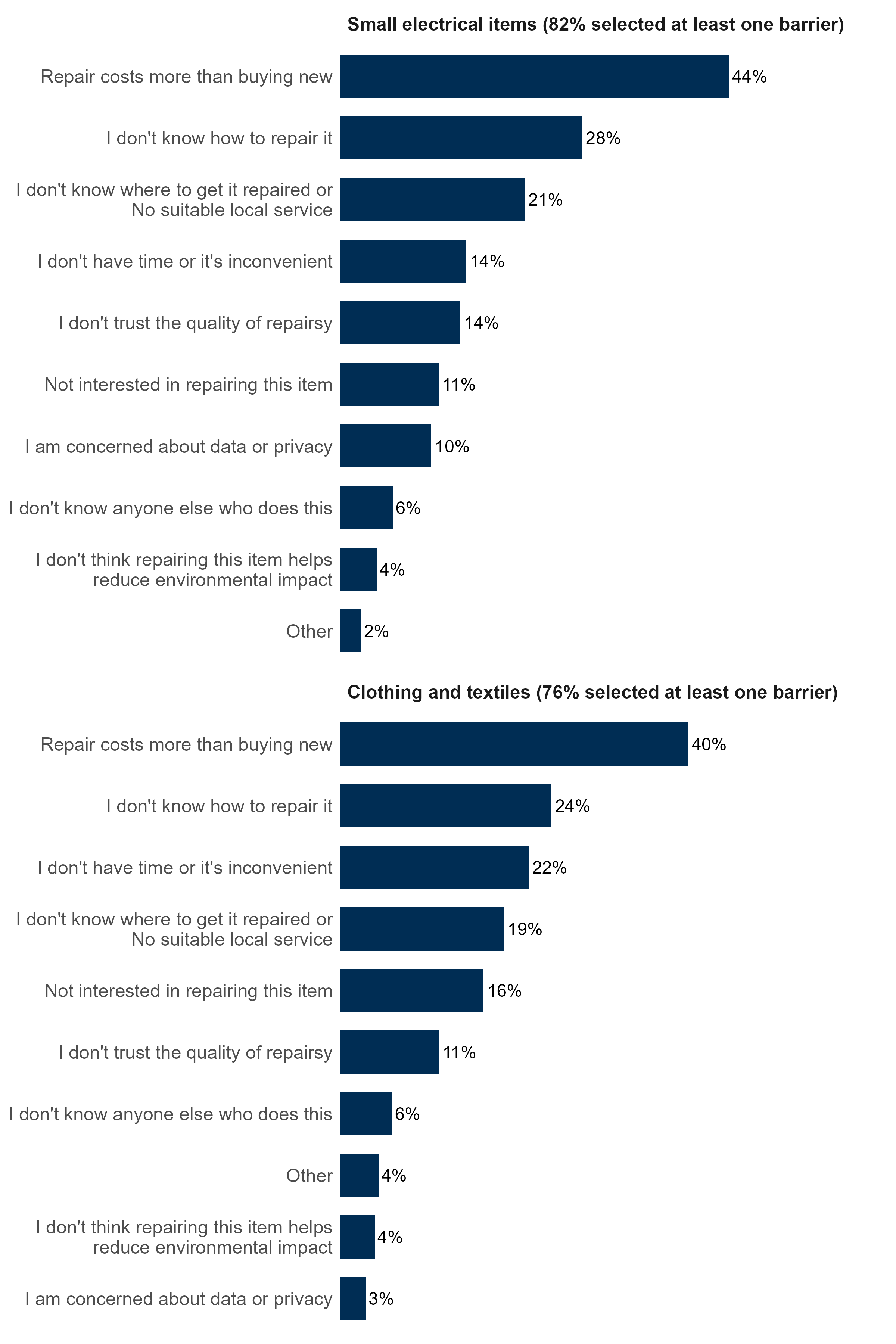
Source: Consumer Scotland circular economy polling: For each of the following item types, are there any reasons why you might not repair them if they are broken? All respondents who reported at least one barrier to repairing (weighted base for clothing and textiles = 764 and small electricals = 824). Percentages are based on respondents who selected “Always” or Very often”.
Cost and lack of skills are key perceived barriers to repairing
For both small electricals and clothing and textiles, a high proportion of consumers in Scotland report experiencing at least one barrier to repair (82% for small electrical items and 76% for clothing and textiles). This is similar to what was found when looking at recycling these items. As with recycling, it suggests that these item types are associated with multiple practical barriers for consumers, rather than a single isolated constraint. It suggests that repair is commonly perceived by consumers as difficult.
When looking into specific barriers, across both small electrical items and clothing and textiles, cost is the most commonly reported consumer barrier to repair. Around 44% of those considering repairing small electrical items and 40% for clothing and textiles say that repairing costs more than buying the item new.
Knowledge-related barriers are the second most common barrier with 28% of consumers saying they do not know how to repair small electrical items and 24% for clothing and textiles. Initiatives like Circular Communities Scotland’s Share & Repair Network (targeted at organisations rather than individuals) could be useful in bridging this gap. The network provides member organisations with practical support, particularly in helping organisations build the skills and confidence needed to run repair activities. Member feedback in the impact report highlights that the network’s one‑to‑one support, shared resources, and guidance have been instrumental in their development. Given the network’s rapid expansion (from 22 to 83 active projects between 2022 and 2024) it suggests that this kind of structured support is helping strengthen local repair capacity across Scotland, especially in community settings where skills gaps have been identified.[45]
For small electricals, access to services is a further challenge, with 21% saying they do not know where to get items repaired or that there is no suitable local service. For clothing and textiles, time and convenience play a slightly larger role, with 22% saying repair is inconvenient or they do not have time.
By contrast, attitudinal barriers are reported by smaller proportions of consumers. Around 11% of consumers say they are not interested in repairing small electrical, with this figure rising to 16% for clothing and textiles. Other attitudinal or perception-based barriers, such as doubting the quality of repairs (11 to 14%), concerns about data or privacy for electrical items (6%), believing that repair does not help the environment (around 10%), or not knowing anyone else who repairs items (around 6%) tend to be reported by only a small minority of consumers.
Our findings in this report align with a recent systematic literature review[46] and a Delphi exercise with academic and practitioner experts that ranked 26 consumer repair barriers. In that study, experts identified “convenience of repair” as the highest‑ranked barrier category, and within this category repair cost was highlighted as one of the most significant obstacles to consumers choosing to repair. Additionally, the study emphasised that limitations in repair infrastructure, such as lack of accessible services compound these cost‑related barriers, while a second top‑ranked category, “technical possibility of repair”, includes barriers such as lack of spare parts and absence of repair manuals, which map onto wider information and capability challenges. Together, this academic evidence reinforces our finding that repair costs are a primary deterrent, situating cost at the very top of expert‑assessed global barriers to repair.
Taken together, this suggests that consumers’ reluctance to repair items is not primarily driven by negative attitudes, but by perceptions and experience that repair is too costly, too difficult, or is not easily accessible.
Demographic considerations
Age differences are smaller for repair than for recycling
Age does make some difference to the barriers people report around repair, but the pattern is less clear-cut than with recycling. Younger adults are more likely to say they don’t know how to repair items. For example, around 26% of 18 to 24 year olds say they don’t know how to repair clothing and textiles, compared with around 11% of those aged 65 to 74. They are also more likely to say they do not trust the quality of the repairs, with 15% of 18 to 25 year olds saying this for textiles and 18% for small electricals versus around 3 to 4% for 64 year olds and over.
Younger adults are also more likely to say that repair is inconvenient or that they don’t have time (around 20% among 35 to 44 year olds, compared with only 5% among those aged 65 to 74). Similar to barriers to recycling, this is likely to be driven by life stage factors such as working age adults being more time poor.
However, across all age groups, the most common reason people give for not repairing items is that repairing costs more than buying something new. This response was consistent across types of item. For small electrical items, this ranges from 28% for 18 to 24 year olds to 45% for those aged 55 to 64, with most other age groups clustered in the low to mid-30s. A similar pattern appears for clothing and textiles, where responses range from 22% among 18 to 24 year olds to 35% among those aged 35 to 44, again with very small differences between the other age groups.
Unlike recycling, where financial cost is generally not a direct barrier for households, repair decisions often involve a clear price comparison for consumers between fixing an item and replacing it. As a result, cost concerns appear to be widely shared across age groups when it comes to repair.
Income is linked to different kinds of repair barriers
When considered by income, the sense that repair costs more than replacing the item is reported by around 30 to 39% of participants for electrical items and 24 to 32% for clothing and textiles, across the income bands. This shows cost is perceived as a barrier by most people.
The main difference between income bands seems to be related to trust that repairs are of a high quality, with those in higher income bands generally being more sceptical (19% of those earning £60,000 and over, versus 9% for those earning below £20,000). A similar pattern is found for clothing and textiles. One possible explanation is that higher-income households may be more likely to own newer, more complex or higher-value items, where repairs can feel riskier or more uncertain. This could make confidence in the quality of repairs more salient for these groups.
Attitudinal resistance is low across all groups
Similar to recycling, attitudinal resistance to repairing is low across all demographics and items. Small proportions of consumers say they are not interested in repairing (< 16%) or do not believe repairing helps the environment (< 6%), with few statistically significant differences between groups.
7. Policy scenario 1: A 20p deposit return scheme
We asked consumers to anticipate their likely response to the introduction of a 20p deposit return scheme for plastic bottles and cans as the Scottish Government is actively developing a scheme to be introduced in October 2027.
We found that willingness to return containers under a deposit return scheme is primarily shaped by convenience and how easily returns can be integrated into everyday routines.
Scenarios that minimise additional effort (e.g. nearby return points or the ability to return containers alongside regular shopping trips) are consistently associated with higher stated engagement, while time, effort and uncertainty act as the main deterrents to consumers’ participation.
Differences between demographic groups are generally limited when returning containers is easy but become more pronounced as effort or complexity increases.
As the practical demands of returning containers rise, certain groups of consumers, including older adults, people with long-term limiting health condition, and those with fewer transport options appear more likely to face barriers.
To understand how people might engage with a 20p deposit return scheme for plastic bottles and cans, we asked them how likely they would be to return empty containers under a range of different scenarios. These scenarios varied in terms of convenience, effort and certainty (for example distance to the return point, whether returns could be combined with shopping trips, waiting times, and clarity about which containers would be accepted). This approach allows us to identify the factors most likely to encourage or discourage participation in the scheme.
When asked about how they would engage with a deposit return scheme where a 20p deposit is added to the price of plastic bottles and cans, there were a range of factors that impacted on consumers’ ability or willingness to engage with a scheme. Engagement with a scheme was likely to be higher when returning containers was convenient and could be easily integrated into daily life. When considering implementation of the scheme, including rules around exemptions, consideration should be given to these key motivators and barriers.
What encourages people to return their containers
Local access is strongly linked to higher participation. 85% of consumers said they would be likely to return containers if a return point was within a five-minute walk, with this falling to 61% if it was within a 15-minute walk. This indicates that likelihood of returning declines as the time and effort required increases, highlighting the importance of nearby return points.
Returns are more likely when they can be combined with existing routines. 84% of consumers said they would be likely to return containers when this could be done as part of a normal shopping trip. This suggests that integrating returns into journeys people already make could help reduce friction and support uptake.
Batch returning is more likely. Many people indicated they would prefer to save up their containers and return them in one go. For example, 76% say they would return more than 10 containers compared with only 35% who would return 1 to 2 containers. This is probably because people want the return to feel worth the amount of time and effort involved.
Chart 5: Likelihood of returning containers under a 20p deposit return scheme increases where returning is convenient
Percentages show likelihood to return containers in each situation
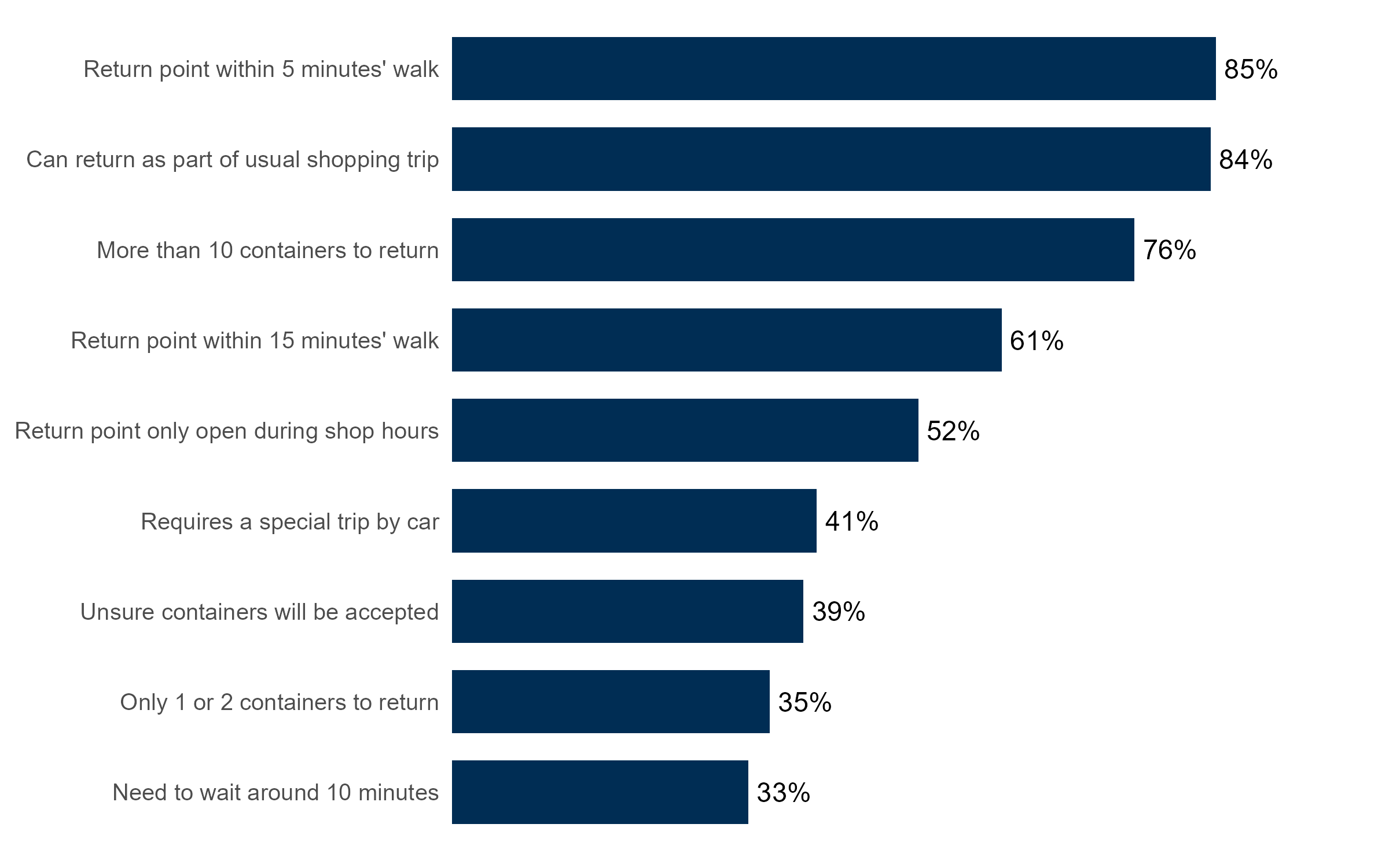
Source: Consumer Scotland circular economy polling: Thinking about returning empty containers to reclaim the 20p deposit, how likely would you be to do so in each of the following situations? All respondents who purchase plastic bottles and cans (weighted base = 980).
What puts people off returning their containers
Consumers were also asked about scenarios where returning containers might involve more time, effort or uncertainty. In this section, we focus on the situations where people are most likely to say they would not return containers, highlighting potential barriers that could reduce participation in the scheme.
Long waiting times discourage returns. Where people would need to wait around 10 minutes, 44% said they would be unlikely to return containers. This indicates that queueing and delays could be a significant barrier to participation.
Small batch returns are less likely. When people had only 1 or 2 containers to return, 43% said they would be unlikely to make the return. This suggests small volumes may not be seen as worth the time and effort involved.
We see that people are more willing to return containers in large batches, but this batching behaviour is also more likely to create queues which in turn triggers longer waiting times. This creates a potential barrier for uptake. Overall, a return scheme will need to balance the tension between consumers’ desire for batch returning and their unwillingness to experience waiting times.
Special car trips discourage returns. When returning containers would require a dedicated trip by car, 43% said they would be unlikely to do so. This indicates that returns are less appealing when they cannot be combined with other journeys.
Chart 6: Unlikelihood of returning containers under a 20p deposit return scheme increases where returning requires additional time or effort
Proportion of respondents reporting that they would be unlikely to return containers in different return situations under a 20p deposit return scheme
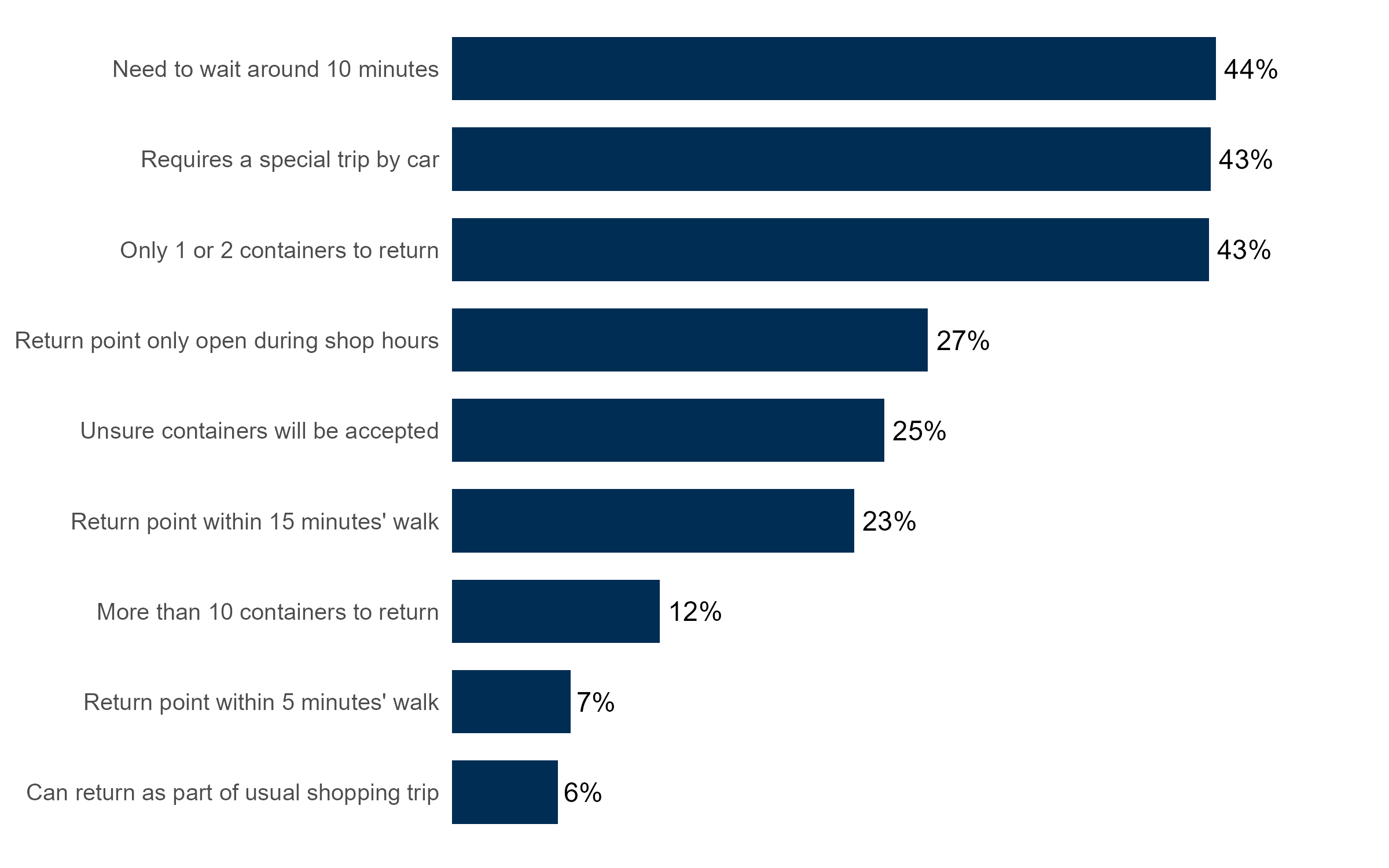
Source: Consumer Scotland circular economy polling: Thinking about returning empty containers to reclaim the 20p deposit, how likely would you be to do so in each of the following situations? Base: All respondents who purchase plastic bottles and cans (weighted base = 980
Demographic considerations
Table 2: Likelihood of returning containers under a 20p deposit return scheme by demographic group. Differences between groups are minimal for easy returns but increase as the process becomes harder.
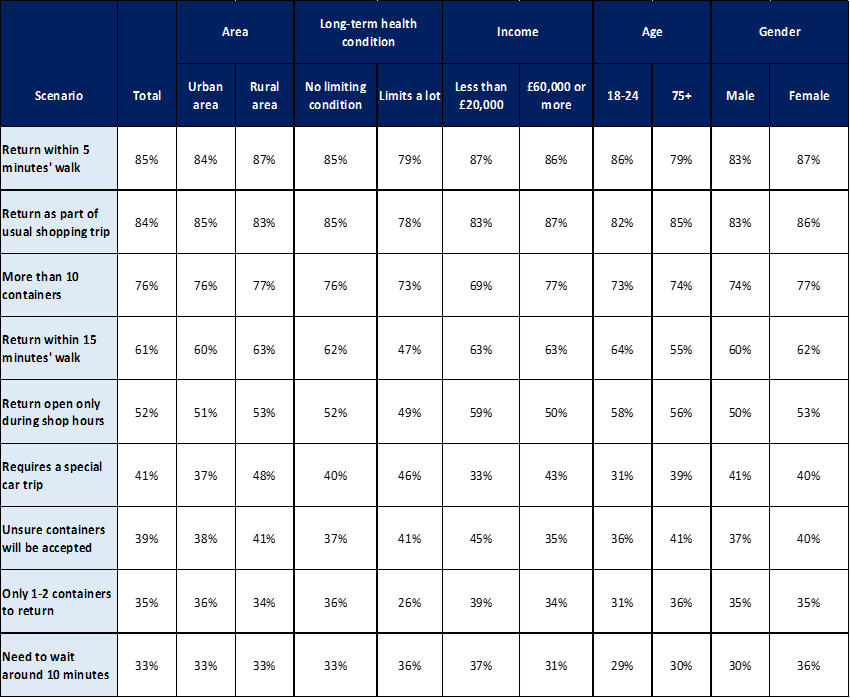
Source: Consumer Scotland circular economy polling: Thinking about returning empty containers to reclaim the 20p deposit, how likely would you be to do so in each of the following situations? Base: All respondents who purchase
plastic bottles and cans (weighted base = 980)
Differences between groups are small if return is straightforward
The influence of convenience and effort on willingness to return containers varies across consumer demographic groups. In general, differences between groups are relatively small when returning containers is very easy, but widen as the level of effort or inconvenience increases.
For example, when return points are very close to home (within a 5-minute walk), demographic differences are limited and overall willingness to return containers is high across all age groups. Younger adults aged 25 to 34 report particularly high levels of willingness (90%), while older adults aged 65 to 74 also report relatively high levels (78%). This suggests that when the practical barriers to returning containers are minimal, engagement is broadly consistent across the population.
Differences between groups widen with increased time, effort and inconvenience
As the distance to return points increases, differences between groups become more pronounced. When the return point is within a 15-minute walk, overall consumer willingness falls to 61%, with a sharper decline among people with long-term limiting health conditions that limit day-to-day activities (47% compared with 62% among those without such limitations). Older adults also report slightly lower willingness than younger adults at longer distance (58% among 65 to 74 year olds compared with 69% among 25 to 34 year olds). This indicates that even modest increases in effort may create additional barriers for older people and those with limiting long-term condition.
Scenarios requiring a dedicated car trip show clearer differences by age, income and area. Younger adults (18 to 24) are less likely to say they would make a special trip (31%), as are those on lower incomes (under £20,000, 33%). In contrast, those aged 65 to 74 (50%) and those with an income of £60,000 or more (43%) are more likely to say they would return containers in this situation. Lower willingness among younger adults and those on lower incomes is likely to reflect lower rates of car access or ownership in these groups, making a dedicated return trip less feasible. For instance, looking at data from Understanding Society [47], in Scotland, 56% of those aged 20 to 29 have access to a car. This peaks at 84% for the 40 to 49 age band before decreasing only slightly to 79% for those over 70.
Rural residents (48%) are slightly more willing than urban residents (37%) to return containers even when they require a dedicated car trip, which may reflect greater familiarity with travelling longer distances or greater reliance on car journeys in rural areas.
Waiting times reduce willingness to return containers across all age groups, but the effect is particularly pronounced among working-age adults. Overall, 33% say they would be likely to return containers if they had to wait around 10 minutes, falling to 28% among those aged 35 to 44. This suggests that time pressures may be a particular barrier for people in mid-life who are time poor. Related to this, restricted opening hours may disproportionately affect working-age adults. Where return points are only open between 9am and 5pm, 52% overall say they would return containers. This falls to 43% among 35 to 44 year olds, compared with 59% among those aged 55 to 64, indicating that limited opening hours may present greater barriers for those with less flexibility in their daily schedules.
Uncertainty about whether containers will be accepted also affects willingness, especially among younger adults. Overall, 39% say they would still try and return containers when unsure about acceptance. This falls to 36% among 18 to 24 year olds, compared with 46% among those aged 55 to 64, indicating that older adults may be more tolerant of uncertainty in this context.
Integrating returns into existing routines appears particularly important for older adults. While 84% overall say they would return containers if they could do so as part of their usual shopping trip, this rises to 90% among 55 to 64 year olds compared with 82% among those aged 18 to 24. This suggests that building returns into established habits may be especially effective for older groups. Similar research by Zero Waste Scotland shows that recycling behaviour is mainly shaped by people’s routines and habits and the biggest obstacle to recycling when away from home is the lack of accessible recycling bins, while at home the main difficulty comes from uncertainty about which items are accepted in household recycling collections.[48]
Taken together, these findings show that differences between demographic groups are relatively small when returning containers is straightforward, but become more pronounced as the level of effort, time or uncertainty increases. However, the type of barrier matters. Younger adults and those on lower incomes are less likely to engage in scenarios that require a dedicated car trip, while older adults show lower willingness as walking distances increase. Working-age groups appear particularly affected by waiting times and restricted opening hours. This suggests that different design features of a return system may affect groups in different ways, depending on how easily returns can be incorporated into their daily routines and circumstances. For the proposed deposit return scheme to be successful, it will be important for policy makers to consider and mitigate these barriers.
8. Policy scenario 2: A 25p charge on single use cups
We also asked consumers to anticipate their likely response to the introduction of a 25p charge on single-use cups as the Scottish Government continues to consider whether or not to introduce such a scheme.
The most common expected response is no change in purchasing behaviour, although around half of regular takeaway drink purchasers say they would either reduce or stop buying drinks in single-use cups. Nearly half of regular purchasers say they would frequently bring a reusable cup if the charge were introduced, suggesting that behavioural change is more likely to take the form of switching behaviour rather than complete avoidance.
Responses vary slightly by demographic group, with those with limiting long-term health conditions more likely to anticipate stopping purchases. Younger, working-age adults predict they will be more responsive to the charge by bringing a reusable cup.
Consumers were asked how their behaviour might change if a 25p charge were introduced on single‑use takeaway cups.[4] Two separate questions were used to capture different aspects of possible behaviour change:
- A question on how the charge would affect their purchasing behaviour specifically
- A question on how often they would be willing to bring a reusable cup instead
Expectations of the impact on single-use cup purchases are split
Among the 72% of respondents who regularly purchase takeaway drinks, views on the impact of a 25p single‑use cup charge were mixed. Around 40% say the charge would not change how often they buy drinks, and 8% expect they would buy more. In contrast, 28% report they would buy fewer takeaway drinks, and 17% say they would stop buying drinks in takeaway cups altogether. This means roughly 48% anticipate maintaining or increasing their purchasing frequency, while 45% expect to reduce or stop it, indicating a fairly balanced set of behavioural intentions, though these are self‑reported and may not directly reflect actual behaviour.
Chart 7: Responses show a fairly even split in expected changes to takeaway drink purchasing following a 25p cup charge
Proportion of respondents reporting how a 25p charge on single-use cups would affect how often they purchase drinks in takeaway cups
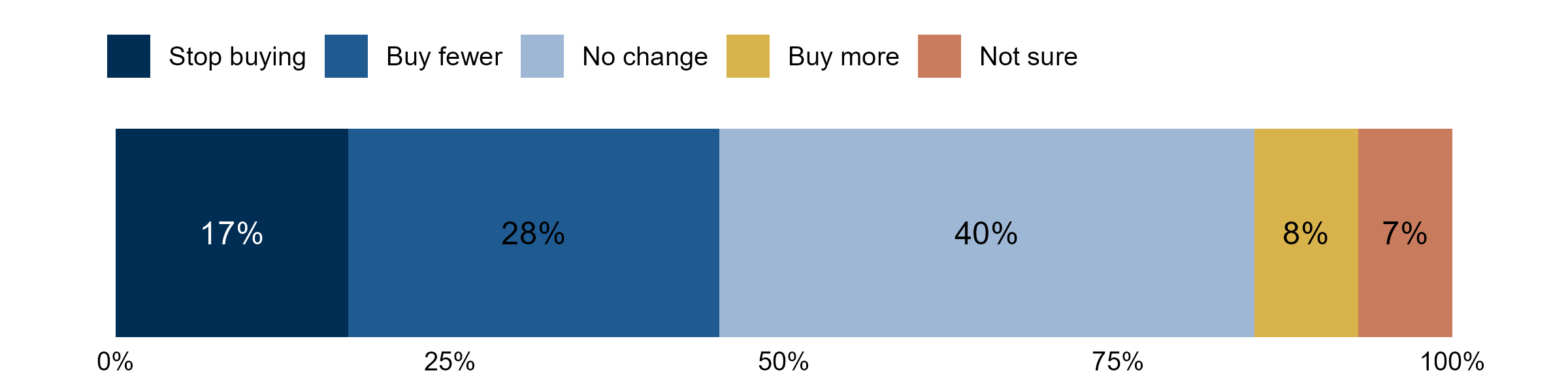
Source: Consumer Scotland circular economy polling: Which of the following options best describes how you expect this change would affect your purchasing habits? Base: All respondents who buy takeaway drinks and are sure of their behaviour (weighted base = 725).
Once again, across most demographic groups, the most common response to the proposed charge is that purchasing habits would not change. Between 30% and 55% of respondents in each group anticipate that there would be no change in their purchasing frequency for drinks in single-use takeaway cups.
However, there are some differences by long-term limiting health condition. Among consumers who reported no long-term limiting health condition, 31% said the proposed charge would not change their purchasing behaviour, compared with 24% of those who reported a long-term condition. Consumers with a long-term condition, on the other hand, were more likely to anticipate a change in behaviour, particularly stopping purchases altogether: 17% said they would stop buying takeaway drinks, compared with 11% among those without a long-term limiting health condition.
Respondents without a long-term limiting health condition were more likely to say they would reduce rather than stop their purchases (21%, compared with 16% among those with a long-term limiting health condition). Overall, this suggests that respondents with a long-term condition are more likely to anticipate more substantial changes to their takeaway drink purchasing behaviour in response to the charge.
Bringing a reusable cup
Consumers were also asked, separately, how often they would be likely to bring their own reusable cup when purchasing a takeaway drink if the 25p charge is applied. Almost half of those who purchase takeaway drinks (47%) say they would do this frequently (that is, always or very often). A further 23% say they would do so sometimes, while 23% say they would rarely or never bring a reusable cup. Finally, 7% are not sure how the change would affect them.
These findings suggest that a 25p charge could encourage regular use of reusable cups among a substantial group, but not universally. While many anticipate frequent use, a similar proportion say they would only do so occasionally or rarely, indicating that additional measures may be needed if the aim is to increase reusable cup adoption more broadly.
Chart 8: A 25p charge is associated with more frequent reported use of reusable cups when purchasing takeaway drinks
Proportion of respondents reporting how often they would bring their own reusable cup when purchasing a takeaway drink, assuming a 25p charge on single-use cups
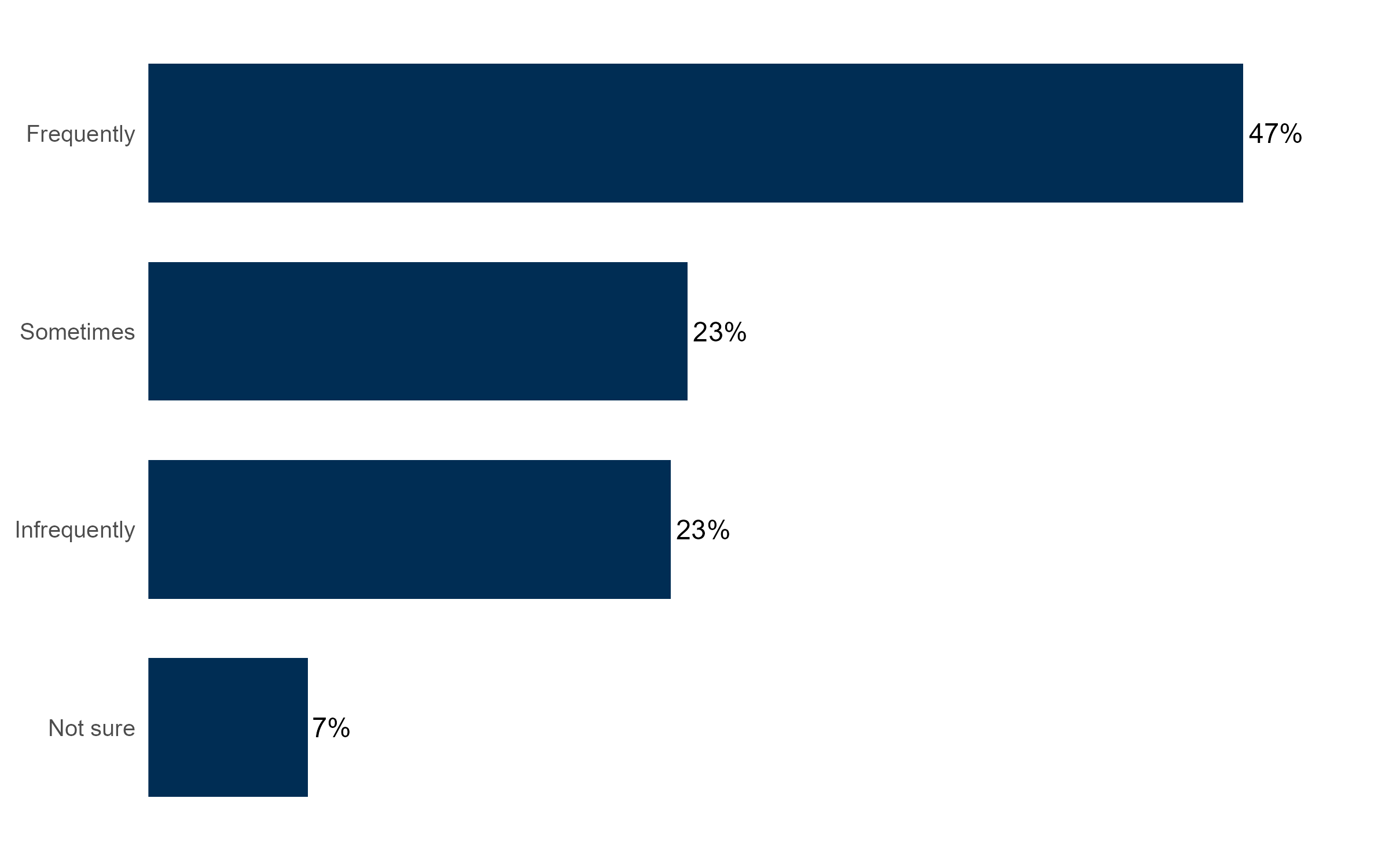
Source Consumer Scotland circular economy polling: How often, if at all, are you likely to bring your own reusable cup to purchase a takeaway drink? Base: All respondents who purchase takeaway drinks (weighted base = 680).
Research conducted by Zero Waste Scotland[49] has found that 63% of respondents believe previous similar measures such as the carrier bag charge has had a positive effect and 58% saying the same of the single-use plastics ban. In their survey, they find 60% of respondents said they would buy fewer drinks in single-use cups if these were charged for it and 74% said that a single-use cups charge would encourage them to use a reusable cup more.
This approach might be a better alternative to relying on recycling of these cups particularly since we find potential evidence for a perception versus reality gap for disposal of single-use cups. 49% of respondents say they frequently recycle single-use cups, but these cups cannot be easily recycled in domestic settings. This indicates many people believe they are recycling correctly, but in practice, when cups are placed in home recycling, these items often contaminate recycling streams. Increasing use of reusable cups for takeaway drinks should also limit the number of single-use cups that are incorrectly recycled.
We found age differences in intended behaviour. Younger adults predict they would be more likely to frequently bring a reusable cup, with 53% of those aged 25 to 34 saying they would always or very often bring their own cup, compared with 32% of those aged 75 and over. These differences suggest that younger, working-age adults may be more responsive to a charge in terms of adopting reusable alternatives.
There is also a significant difference by income, with respondents in the highest income group (£60,000 and over) more likely to say they would frequently bring a reusable cup (54%) compared with those earning between £20,000 and £39,999 (41%). By location, respondents living in rural areas are more likely than those in urban areas to say they would bring a reusable cup infrequently (27% compared with 20%).
Overall, the findings suggest that a single use cup charge may encourage a shift toward reusable alternatives for many consumers, particularly for those in the middle age brackets, while uptake seems lower among older groups and those in rural areas.
9. Key messages and recommendations for policymakers
Overview
This research examines the key factors that affect consumer willingness and ability to engage in specific circular economy measures such as repairing and recycling and how barriers to engagement differ across different consumer groups. Based on the findings of this research we make recommendations on how to tackle the barriers to repair and recycling that consumers in Scotland currently experience.
This report has highlighted the strong role that convenience plays in consumer ability and willingness to engage in circular economy measures.
Supporting consumers to understand the changes that are required of them and putting the right mechanisms in place to enable them to make these changes is critical to the development of a circular economy in Scotland. By actively addressing the key barriers to consumer willingness and ability to engage policymakers can maximise the reach and impact of circular measures.
Based on the findings of this research, we set out below a range of key actions and priorities that will be required to facilitate increased consumer engagement in the transition to a circular economy. These actions are focused on six key themes:
- Moving action further up the waste hierarchy, beyond well-established behaviours and focusing on more challenging materials
- Strengthening consumer knowledge and understanding and engagement through targeted information provision and communication
- Delivering equitable access to recycling and repair facilities for consumers across Scotland, taking into account demographic considerations
- Providing targeted support for small businesses to increase the availability and improve viability of repair facilities
- Delivering a deposit return scheme that is clear, convenient and accessible for consumers
- Ensuring that any charge on single-use cups fully considers the impact on consumers, including those in vulnerable circumstances
Moving action further up the waste hierarchy
This research shows that recycling is the dominant consumer behaviour for all material types and is particularly common for items that are straightforward to recycle at home.
Policy measures must now focus on moving beyond well-established recycling behaviours, towards supporting increased levels of reuse and repair, enabling consumers to move their actions further up the waste hierarchy. The design of these policy measures must address common barriers to repair, reuse and recycling, making it as straightforward as possible for consumers to understand their role and make sustained changes to behaviour.
Consumer Scotland’s Climate Change policymakers toolkit identified Cost, Convenience, Clarity, and Confidence (the 4 Cs) as the key issues when considering the role of consumers in the transition to a more sustainable future.[50] Our research here identifies cost and convenience as particularly key to increase consumer engagement with the transition to a circular economy. We recommend that policymakers should utilise Consumer Scotland’s policymakers toolkit to assess the impact of circular economy policies on consumers, including those in vulnerable circumstances, and ensure that the barriers the consumer participation are fully considered and addressed.
Supporting consumer understanding and engagement
Our research found that not knowing where or how to recycle or repair items is a key barriers to consumer engagement. Consumers must be able to understand what can be repaired and recycled and where they are able to do this if engagement with these behaviours is to increase.
The Scottish Government should work with stakeholders including Circular Communities Scotland to increase consumer awareness of how and where to recycle materials such as small electricals and clothing and textiles
We recommend that the Scottish Government delivers a targeted consumer behaviour change campaign by mid 2027, focussing on materials which are currently more likely to be incorrectly disposed of via landfill. This campaign should focus on the provision of clear information about:
- the benefits of repair and reuse practices, such as saving money and supporting the local economy
- the availability of repair, reuse and recycling facilities for these items
- correct disposal options for items such as single-use cups, textiles and electrical items
This will help to avoid contamination of recycling streams or items being unnecessarily landfilled.
The Scottish Government should also consider whether there are actions which would improve consumer confidence in reuse and repair practices. Our research suggests that a lack of confidence in the quality of repairs is currently affecting consumer participation in repair and reuse practices.
Repair businesses must provide clear information about products and services and the develop effective redress measures for where things go wrong, if they are to compete with more traditional linear business models.
Consumer Scotland recommends that the Scottish Government should put in place measures to:
encourage repair businesses to provide consumers with a warranty on repaired items to encourage consumer confidence in and use of these services
raise consumer awareness of their rights across these new and emerging markets
Ensuring equitable access to recycling and repair facilities
Our research found that access to suitable local facilities is a key barrier to consumers recycling. A lack, or perceived lack, of suitable local service or facility is the most frequently reported barrier to recycling most materials covered by this research. In order to facilitate moving action further up the waste hierarchy, all consumers across Scotland should have access to repair, reuse and recycling options that work for them.
Measures must take into account the range of different geographical and community needs that local authorities and residents across Scotland encounter. For example, there will be different considerations and needs for an urban area with tenement or flatted properties compared to a sparsely populated rural area.
The Scottish Government should act to ensure that repair, reuse and recycling facilities are accessible and available for consumers across Scotland. We recommend that the Scottish Government works with partners such as local authorities, consumer bodies and Zero Waste Scotland to:
- Assess where repair and recycling facilities are currently unavailable or sparsely provided and consider allocating local or national funding streams to support the startup or scaling up of services to fill these gaps
- Promote available repair and recycling facilities, through targeted information or public awareness campaigns to raise awareness as part of wider net zero communications work. This campaign should include a focus on actions that will help to support these behaviours becoming ingrained with young people.
- Identify a range of measures to increase availability of recycling infrastructure so support increased consumer engagement. This could include expanding materials collected at kerbside and increasing provision of hubs at local recycling facilities or in community centres such as libraries or other municipal buildings
- Develop and implement the upcoming Code of Practice on household recycling by the end of 2026 in a way that meets the diverse needs of consumers in a range of circumstances, such as those living in flats and those in rural areas
- Address the disparities in food waste collection through:
- The review of the rural food waste exemption during 2026, with revised collections in place by the end of 2027
- The intervention plan on household food waste reduction behaviour change, detailed in the Circular Economy and Waste Routemap, which should be delivered by the end of 2027
When considering solutions for remote and rural areas, the Scottish Government must take into account the significant transportation and infrastructure challenges faced by rural and island communities in relation to waste collection and processing. It will be important to ensure that the carbon impact of collecting and processing materials is proportionate to the savings achieved.
Increasing availability and improving viability of repair facilities
Successfully increasing the number, and geographic coverage, of repair businesses will be key to supporting consumer take-up of these practices. Action should focus on effectively tackling the barriers that exist to consumer participation, including issues around the convenience and cost-effectiveness of repairs.
We recommend that the Scottish Government works with stakeholders such as Circular Communities Scotland to provide targeted small business development support to repair businesses. Supporting these businesses to provide consumers with a service that is accessible, reliable and good value for money will be crucial in encouraging consumers to use these services. This targeted support should include facilitating peer learning, financial support to scale up and dedicated business development and marketing advice for such businesses.
Policy proposals should also consider how consumers can be supported to develop repair skills, for example by supporting businesses to run workshops to develop consumer repair skills and confidence or to consider developing resources for use in schools and other community settings. The Scottish Government should work with partners, including Zero Waste Scotland and Circular Communities Scotland, to develop resources to support increasing repair skills.
Implementing a successful deposit return scheme
The final deposit return scheme must be designed in a way that addresses consumer priorities and barriers to take-up. This research found that scenarios that minimise additional effort, such as close proximity of return points or the ability to return containers as part of regular trips, are associated with higher stated engagement, while time, effort and uncertainty are the main deterrents.
We recommend that the design of the DRS scheme maintains a clear focus on making access as convenient as possible and ensuring that and the information surrounding its use is clear and consistent.
When implementing the scheme, including developing any exemptions and supporting communication materials, the Scottish Government must engage with Exchange for Change to ensure that it reflects the needs and priorities of consumers. To maximise take-up the scheme must incorporate:
- Ease and speed of return of materials, including addressing opening hours and wait times
- The ability to integrate returning containers into everyday consumer routines such as shopping and commuting
- Certainty for consumers about scheme rules, including provision of clear and consistent messaging
Taking action on single-use cups
This research found that the introduction of a 20p charge for a single-use cup is likely to have some impact on consumer purchasing behaviours, with around 45% of consumers in Scotland expecting to reduce or stop purchasing drinks as a result of the charge. Where environmental charges are implemented for problematic single-use products, it is important to ensure that the impact on consumers is fully considered.
If the Scottish Government proceeds with implementing a charge on single-use cups, we recommend that the impact on consumers in vulnerable circumstances is fully considered through robust stakeholder engagement and impact assessments, to ensure that those who are least able to pay are not disproportionately impacted. Any charge introduced should be trialled before being fully rolled out across Scotland in order to gain insight on consumer experiences and barriers. This trialling should include both urban and rural elements and should include a focus on the experiences of consumers in vulnerable circumstances, particularly disabled consumers and those on low incomes.
Any policy measures implemented must ensure consumer awareness about appropriate disposal of cups and support businesses to understand the requirements on them, giving them time to adjust.
This research has identified that there is potential consumer misunderstanding around the current ability for single-use cups to be appropriately recycled. We recommend that the Scottish Government works with industry and other partners to provide consumers, and businesses, with clear and consistent messaging about the appropriate disposal of single-use cups.
It is important to acknowledge that a charge on single-use cups would form only one part of the solution. The Scottish Government should also use other methods to take action on single-use cups, including:
Working with manufacturers to drive improvements in materials used for single-use cups
Facilitating greater consumer awareness about the impact of single-use cups and reduction in consumption through sustained behaviour change campaigns
Supporting further development and trials of cup hire and take back schemes at both a local and national to reduce the use of single-use cups.
10. Endnotes
[1] Consumer Scotland (2024) Consumer perceptions of and engagement with the transition to net zero. Available at: https://consumer.scot/publications/consumer-perceptions-of-and-engagement-with-the-transition-to-net-zero-html/
[2] Consumer Scotland (2025) A consumer framework for addressing climate change. Available at: https://consumer.scot/publications/a-consumer-framework-for-addressing-climate-change-toolkit-for-policymakers-html/
[3] Circle Economy (2022) The Circularity Gap Report – Scotland. Available at: https://assets-global.website-files.com/5e185aa4d27bcf348400ed82/6399cc007f63ad41fae0b240_CGR%20Scotland.pdf
[4] Circle Economy (2022) The Circularity Gap Report – Scotland. Available at: https://assets-global.website-files.com/5e185aa4d27bcf348400ed82/6399cc007f63ad41fae0b240_CGR%20Scotland.pdf
[5] Zero Waste Scotland (no date) Circular economy. Available at: https://www.zerowastescotland.org.uk/topics/circular-economy
[6] Zero Waste Scotland - Circular Economy Bill: Continuing Scotland’s sustainable journey available at: https://assets.website-files.com/5e185aa4d27bcf348400ed82/6399cc007f63ad41fae0b240_CGR%20Scotland.pdf[7] Zero Waste Scotland (no date) Circular economy. Available at: https://www.zerowastescotland.org.uk/topics/circular-economy
[8] Consumer Scotland (2024) Consumers and the transition to a circular economy. Available at: https://consumer.scot/publications/consumers-and-the-transition-to-a-circular-economy/
[9] Zero Waste Scotland (2025) Scottish Waste Environmental Footprint Tool Available at: https://cdn.zerowastescotland.org.uk/managed-downloads/mf-oi6i6jlf-1758809089d
[10] Zero Waste Scotland (2025) Product Stewardship Considerations for Textiles in Scotland. Available at: https://www.zerowastescotland.org.uk/resources/product-stewardship-considerations-textiles-scotland
[11] Zero Waste Scotland (2024) Second Hand Shopping Survey. Available at: https://cdn.zerowastescotland.org.uk/managed-downloads/mf-tmcvll4u-1749133239d
[12] WRAP (2025) Displacement Rates Untangled. Available at: https://www.wrap.ngo/resources/report/displacement-rates-untangled
[13] Wrap (2024) UK Textiles Pact annual progress report 23-24. Available at: https://www.wrap.ngo/sites/default/files/2024-11/textiles-2030-annual-progress-report-23-24.pdf
[14] Zero Waste Scotland (2025) Understanding values and belief changes in relation to food waste behaviours. Available at: https://www.zerowastescotland.org.uk/resources/understanding-values-and-belief-changes-relation-food-waste-behaviours
[15] Zero Waste Scotland (2026) Trialling Recycling Interventions to Increase Food Waste Collections. Available at: https://www.zerowastescotland.org.uk/resources/trialling-recycling-interventions-increase-food-waste-collections
[16] WRAP (2022) A Deep Dive into Household Food Waste in the UK, 2022: Reasons, Patterns, and Opportunities for Change. Available at: https://www.wrap.ngo/sites/default/files/2025-07/WRAP-Deep-Dive-into-Household-Food-Waste-in-the-UK-2022.pdf
[17] Expert Panel on Environmental Charging and Other Measures (2019) Rapid Review of Charging for Disposable Coffee Cups and other Waste Minimisation Measure. Available at: https://orca.cardiff.ac.uk/id/eprint/124422/1/rapid-review-charging-disposable-coffee-cups-waste-minimisation-measure-full-report.pdf
[18] Zero Waste Scotland (2024) Single-use survey – what did Scotland say? Available at: https://www.zerowastescotland.org.uk/resources/single-use-survey-what-did-scotland-say
[19] Reloop (2024) Public opinion research on the Deposit Return Scheme. Available at: https://www.reloopplatform.org/wp-content/uploads/2024/05/Public-opinion-research-on-DRS-May24.pdf
[20] Zero Waste Scotland (2025) Introduction of New Materials to Kerbside Waste Collections report. Available at: https://www.zerowastescotland.org.uk/resources/introduction-new-materials-kerbside-waste-collections-report
[21] Zero Waste Scotland (2026) Recycling Services Report (a Residents' Perspective). Available at: https://www.zerowastescotland.org.uk/resources/recycling-services-report-residents-perspective
[22] Scottish Government (2024) Scotland’s Circular Economy and Waste Route Map to 2030 Consultation. Available at: https://www.gov.scot/binaries/content/documents/govscot/publications/consultation-paper/2024/01/scotlands-circular-economy-waste-route-map-2030-consultation/documents/scotlands-circular-economy-waste-route-map-2030-consultation/scotlands-circular-economy-waste-route-map-2030-consultation/govscot%3Adocument/scotlands-circular-economy-waste-route-map-2030-consultation.pdf
[23] Circular Economy (Scotland) Act 2024. Available at: https://www.legislation.gov.uk/asp/2024/13
[24] The Scottish Government (2025) Changes to waste management services. Available at: https://consult.gov.scot/environment-forestry/changes-to-waste-management-services/
[25] Scottish Grocers Federation (2025) Charging for Single-Use Disposable Beverage Cups: Analysis of Consultation Responses. Available at: https://www.sgfscot.co.uk/bulletins/charging-for-single-use-disposable-beverage-cups-analysis-of-consultation-responses
[26] Scottish Government (2025) Draft Circular Economy Strategy: consultation. Available at: https://www.gov.scot/publications/draft-circular-economy-strategy-scotland/
[27] Scottish Government (2025) Draft Climate Change Plan. Available at: https://www.gov.scot/publications/scotlands-climate-change-plan-2026-2040
[28] Scottish Government (2024) Scotland's circular economy and waste route map to 2030. Available at: https://www.gov.scot/publications/scotlands-circular-economy-waste-route-map-2030/
[29] Consumer Scotland (2024) Consumer perceptions of and engagement with the transition to net zero. Available at: https://consumer.scot/publications/consumer-perceptions-of-and-engagement-with-the-transition-to-net-zero/
[30]Department for Environment, Food and Rural Affairs (2025). Available at: https://www.gov.uk/government/statistics/uk-waste-data/uk-statistics-on-waste
[31]Consumer Scotland (2024) Consumer perceptions of and engagement with the transition to net zero. Available at: https://consumer.scot/publications/consumer-perceptions-of-and-engagement-with-the-transition-to-net-zero/
[32] Scottish Government (2024) Scotland’s Circular Economy and Waste Route Map to 2030. Available at: https://www.gov.scot/binaries/content/documents/govscot/publications/strategy-plan/2024/12/scotlands-circular-economy-waste-route-map-2030/documents/scotlands-circular-economy-waste-route-map-2030/scotlands-circular-economy-waste-route-map-2030/govscot%3Adocument/scotlands-circular-economy-waste-route-map-2030.pdf
[33] Scottish Environment Protection Agency (2024). Available at: https://data.gov.scot/sepa/waste/household.html
[34] Zero Waste Scotland (2023) The composition of household waste at the kerbside in 2021-23. Available at: https://cdn.zerowastescotland.org.uk/managed-downloads/mf-ejmegftx-1696500166d
[35] Zero Waste Scotland (2025) Product Stewardship for Textiles in Scotland: A policy discussion. Available at: https://cdn.zerowastescotland.org.uk/managed-downloads/mf-yaichy1i-1764148428d
[36] Zero Waste Scotland (2024) Reducing Food Waste at Home. Available at: https://www.zerowastescotland.org.uk/resources/bitesize-food-waste-course
[37] Scotland’s Census (2022) Scotland’s Census – Housing. Available at: https://www.scotlandscensus.gov.uk/2022-reports/scotland-s-census-2022-housing/#section2
[38] Consumer Scotland (2024) Consumer perceptions of and engagement with the transition to net zero. Available at: https://consumer.scot/publications/consumer-perceptions-of-and-engagement-with-the-transition-to-net-zero/
[39] Zero Waste Scotland (2026) Recycling Services Report (a Residents' Perspective). Available at: https://www.zerowastescotland.org.uk/resources/recycling-services-report-residents-perspective
[40] Zero Waste Scotland (2025) Household Food Waste in Scotland 2021-22. Available at: https://www.zerowastescotland.org.uk/resources/household-food-waste-scotland-2021-22
[41] Zero Waste Scotland (2023) Household Waste Composition Analysis. Available at: https://www.zerowastescotland.org.uk/resources/household-waste-composition-analysis
[42] Zero Waste Scotland (2023) RFS Contamination Toolkit. Available at: https://www.zerowastescotland.org.uk/resources/rfs-contamination-toolkit
[43] Zero Waste Scotland (2023) The Circularity Living Tracker. Available at: https://www.zerowastescotland.org.uk/circularity-living-tracker
[44] Scottish Household Survey (2024). Available at: https://www.gov.scot/publications/households-in-scotland-by-housing-tenure-scottish-household-survey-2024/pages/characteristics-of-households-by-tenure/
[45] Circular Communities Scotland (2024) Share and Repair Network Impact report. Available at: https://circularcommunities.scot/share-repair-network-impact-report/
[46] Journal of Cleaner Production (2023). Available at: https://www.sciencedirect.com/science/article/pii/S0959652623038635
[47] Understanding Society (2023). Available at: https://datacatalogue.ukdataservice.ac.uk/studies/study/9471#details
[48] Zero Waste Scotland (2026) Recycling Services Report (a Residents' Perspective). Available at: https://www.zerowastescotland.org.uk/resources/recycling-services-report-residents-perspective
[49] Zero Waste Scotland (2024) Single-use survey – what did Scotland say? Available at: https://www.zerowastescotland.org.uk/resources/single-use-survey-what-did-scotland-say
[50] Consumer Scotland (2024) Consumer perceptions of and engagement with the transition to net zero. Available at: https://consumer.scot/publications/consumer-perceptions-of-and-engagement-with-the-transition-to-net-zero/