1. Introduction
Building consumer confidence in a complex world
Consumers lead busy lives. They must navigate a myriad of complex markets, from financial services to telecoms, from purchasing a car to renting a home, or maintaining a home that they own. With each new transaction or contract people are acting as consumers – even if they don’t necessarily think in those terms.
The widespread complexity of many markets is often being accentuated by new technologies. These can support the development of new products and services, and underpin the development of new platforms on which those products are sold.
The opportunity this creates to be able to access a wider range of goods and services more flexibly, is positive for consumers. However, the growing intricacy of markets, combined with a complex patchwork of consumer rights and redress across different markets, can dent consumer confidence.
Weakened consumer confidence has been exacerbated by a range of high-profile and widespread cases of consumer detriment – from government backed insulation schemes to finance products in a regulated market – combined with ongoing weakness in household spending power following the cost-of-living crisis.
Weakness of consumer confidence is bad for consumers. It can also be damaging to the economy more broadly.
And whilst enhanced choice is a positive, affordability challenges, geographic barriers and other socio-demographic characteristics can create inequalities in access to a wide range of essential goods and services.
This sets a challenging agenda for policy makers: supporting informed choices, addressing inequalities of access, and empowering consumers to participate in markets. By ensuring that the economy works fairly and inclusively for consumers, consumers can help underpin a healthy, robust economy.
Our Forward Work Programme sets out the key activities that Consumer Scotland intends to focus on during 2026-2027 to improve outcomes for consumers in Scotland.
For each of our five statutory outcomes we set out the issues that matter to consumers, how we will use our functions to tackle these issues, and the impact that our work will deliver.
The role of Consumer Scotland
Consumer Scotland is the statutory, independent body for consumers in Scotland.
Through our work we aim to improve outcomes for current and future consumers in Scotland, driven by our ambition that every consumer in Scotland is able to participate in a fair and sustainable economy, confident their needs and aspirations will be met.
Our work is focused on our five statutory outcomes:
- Reducing consumer harm
- Increasing consumer confidence in dealing with businesses that supply goods and services
- Increasing the extent to which consumer matters are taken into account by public authorities
- Promoting the sustainable consumption of natural resources and other sustainable practices
- Advancing inclusion, fairness, prosperity and other aspects of wellbeing in Scotland
We deliver our general function of consumer advocacy and advice to achieve these outcomes, which we advance through our statutory functions.
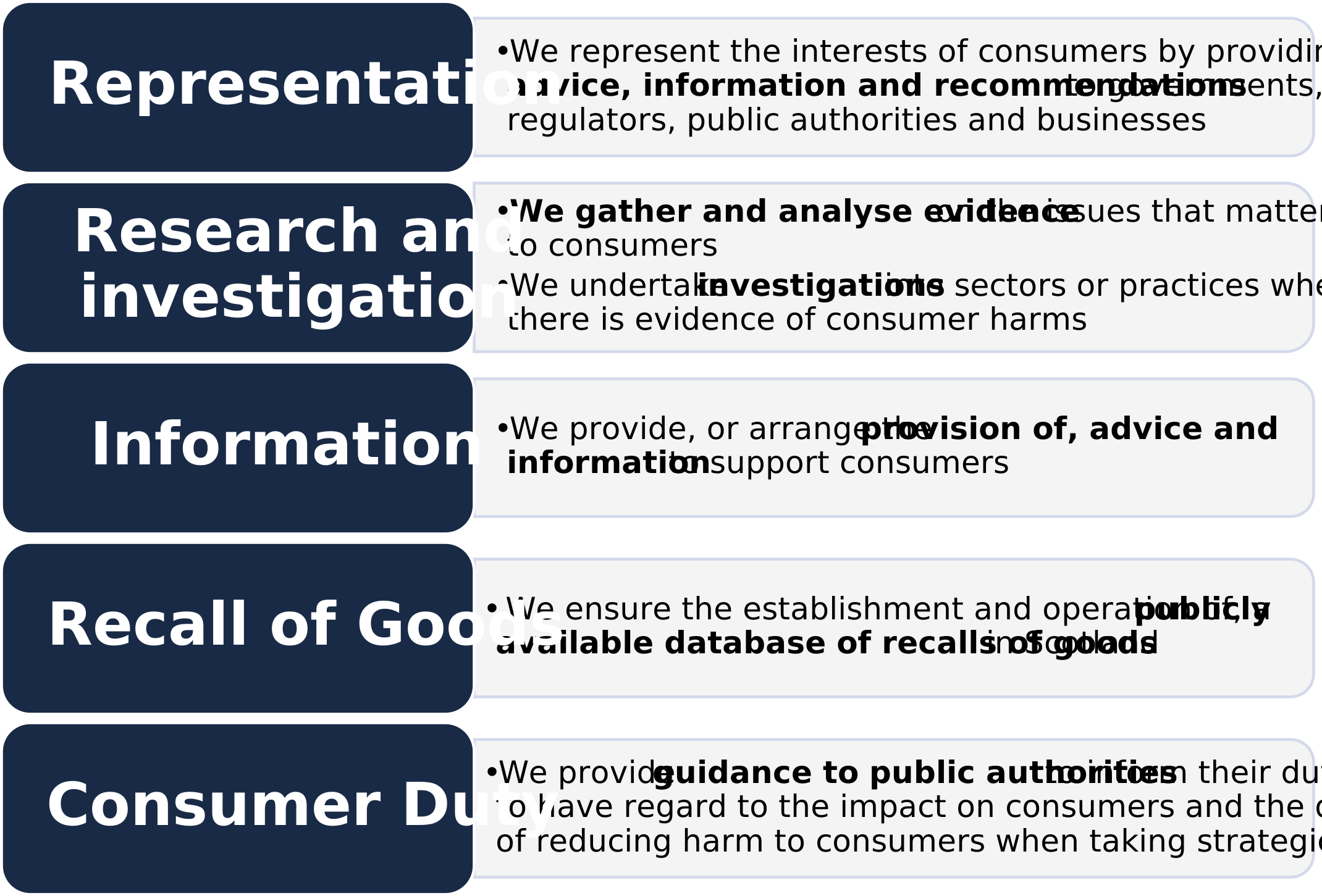
These function are:
- Representation: We represent the interests of consumers by providing advice, information and recommendations to governments, regulators, public authorities and businesses
- Reseach and investigation: We gather and analyse evidence on the issues that matter to consumers. We undertake investigations into sectors or practices where there is evidence of consumer harms
- Information: We provide, or arrange the provision of, advice and information to support consumers
- Recall of goods: We ensure the establishment and operation of, a publicly available database of recalls of goods in Scotland
- The Consumer Duty: We provide guidance to public authorities to inform their duty to have regard to the impact on consumers and the desirability of reducing harm to consumers when taking strategic decisions
In delivering these functions we:
Tackle the issues that matter for consumers across Scotland’s economy. We are the levy-funded advocacy body for the electricity, gas, heat network, post and water sectors in Scotland. We also deliver work across a wide range of other consumer markets, including housing, telecommunications, finance and transport.
Play a key leadership role in Scotland’s consumer landscape and we work in collaboration and partnership with organisations including regulators, advice agencies, enforcement bodies and other public and third sector consumer organisations
Have a specific focus on our three strategic objectives, as set out in our Strategic Plan for 2023-2027: improving the affordability of goods and services; taking action that supports consumers to mitigate and adapt to the effects of climate change; and addressing the issues that matter most to consumers in vulnerable circumstances
Are informed by the internationally recognised consumer principles, which set out what good consumer outcomes look like for any given market or service. These principles are: Access, Choice, Safety, Information, Fairness, Representation and Redress. We also consider an additional principle of Sustainability.
2. How we work
Leading the consumer landscape
As Scotland’s statutory consumer body, we provide a leadership role across Scotland’s consumer landscape. We do this by:
Working in partnership with key delivery bodies including Advice Direct Scotland, Citizens Advice Scotland, Trading Standards Scotland and the Society of Chief Officers of Trading Standards in Scotland, recognising the vital contribution and specific expertise that each organisation brings
Convening key collaboration networks which bring together advice agencies, enforcement bodies, regulators and others to share intelligence and expertise including:
- The Consumer Sector Chief Executives Leadership Group
- The Consumer Network for Scotland
- The Energy Consumers Network, which also serves as a Strategic Leadership Group of the Scottish Energy Advisory Board
- Promoting the principles of public service reform within the sector and by working closely with other public bodies to maximise the efficiency of our operations
Evidence-led advocacy
Developing and delivering robust, high quality evidence on consumer matters underpins our work as Scotland’s statutory consumer body. We do this through:
- direct engagement with consumers to gather their views across a wide range of markets and services, using a range of qualitative and quantitative research methodologies
- scrutinising robust datasets from government, regulators and other public authorities, applying our analytical capacity to interpret this data from a uniquely consumer perspective
- analysing important evidence from our frontline delivery partners who work directly with consumers
- bringing together this evidence with our cross-market expertise of consumer priorities and our in-depth understanding of key consumer markets
- developing credible recommendations to deliver change for consumers
- representing the interests of consumers to parliament, public authorities, industry and other key stakeholders as a means of influencing strategic decision-making
Investigations
Our investigations function is a central part of our work to identify and advocate for improvements that are required in different markets and services to protect consumers and advance their interests.
In Q4 2025-2026, we enhanced the capacity of our investigations function to further develop our investigation pipeline, which will inform our investigations delivery in 2026-2027.
Advice and Information for consumers
We work with our third sector delivery partners Advice Direct Scotland, Citizens Advice and Citizens Advice Scotland to secure the provision of advice, information and support for consumers in Scotland and ensure consumers have the help they need to deal with the problems they are experiencing.
We are focused on ensuring a simple consumer journey and we are working closely with our partners in the sector to help bring greater coherence and effectiveness in line with the Scottish Government’s public service reform agenda.
We are working closely with key consumer landscape partners to review the provision of consumer information in Scotland and identify gaps that require to be filled. During 2026-2027 we will also consider opportunities emerging from our advocacy work on behalf of consumers to develop new information materials, where these are required.
An overview of our strategic funding partnerships to support the provision of information and advice in 2026-2027 is provided in Chapter 5.
Prevention
Through partnership working, we will continue to support our delivery partners with their prevention work which is vital in ensuring consumers avoid experiencing harm. This includes the scam prevention work both Consumer Scotland and our partners are delivering including:
- working in partnership with Young Scot to gather new evidence on the experiences and concerns of young people in Scotland about scams
- representing the safety rights of consumers through membership of groups such as the Scottish Anti Illicit Trade working group and digital sector group
- focusing on AI-based fraud patterns, cryptocurrency scams, fraud affecting neurodivergent and older consumers
- information campaigns on doorstep and social media scams
3. Our 2026-2027 priorities
Our consumer advocacy and advice in 2026-2027 will seek to secure improvements for consumers in Scotland across our five outcomes. Table 1 below provides a summary of our priorities and how we will address them. More detailed ‘theories of change’ to support these priorities are provided in Chapter 4, with details of our strategic partnerships to support information and advice provision set out in Chapter 5.
Table 1
Summary of Consumer Scotland 2026-2027 Priorities
|
Outcome |
Our Priorities |
|---|---|
|
Reducing consumer harm |
Investigating Scotland’s used car market |
|
Tackling consumer detriment in home improvements |
|
|
Supporting water consumers in vulnerable circumstances |
|
|
Preventing and dealing with water debt |
|
|
Promoting more affordable water bills |
|
|
Advocating for more affordable energy bills |
|
|
Promoting an effective system for the recall of goods |
|
|
Funding vital consumer advice services delivered by our key partners |
|
|
Increasing consumer confidence |
Representing consumer interests in financial services |
|
Improving consumer outcomes in the non-household water market |
|
|
Improving consumer experiences of Third Party Intermediaries |
|
|
A universal postal service that consumers have confidence in |
|
|
Improving outcomes for tenants |
|
|
Improving information and redress for postal consumers |
|
|
Improving the consideration of consumer matters by public bodies |
Delivering Scotland’s Consumer Welfare Report |
|
Advancing the Consumer Duty |
|
|
Putting water consumers at the heart of the Strategic Review of Water Charges for 2027-2033 |
|
|
Promoting sustainable consumption |
A water system that responds to climate change |
|
A circular economy that works for consumers |
|
|
Heat networks delivering for consumers |
|
|
Tackling barriers to the take-up of Electric Vehicles |
|
|
Access to low carbon technologies and advancing energy efficiency |
|
|
Advancing inclusion, fairness, prosperity and wellbeing |
Fast, affordable and reliable telecommunications |
|
Reduced electricity distribution charges |
|
|
Accelerating the roll out of smart meters |
|
|
A future energy retail market that works for consumers in Scotland |
|
|
Fair and equitable postal services |
|
|
Strengthening evidence on issues that matter for water consumers |
4. Delivering our priorities: Improving consumer outcomes
Consumer Scotland’s Performance Framework includes our Strategic Theory of Change, which describes our approach to delivering our priorities to improve consumer outcomes.
Based on an abbreviated version of our strategic model, we set out here the theory of change that underpins each of the priorities listed in Table 1 and describe:
- The problem or opportunity we are seeking to address
- What we will do and who we will work with
- What we want to be done differently as a result
- The impact this would have for consumers
Reducing consumer harm
Investigating Scotland’s used car market
The problem or opportunity we’re seeking to address
The used car sector is a major source of consumer complaints in Scotland, with ongoing concerns about vehicle quality, misrepresentation, complex liability between traders and finance providers, and unclear routes to redress. As buying becomes more digital and remote, it becomes harder for consumers to choose vehicles with confidence, navigate finance and know who is accountable.
What we are going to do and who we’ll work with
We will draw on three core evidence sources: Consumer research (quantitative and qualitative), analysis of national complaints data with illustrative case studies and engagement with key stakeholders across industry, enforcement, advice and redress. We will publish findings and recommendations and work with partners to support practical improvements.
What do we want to be done differently as a result
Clearer, more consistent standards across enforcement and advice - with traders, platforms and finance providers improving transparency and redress routes, reducing risk and increasing fairness.
The impact this would make for consumers
Consumers face less detriment through better-informed decision making when faced with poor-quality or misdescribed vehicles - and can access clearer, faster redress. The market becomes more transparent, trustworthy and easier to navigate, improving confidence and wellbeing.
Tackling consumer detriment in home improvements
The problem or opportunity we’re seeking to address
Evidence suggests that consumers in Scotland experience high levels of detriment when purchasing home improvement services. This includes works such as kitchen and bathroom fitting, roofing, and building works. Consumers can experience high levels of detriment as a result of poor quality services and it is not always clear how they can obtain a resolution when they are dissatisfied.
What we are going to do and who we’ll work with
We will commission qualitative research exploring the issues faced by consumers who have experienced issues following making purchases in this sector. We will publish our key findings and recommendations, and use them to advocate for changes that will improve the outcomes for consumers purchasing services in this sector.
What do we want to be done differently as a result
Businesses providing home improvement services will operate in a reliable, fair, and transparent manner, guided by high standards and good practice. Consumers will have a better understanding of the steps they can take to inform their purchase decisions and will understand what steps they may be able to take to resolve issues post purchase, decreasing their risk of detriment.
The impact this would make for consumers
Consumers can make better informed purchase decisions, leading to more services being carried out in a reliable and effective manner. Where possible, consumers will know how to access clear resolution pathways if things go wrong.
Supporting water consumers in vulnerable circumstances
The problem or opportunity we’re seeking to address
A priority services register (PSR) identifies utilities consumers who would benefit from additional support for a variety of identified characteristics. This can be particularly important during emergencies or interruptions in service.
Scottish Water currently has 28,000 customers registered on its PSR and delivers a range of services to support vulnerable consumers. Scottish Water is planning to invest in growing its PSR during the next six years. In doing so, there is opportunity to learn from the experience of PSRs across other utilities in the UK, some of which have a significantly higher number of registered consumers.
What we are going to do and who we’ll work with
We will analyse the approaches taken across UK utility sectors, including energy retail and network companies, telecommunications providers and water companies, to provide support to vulnerable consumers, including the support offered to consumers registered on PSRs. Our analysis will identify relevant recommendations for learning for the water sector in Scotland. We will work with Scottish Water to identify opportunities for increased collaboration across utilities on data sharing and accessibility to make PSR registration simpler for consumers. We will also engage with Scottish Water on its work to systematise PSR support for consumers during operational incidents.
What do we want to be done differently as a result
Enhanced understanding of what works in the design and delivery of targeted support to vulnerable consumers and the consumer benefits this achieves. Increase in the number of consumers registered on Scottish Water’s PSR register and/or in the range of support provided to consumers. Further development of the support provided to vulnerable water consumers in Scotland more broadly, informed by evidence from across UK utilities markets. The project contributes towards the Water Sector Vision commitment to help those who need it most.
The impact this would make for consumers
An enhanced PSR would provide more water consumers in Scotland with access to emergency support, support with specific communication needs, enhanced safety provisions, more accessible information and additional information about planned service interruptions.
Preventing and dealing with water debt
The problem or opportunity we’re seeking to address
Previous research shows 1 in 5 Scottish consumers face water and sewerage debt, driven by unclear billing and partial discounts for low-income households. Charges are collected via Council Tax by local authorities, not Scottish Water, leading to inconsistent debt recovery practices. Current reductions include Council Tax Reduction, single occupancy, and exemptions. Scottish Water works with local authorities to support customers access information on water bills. However, where consumers are not aware of their liabilities this can exacerbate debt problems.
What we are going to do and who we’ll work with
In 2025-2026 Consumer Scotland is delivering new qualitative research on consumer experiences of water debt in Scotland and we are engaging with Scottish Water to analyse updated data on water debt across local authorities. In 2026-2027 we will use the insights from the research and analysis to propose recommendations for change. We will work with Scottish Water and local authorities to identify opportunities for additional actions that can deliver improved outcomes for consumers.
What we want to be done differently as a result
Improved access to up-to-date data on household water and sewerage debt collected by local authorities. Clearer billing information for consumers, particularly for those exempt from Council Tax who may still have water charge liabilities. Improved debt recovery approaches which consider affordability impacts on low-income households. Strengthened collaboration between Scottish Water and local authorities to enhance consumer support. The project contributes towards the Water Sector Vision commitment to help those that need it most.
The impact this would make for consumers
A clearer understanding amongst consumers about how water charges are calculated and collected. A stronger preventative approach from public authorities to help stop consumers accruing water debt. More consumer-friendly debt recovery processes, reducing the stress and financial burden such processes can place on consumers.
Promoting affordable water bills
The problem or opportunity we’re seeking to address
More than 10% of households in Scotland (around 275,000 households) live in water poverty. Within this group, 120,000 households are in severe water poverty. Water charges are likely to rise significantly during the next decade. Action is needed to ensure these charges do not have a disproportionately harmful impact on low-income consumers, or push more consumers into water poverty.
What we are going to do and who we’ll work with
Consumer Scotland has published affordability forecasts to inform the Strategic Review of Charges (SRC 2027-33) process, which highlight the impact on the water poverty rate of the proposed charge increases during this period. In 2026-27 we will use our analysis to inform key final decision stages including the final ministerial objectives and principles of charging and the final determination. We will also work with the key water sector stakeholders to support the development of a revised, longer-term model for water charging and affordability measures; and to identify opportunities to improve customer awareness of and take-up of existing affordability support.
What we want to be done differently as a result
Action to increase uptake of Council Tax Reduction amongst eligible consumers, to ensure consumers get the bill support they are entitled to An increase in the level of discount provided through the Water Charge Reduction Scheme Additional support for low income consumers not reached through existing financial relief A new, longer term charging and affordability model that delivers improved outcomes for consumers The project contributes to the Water Sector Vision commitment to keep services affordable
The impact this would make for consumers
The Strategic Review of Charges process for water for 2027 will deliver a final determination that protects low income consumers Current and future affordability support schemes enable all consumers in Scotland to afford their water bills, without placing undue pressure on other consumers
More affordable energy bills
The problem or opportunity we’re seeking to address
Many Scottish energy consumers struggle to meet their energy needs. Financial supports available to those in need have not kept pace with the level of energy bills. And higher consumption does not mean higher income, so households with unavoidably high energy use are not effectively protected under current arrangements. The system needs to be improved to ensure there is a better link between consumption and financial support, and to ensure that more households have access to devices and infrastructure that can help them to reduce their bills.
What we are going to do and who we’ll work with
We will produce analysis and recommendations for how struggling consumers can be better supported, whether via alterations to existing schemes, such as the Warm Home Discount, or creating new mechanisms such as a social tariff. We will also consider the effectiveness of interventions to tackle energy debt. We will advocate for action by the UK and Scottish governments, including work on data to make sure that financial supports are effectively targeted. We will analyse which forms of low carbon technologies represent the best value for money, and if appropriate advocate for enhanced funding to make sure more households can access these.
What we want to be done differently as a result
DESNZ and Scottish Government to take action to improve the financial supports available to energy consumers.
The impact this would make for consumers
A fair set of supports to ensure all consumers are able to meet a basic level of energy demand, without placing an undue burden on other consumers.
Promoting an effective system for the recall of goods
The problem or opportunity we’re seeking to address
When a safety problem with a consumer product is identified after it has entered the market, it is recalled by the manufacturer. The Office of Product Safety Standards (OPSS) operates a UK-wide public database and it is Consumer Scotland’s statutory duty to ensure consumers in Scotland have access to it. We also want consumers to know how to register purchased electrical goods and where to access advice when something goes wrong. Following our 2025 information campaign, we will continue to highlight the importance of registering goods and accessing the recall register.
What we are going to do and who we’ll work with
We will engage with parliamentarians and advice bodies to ensure consistent messaging around product safety and where to access advice and support. We will continue to work with OPSS on the design of the new recall database to ensure it reflects the needs of consumers in Scotland. Building on our information campaign and website developments, information on steps to take, and where to find advice and support, after purchasing a faulty good will be easier to access and understand for consumers.
What we want to be done differently as a result
Those who provide advice and support to consumers on product safety matters will do so in a more consistent manner with clear messaging on steps to take. The UK-wide refreshed recall database will be easily accessible for all consumers. Consumers will be more aware of the importance of registering electrical products after purchasing them.
The impact this would make for consumers
Consumers will have a stronger awareness of the recall of goods register along with what steps to take when they find themselves in receipt of a faulty good. The consumer journey in relation to product recall will be more straightforward, reducing complexity for consumers.
Increasing consumer confidence
Representing consumer interests in financial services
The problem or opportunity we’re seeking to address
Access to financial products and services is essential for consumers and enables their participation in other markets. When consumers are unable to access financial products and services they can experience detriment.
Consumers in Scotland face a range of challenges accessing financial products and services that meet their needs. These include embedded higher prices, Scotland’s unique geography and demographics and a post-covid debt and arrears legacy.
What we are going to do and who we’ll work with
We will work with other policy, regulatory, governmental and advice bodies to identify and advocate for the needs of consumers. We will participate in working groups and respond to consultations, highlighting the specific challenges consumers in Scotland face. We will work across a range of issues including financial advice, financial literacy and inclusion. We will also explore issues around access and choice, focussing on access to cash and banking facilities.
What do we want to be done differently as a result
The challenges faced by consumers in Scotland, including those in remote and rural areas, will be considered by policy makers at an early stage of policy development. This will allow potential detriment to be identified and mitigated during implementation of proposals.
UK stakeholders will have a greater awareness of the specific challenges faced by consumers in Scotland and will take action to support more equitable access to financial services.
The impact this would make for consumers
Consumers in Scotland, including those in vulnerable circumstances, have access to financial products and services that suit their needs and suit their circumstances. Consumers can confidently participate in the market and their use of financial services facilitates access to other markets.
Improving consumer outcomes in the non-household water market
The problem or opportunity we’re seeking to address
The water market in Scotland for non-domestic consumers is a competitive market, with businesses able to choose from a range of different water suppliers. The current arrangements have not always delivered effectively for business consumers, with difficulties including issues with customer service, access to redress and limited consumer switching. To tackle these issues Consumer Scotland supported the development of a first Code of Practice for providers in the non-household market. The Code launched in April 2025 and has been followed by a ‘Market Health Check’ validation process.
What we are going to do and who we’ll work with
In 2026–2027 Consumer Scotland will work with the Water Industry Commission for Scotland and other sector stakeholders to deliver new research with non-household customers to test customers’ experience of market offerings and whether the Code and concurrent market changes are delivering improved outcomes. We will examine where the Code is working well and the improvements it is delivering for consumers, as well as areas for further development and the practical actions required to achieve this.
What do we want to be done differently as a result
Improved customer service for business water customers. Consumers more informed on different suppliers and more willing and able to exercise choice, improving competition and driving up standards. New opportunities identified to further strengthen the Code of Practice and market health check process, bringing further benefits to consumers. The project contributes towards the Water Sector Vision commitment to enabling the economy to prosper.
The impact this would make for consumers
More affordable, reliable and customer-focused services for non-household water consumers in Scotland.
Improving consumer experiences of Third Party Intermediaries (TPIs)
The problem or opportunity we’re seeking to address
Third party intermediaries (TPIs) operating in the energy market are not currently directly regulated. This reduces consumer confidence when engaging with these services, and poor practices are more difficult to address. The UK government have signalled their intention to give Ofgem powers to regulate TPIs, and Consumer Scotland a role in advocating on behalf of consumers in Scotland who use TPIs.
What we are going to do and who we’ll work with
Building on our successful engagement to date with the proposals for regulating TPIs we will continue to improve the evidence base of key consumer issues in the TPI market, conducting literature reviews, engaging with relevant stakeholders, and commissioning research. We will use this analysis to articulate the problems that exist in the TPI market and produce evidence-based recommendations around which TPIs or aspects of their service should be considered high risk and therefore warranting tight regulation.
What do we want to be done differently as a result
Ofgem to be able to promptly introduce proportionate and effective regulation that reflects the interests of consumers in Scotland.
The impact this would make for consumers
Consumers can have greater confidence when using TPIs that the service is reliable, increasing their willingness to engage and securing a better deal for their energy.
A universal postal service that consumers have confidence in
The problem or opportunity we’re seeking to address
In 2025 Ofcom announced changes to the universal postal service, which will reduce the number of delivery days for second class post and reduce some quality of service targets. Consumer Scotland recommended a need for closer engagement with consumers and consumer groups to inform USO changes and Ofcom subsequently directed Royal Mail to establish a Customer Engagement Forum to provide insight, advice and challenge on the reform process. At the end of 2025 a further phase of USO reform commenced, focused on pricing and affordability.
What we are going to do and who we’ll work with
We will engage with Royal Mail, Ofcom and other consumer groups across the UK on the implementation of changes to the USO. We will do this through the Engagement Forum and through other bilateral and multilateral engagements. We will engage with Ofcom and Department for Business and Trade to represent Scottish consumers’ interests in any changes to USO pricing and affordability systems. We will engage stakeholders and parliamentarians across Scotland to gather intelligence on the effectiveness of USO reform. We will scope and design new quantitative research, which augments the existing evidence base to highlight Scottish consumers’ experiences of letters, parcels and post offices, including USO reform implementation.
What do we want to be done differently as a result
The implementation of changes to the USO is delivered openly and transparently, with a clear focus on improving consumer outcomes, including Royal Mail’s quality of service performance, and swift action to address any consumer harm identified through the change process.
Any further reform to the universal service obligation, including any changes relating to pricing structures, prioritises affordability, consumer confidence and access.
The impact this would make for consumers
Consumers have trust and confidence in the postal market.
Improving outcomes for tenants
The problem or opportunity we’re seeking to address
Private rented sector tenants in Scotland are often living with issues that landlords should legally resolve, often because a lack of clear information on what their rights are, where they can get advice, and how to navigate redress systems such as the Tribunal. Social rented sector tenants are facing similar issues to varying degrees. A lack of housing supply contributes to the power imbalance in the tenant-landlord relationship.
What we are going to do and who we’ll work with
Consumer Scotland will use our evidence to advocate for access to clearer information and advice, and effective implementation of the Housing Act 2025. We will explore opportunities to streamline access to advice and improve signposting. We will work with the Scottish Government and others to help improve redress processes. We will use the findings of our social tenant survey to advocate for improvements across tenures.
What do we want to be done differently as a result
It will be easier for tenants and landlords to understand their rights and responsibilities and they will have better access to advice and to redress options. The Tribunal and other redress services will become more transparent and accessible. Policymakers, regulators and landlords will ensure tenants in Scotland enjoy secure tenancies in safe homes.
The impact this would make for consumers
Tenants live in better conditions. Both tenants and landlords are better informed about rights and responsibilities, and tenants have more confidence to raise and seek resolutions to issues.
Improving information and redress for postal consumers
The problem or opportunity we’re seeking to address
Postal consumers receive information about postal products from a range of sources, including postal operators, physical retailers such as Post Offices and online retailers. A range of information can be useful to consumers when deciding what services to use, including issues of speed, reliability, price and environmental impact. Consumers need this information in clear, accessible ways at the right stage of the buying process. Consumers also need to have access to an effective, robust complaints process if things go wrong.
What we are going to do and who we’ll work with
We will deliver qualitative research with consumers on their experience of the postal complaints process. We will engage with consumer advice bodies across the UK in designing this work. Using this evidence, we will advocate for smooth consumer journeys and clearer information about complaints systems. We will advocate for clear and prominent notification for consumers about key purchasing information, including delivery speed. Building on our decarbonisation research we will advocate for improved consumer information on environmental impacts of postal choices.
What do we want to be done differently as a result
Consumers know how to make a complaint and find it easy and straightforward to do so. Operators will give more consideration and priority to green delivery options and consumers will be able to make informed choices about the environmental impact of deliveries. All postal products have clear and transparent information about delivery speed, reliability and price, reflecting any differences in service to different locations.
The impact this would make for consumers
Consumers have access to clear, trustworthy and relevant information about the postal market.
Improving consideration of consumer matters by public bodies
Scotland’s Consumer Welfare Report
The problem or opportunity we’re seeking to address
The Consumer Scotland Act requires Consumer Scotland to publish a Consumer Welfare Report (CWR) every three years, with the first report due in 2026. The report will set out how well the interests of consumers are being served in Scotland, and the nature and extent of any harm experienced by consumers in Scotland. We are required to lay the report before Parliament, and send a copy to Scottish Ministers.
What we are going to do and who we’ll work with
We will publish the CWR 2026 following the summer recess. The report will draw on a wide range of evidence to inform its response to the statutory questions. We will engage with a range of stakeholder organisations in the development of the report. The work will also involve original survey research with a representative sample of consumers in Scotland.
What do we want to be done differently as a result
Our report will aim to bring key consumer issues to the forefront of the minds of public authorities and policy-makers, drawing on good quality and robust evidence. The report will raise the profile of consumer issues, highlight the importance of good consumer outcomes, and shed light on some of the key issues currently being experienced. Ultimately, our work will enable informed public debate on the role of government, regulators, advice bodies and consumers themselves in improving consumer welfare.
The impact this would make for consumers
Consumers will benefit from a renewed focus on consumer welfare, which will increase the extent to which consumer matters are taken into account by policy makers in Scotland.
Advancing the Consumer Duty
The problem or opportunity we’re seeking to address
Action is needed to further embed a clear focus on consumer principles in public sector decision-making through application of the Consumer Duty.
We want the Consumer Duty to become an enabler for an effective reform of public services in Scotland, a reform that helps consumer confidence in public services grow.
What we are going to do and who we’ll work with
We will proportionately monitor where public bodies are applying the consumer duty to strategic decisions and highlight best practice. We will continue our engagement with public bodies highlighting how effective application of the consumer duty can help deliver consumer confidence, economic growth and value for public sector money. We will work with consumer bodies and community groups to highlight how the consumer duty can strengthen the link between the third sector, local communities and public sector decision-making.
What do we want to be done differently as a result
Public bodies in Scotland to have a clearer understanding of how the consumer principles apply to users of their services and how they can help deliver better value for money and economic growth. Public sector decision makers to deliver better informed policies with the needs of consumers and local communities fully considered. The third sector and local communities to be more empowered to actively participate in the public policy design process.
The impact this would make for consumers
The needs of consumers will be better reflected in public sector decision-making leading to less time raising issues or complaints.
Consumers will have more confidence in the public services they rely upon.
Water consumers at the heart of Strategic Review of Charges 2027–2033
The problem or opportunity we’re seeking to address
The water charges to be paid by consumers in Scotland from 2027 to 2033 are determined by a Strategic Review of Charges (SRC) process. The Review determines the funding Scottish Water requires to deliver services and invest in infrastructure in the context of climate change and ageing assets. It is vital that consumers have a central role in the decision process, given the significant impact of the Review on consumer bills and services.
Scottish Water has conducted and synthesised a significant body of consumer evidence to inform the development of its business plan, with assurance on this work provided by its Independent Customer Group. Consumer Scotland is delivering independent research to test whether Scottish Water’s business plan delivers on consumers’ priorities.
What we are going to do and who we’ll work with
We will engage directly with Scottish Water, WICS, Scottish Government and other key stakeholders to represent consumer interests during the draft and final determination process in 2026. We will deliver this through our input to the Water Industry Leaders’ Group, Strategic Review of Charges Group, bilateral engagements and our formal response to the draft Ministerial Objectives and Principles of Charging and the Draft Determination.
We will also deliver the third and final Phase of our robust deliberative research programme which will test consumers’ views of Scottish Water’s final Business Plan. We will continue to work closely with sector stakeholders through a multilateral research advisory group to inform the delivery of this work.
What do we want to be done differently as a result
The draft and final determinations to reflect consumer priorities for investment. The final Ministerial Objectives and Principles of Charging deliver key consumer priorities. The project contributes towards the Water Sector Vision commitment to serve all customers and communities in a way that is fair and equitable to present and future generations.
The impact this would make for consumers
Consumers get the right outcomes from the SRC process – key priorities are invested in, services are delivered efficiently and effectively by Scottish Water and water bills are fair and affordable for all consumers.
Promoting sustainable consumption
A water system that responds to climate change
The problem or opportunity we’re seeking to address
Tackling climate change is collective responsibility which requires a systems-based, cross-sectoral national approach. As part of this process, Scotland’s water sector needs to change to respond to climate change and protect water resources and wastewater infrastructure. New legislation is required to provide an up-to-date legal framework to manage these changes. Consumer Scotland’s research is informing the policy change process across water resource planning, surface and waste water management and drinking water quality and security.
What we are going to do and who we’ll work with
Building on our previous research and advocacy, we will continue to contribute to the Scottish Government’s policy development processes, providing evidence and analysis on the key priorities for consumers to inform the development of new legislation. We will consider consumer priorities in the development of more nature-based solutions to tackle water infrastructure challenges, and the potential these offer for wider improved outcomes for consumers.
What do we want to be done differently as a result
New legislation reflects the key role and priorities of water consumers in enabling the sector to respond the challenge of climate change.
An ongoing commitment from stakeholders to working in partnership with customers and communities to deliver change. The project contributes towards the Water Sector Vision commitment to maximise our contribution to Scotland achieving net zero emissions and adapting to climate change.
The impact this would make for consumers
Improvements in how issues such as water scarcity, water quality and flooding are tackled in Scotland. Consumers feel empowered to contribute to tackling climate change and support resilience in the water and waste water sector, with more support to reduce water wastage and dispose appropriately of household waste.
A circular economy that works for consumers
The problem or opportunity we’re seeking to address
Household low-carbon choices are expected to contribute to one-third of emissions reduction in 2040. However, while the majority of consumers in Scotland are concerned about climate change, many are unsure what they can do to help support sustainable consumption. Cost, convenience, clarity and confidence are key barriers to consumer behaviour change. Action is required to support consumers to change behaviours, reduce consumption and to increase the reuse and repair of goods.
What we are going to do and who we’ll work with
We will use our consumer climate change framework and evidence base to advocate for the needs and priorities of consumers with a particular focus on actions flowing from the Circular Economy Strategy and the Climate Change Plan. Working with stakeholders, we will advocate for a supportive, enabling environment for consumers. We will input to key policy and practice interventions, including the implementation of the Deposit Return Scheme and Product Stewardship Plan.
What do we want to be done differently as a result
Stakeholders, including the Scottish Government, to work in closer collaboration and to have a clearer understanding of the needs and priorities of consumers. The impact of measures, individually and collectively, on consumers to be better understood and considered. As a result, future legislation and policy to have a stronger focus on consumer needs and protections. Consideration of barriers to consumer action will happen earlier in the policy making process.
The impact this would make for consumers
Consumers will benefit from a more enabling environment, where it is more affordable, straightforward and safer to make sustainable choices, and where they can access the support needed. Policy makers will understand the consumer journey and barriers to change, better allowing potential consumer to be identified and addressed.
Heat networks delivering for consumers
The problem or opportunity we’re seeking to address
Currently, around 1.5% of Scotland’s heat is supplied from heat networks, but the Scottish Government has set an ambitious target to increase this to 8% by 2030. The sector has been regulated by Ofgem from early 2026. Regulation needs to address the issues impacting consumers in the sector.
Growth is expected within the sector to support the decarbonisation of Scotland’s buildings. Consumers need to be supported when asked to connect.
What we are going to do and who we’ll work with
We will continue to work with Ofgem to ensure that regulation delivers better outcomes for heat network consumers. We will continue to work with our third sector delivery partners to provide heat network consumers with access to advice and support. We will engage with Scottish Government policy teams to ensure that future heat network consumers are considered and protected in the transition to low carbon heating.
What do we want to be done differently as a result
Heat network regulation must deliver improved protections for consumers on areas such as fair pricing, reliability and quality of service. Consumers are engaged at the earliest point of local heat network development. Consumers must be incentivised and supported to connect to local heat networks, when available. The Scottish Government’s forthcoming Buildings (Heating and Energy Performance) and Heat Networks (Scotland) Bill is designed to enable and empower consumers to take action to decarbonise their homes.
The impact this would make for consumers
Heat networks deliver reliable, safe and affordable low carbon heating to a growing number of consumers across Scotland. Heat network consumers have access to appropriate advice, redress and support and are protected against detriment.
Tackling barriers to the take-up of Electric Vehicles
The problem or opportunity we’re seeking to address
Positively, EVs are being adopted increasingly widely by consumers. However, there are challenges around the inequality of experience between those who can and cannot charge at home. Home charging is both convenient and significantly cheaper than running a petrol or diesel vehicle. As far as practical, we want similar benefits to be available for those EV drivers who can’t charge at home.
What we are going to do and who we’ll work with
In 2025–2026 we are delivering new research to update our previous work in this area, with a central focus on better understanding the experiences and aspirations of current and potential EV drivers who cannot charge at home.
We will continue to work with stakeholders to take forward the recommendations flowing from the new research. We will also deliver a new stakeholder forum, in partnership with Transport Scotland, to provide a shared forum to improve the consumer experience.
What do we want to be done differently as a result
An appropriate range of solutions is available to support the development of charging facilities for those consumers enable to charge at home.
The impact this would make for consumers
Improved access to attractive and affordable charging facilities for all EV drivers, including those not able to charge at home, making it easier for more consumers in Scotland to access the Electric Vehicle market.
Improving access to low carbon technologies and advancing energy efficiency
The problem or opportunity we’re seeking to address
Lowering emissions from home heating is an essential part of Scotland’s transition to more sustainable consumption. These will have significant effects on consumers’ homes during the years ahead. It can be costly and complex to install low carbon technologies and doing so can be disruptive for consumers in their homes. It is vital that consumers have the advice, support, information, financial resources and protection that they need as they go through this process.
What we are going to do and who we’ll work with
We will build on previous work on this issue, including our investigation into Scotland’s green home heating market. We will continue to advocate for improved incentives, information and protections for consumers. We will do this though supporting work on issues such as EPC reform, minimum energy efficiency standards and the development of the future advice service. We will work with the Scottish Government to support the development of the Buildings (Heating and Energy Performance) and Heat Networks (Scotland) Bill.
What do we want to be done differently as a result
The Buildings (Heating and Energy Performance) and Heat Networks (Scotland) Bill is designed to enable and empower consumers to take action to decarbonise their homes. Actions are taken to streamline and improve the consumer journey, raising the standards of advice, protection, and redress, thereby elevating overall consumer confidence.
The impact this would make for consumers
It is much easier for consumer to make improvements to their homes to improve energy efficiency, reduce bills and reduce emissions.
In making these improvements, consumers are better protected from harm and have more confidence in the market, contributing to the achievement of climate change targets, and to the wider economy.
Advancing inclusion, fairness, prosperity and wellbeing
Fast, affordable and reliable telecommunications
The problem or opportunity we’re seeking to address
Telecommunication networks allow consumers to communicate, access services and participate in society. Despite recent improvements, some consumers in Scotland are not able to access, or do not take up this enhanced connectivity. Consumers in Scotland may also have lower levels of choice between providers compared with the rest of the UK. 9% of consumers in Scotland face digital exclusion, while others face digital skills or affordability challenges, raising a risk of isolation or lack of access to services.
What we are going to do and who we’ll work with
Consumer Scotland will provide robust and independent advocacy on behalf of consumers, seeking to influence development of telecommunication networks regulation. We will publish scoping work identifying the key issues affecting telecommunications consumers and priority areas for action. We will engage with regulators, governments and providers to ensure that consumers are considered and protected in the roll out of next generation services. We will represent consumers on key telecommunications consumer forums.
What do we want to be done differently as a result
Telecommunications network regulation and roll-out to be designed with a clear understanding of and focus on the issues that matter to consumers in Scotland. Telecommunications regulators to have a clear understanding of the consumer perspective and to be responsive to this.
Telecommunications consumers to have access to high quality advice and support. The delivery of services by providers to take account of the needs of consumers in Scotland.
The impact this would make for consumers
Telecommunications consumers across Scotland can choose from a range of competitive, fast, reliable and affordable services. Consumers are protected from harm and have access to advice, support and redress should they need it.
Reduced electricity distribution charges
The problem or opportunity we’re seeking to address
Consumers in the north of Scotland pay some of the highest distribution charges of any area in Great Britain. This contributes to higher bills and higher unavoidable fixed costs within those bills. As the energy market is a national one, we do not consider this fair, as consumers in Scotland do not get to benefit from the prevalence of renewable generation directly.
What we are going to do and who we’ll work with
We will produce analysis to support a change to the way distribution charges are recovered. We will advocate for UK government and Ofgem to change the charging arrangements accordingly.
What do we want to be done differently as a result
DESNZ and Ofgem to revise distribution charging arrangements by make licence and code modifications.
The impact this would make for consumers
Reduced distribution charges for consumers in the north of Scotland.
Accelerating the roll out of smart meters
The problem or opportunity we’re seeking to address
The smart meter rollout in Scotland is lagging behind the rest of GB, in some areas dramatically so. There are several reasons for this, not least the geographic profile of consumers in Scotland, meaning they can be more difficult to reach and the incentives for individual suppliers to prioritise certain regions in Scotland are limited. The slow pace of the rollout has limited Scottish consumers’ ability to access certain deals, and will become an increasing disadvantage as we see more time of use and dynamic tariffs appear.
What we are going to do and who we’ll work with
We will formulate a set of recommendations for how the smart meter rollout could be accelerated in Scotland, including assessing whether greater collaboration between suppliers could be required, or whether the rollout should be moved to DNOs, and ensuring upcoming changes such as the 2G and 3G switch-off are factored into plans. We will advance these recommendations with UK government and Ofgem.
What do we want to be done differently as a result
Scotland to be better prioritised as part of the rollout going forward, ensuring greater penetration of smart meters by 2030 Ofgem.
The impact this would make for consumers
Consumers are able to access a wider variety of smart tariffs, securing a better deal for their energy.
A future energy retail market that works for consumers in Scotland
The problem or opportunity we’re seeking to address
The existing retail energy market design is unlikely to produce fair and inclusive outcomes for consumers, or to support the changes needed to enable the transition to net zero. This will mean relaxing some regulations to allow for innovation, while strengthening others to ensure consumers can engage with confidence.
What we are going to do and who we’ll work with
We will examine how price regulation needs to evolve to continue to be relevant for consumers, and to consider how other aspects of the market design need to change to maximise the benefit of the energy transition for consumers. We will work with Ofgem and other stakeholders on future data and digital infrastructure needed to support all consumers to benefit from energy system changes.
What do we want to be done differently as a result
Ofgem and DESNZ to actively consider consumers in Scotland, and the specific issues affecting them, in the design of a future GB energy market.
Ensure policy-makers understand the distributional impacts of changes already underway in the energy retail market, and take action to ensure those unable to engage are protected.
The impact this would make for consumers
A fair and sustainable energy market where current and future consumers, including those in vulnerable circumstances, have access to affordable energy in markets that prioritise positive consumer outcomes.
Fair and equitable postal services
The problem or opportunity we’re seeking to address
Different consumer groups in Scotland experience different parts of the postal service in different ways. Stamp prices have risen sharply in recent years, but Ofcom is considering further relaxing existing affordability protections in the market. Consumers with no fixed address can find it difficult to get access to important post. Island communities in Scotland have very different experiences of letters, parcels and Post Office provision.
What we are going to do and who we’ll work with
Building on previous work on these issues we will continue to engage with Ofcom to advocate for affordability protections for all consumers, work with Citizens Advice, other consumer bodies and third sector partners in Scotland on the development of an Address and Collect service for consumers with no fixed address and build on our previous research, to advocate for improved protections for island communities in Scotland across Post Office, parcels and letters services
What do we want to be done differently as a result
Retention of the Second Class safeguard cap to ensure mail remains affordable for all. Any new targeted stamp scheme to complement a market-wide safeguard cap and to deliver effectively for consumers. Progress towards an effective Address and Collect scheme. New postcode area level Quality of Service targets for Scottish islands Enhanced clarity and consumer awareness on protections related to use of local couriers and hauliers within island communities.
The impact this would make for consumers
The postal market is fair and equitable for consumers – particularly those facing postal exclusion or those in island communities.
Strengthening the evidence base on the issues that matter for water consumers
The problem or opportunity we’re seeking to address
As Scotland’s water sector responds to climate and infrastructure challenges amid affordability concerns, it is vital that consumers’ views and priorities are at the heart of decision-making. Scottish Water undertakes a significant programme of customer research and analysis to support the design and delivery of its services, while other sector stakeholders conduct research within their areas of responsibility. As the independent, statutory consumer body, Consumer Scotland will examine the opportunity and focus for additional consumer data to help inform future decision-making across policy, regulation and delivery.
What we are going to do and who we’ll work with
We will work closely with Scottish Water, Scottish Government and sector regulators to examine the existing consumer evidence base and scope the focus and opportunity for additional consumer data. We will also draw on our cross-market expertise as Scotland’s independent, statutory consumer body, and examine relevant work from other UK nations to assess the issues that matter for consumers. From this scoping work we will identify potential areas for new consumer data on attitudes, experiences, and needs. Working closely with stakeholders we will ensure our work builds on existing data sources to maximise value and avoid duplication, creating a firm foundation for our independent insight, scrutiny and analysis.
What do we want to be done differently as a result
Additional, published, data and analysis produced by Scotland’s independent statutory consumer advocate tests and builds on the existing consumer evidence base in the water sector. This will further strengthen evidence-led scrutiny and decision-making, focused on advancing consumers’ priorities across policy, planning and delivery. The project contributes towards the Water Sector Vision commitments to be agile and collaborate within the sector and to serve all customers and communities in a way that is fair and equitable to present and future generations.
The impact this would make for consumers
Understanding of, and action on, consumers’ priorities will be further strengthened across key decision processes in policy, planning and delivery in Scotland’s water sector.
5. Performance Framework
We published our Performance Framework in 2023 and this sets out how we track our impact and performance. The Framework includes quantifiable organisational activity indicators; workstream monitoring; our recommendations register; and impact assessments.
We report on our performance against this framework through our Annual Report and Accounts, which are subject to external audit, laid before the Scottish Parliament and published on our website. We have also published our detailed impact assessments, which are in a case study format, on our website.
In 2025-2026, in line with our legislation, we have commissioned an independent review of our performance, which is considering our first three years of operation as an organisation.
We are carrying our further development work on our performance framework, which we will complete in 2026.
6. Funding
Consumer Scotland receives core funding from the Scottish Government’s annual budget, which is approved by the Scottish Parliament. For 2026-2027 our general resource funding is £4.550 million, inclusive of funding for:
- the Consumer Advocacy and Education work plan delivered by Citizen’s Advice Scotland
- the consumeradvice.scot service delivered by Advice Direct Scotland
We also receive funding for advice services, research and advocacy activity in electricity, gas, heat networks, post and water sectors. This funding is provided via levies, which are derived from consumers’ bills and are administered by the UK and Scottish Governments.
Our levy funding requirements for 2026-2027 are set out in Table 2 below. This also includes funding for the delivery of:
- Big Energy Savings Network (delivered by Citizens Advice Scotland)
- energyadvice.scot and postadvice.scot services (delivered by Advice Direct Scotland).
- Tier 2 advice for electricity, gas, heat network and post consumers (delivered by the Citizens Advice Scotland Extra Help Unit)
- The Scottish element of GB-wide consumer advocacy activity in gas, electricity and postal sectors (delivered by Citizens Advice)
Our levy funding is included in Table 2 and an overview of our strategic funding partnerships is provided at Table 3.
Table 2: Levy Funding 2026-2027
Note all costs are those anticipated at the time of publication of this Forward Work Programme. Budgets are subject to final confirmation with the relevant funding organisations.
| Budget category | Energy | Post | Water | Heat Networks | Energy & Post advice | Consumer | Directorate |
|---|---|---|---|---|---|---|---|
| Programme | £146,000 | £65,000 | £117,000 | £52,000 | tbc | n/a | n/a |
| External delivery | £338,000 | n/a | n/a | £313,000 | £998,900 | n/a | n/a |
| Staffing | £680,000 | 166,700 | £322,500 | £264,500 | n/a | n/a | n/a |
| Staff-related costs contribution | £72,000 | £21,000 | £30,000 | £40,000 | n/a | n/a | n/a |
| Contribution to Citizens Advice | £171,700 | £34,700 | n/a | n/a | n/a | £69,400 | £10,300 |
| Total | £1,408,800 | £287,400 | £469,500 | £669,300 | £998,900 | £69,400 | £10,300 |
In delivering our work programme we will remain alert to emerging issues that impact consumer outcomes. In some cases, we may need to adapt our activities to respond appropriately to these issues. We will use our prioritisation questions to help support us in taking such decisions.
Table 3
Strategic Funding Partnerships 2026-2027
| Activity area | Partnership organisation | Partnership description |
| Consumer advocacy and education | Citizens Advice Scotland |
Consumer Scotland will administer a consumer advocacy and education grant to Citizen’s Advice Scotland in 2026-2027. This funding partnership ensures that the work delivered by CAS complements our statutory outcomes and strategic priorities, helps consumers who need it the most and delivers value for money. |
|---|---|---|
| Consumer advocacy | Citizens Advice (England & Wales) |
Consumer Scotland will administer the Scottish element of GB-wide consumer advocacy activity in gas, electricity and postal sectors that is delivered by Citizens Advice. We will work in close partnership with Citizens Advice to achieve effective alignment, complementarity and value for money in the delivery of this work. |
| Consumer advice | Advice Direct Scotland |
Consumer Scotland will administer the Consumeradvice.scot grant to Advice Direct Scotland in 2026-2027. This partnership will allow us to better align our strategic advocacy with the delivery of advice services. |
| Tier 1 Energy and Post advice | Advice Direct Scotland |
From 2026-2027, Consumer Scotland will fund Advice Direct Scotland to support delivery of the energyadvice.scot service; for gas and electricity and heat network consumers and the postaladvice.scot service. This partnership will allow us to better align our strategic advocacy with the delivery of advice services. |
| Tier 2 Energy and Post advice | Advice Direct Scotland |
From 2026-2027, Consumer Scotland will fund the Extra Help Unit to deliver Tier 2 consumer advice for energy and post consumers, allowing us to better align strategic advocacy with the delivery of advice services. |
| Big Energy Savings and Worried This Winter campaign | Citizens Advice Scotland |
We will continue to work in partnership with Citizens Advice Scotland to enable the delivery of the Big Energy Savings Network (BESN) project and the energy support awareness raising campaign. Both programmes are delivered in communities across Scotland by Citizens Advice Bureaux and other third-sector partners. |
7. Appendix 1
Our Supporting and Scoping Work
Alongside the activities described in main body of the Forward Work Programme, Consumer Scotland will also supporting work in 2026-2027 to represent the interests of consumers across markets and services.
The landscape for consumers can shift quickly and we will also scope a select number of areas of potential future activity during 2026-2027.
Details of our supporting and scoping work for 2026-2027 are provided in the tables below.
Supporting Work
|
Market Area |
Activity |
Description |
|
Consumer Markets |
Public Transport |
We will engage in follow-up advocacy on our reports, on issues including sustainability, safety and accessibility, and the needs of consumers in rural areas. We will continue our engagement with the Great British Railways Bill which reforms arrangements for redress and representation for rail consumers to ensure issues affecting consumers in Scotland are highlighted appropriately. We will also continue stakeholder engagement and membership of relevant working groups. |
|
Consumer Markets |
Regulations that deliver for consumers |
During 2025-2026 proposed changes to regulatory frameworks in a number of markets will impact on consumers in Scotland. This includes the commencement of new UK-wide provisions in relation to digital markets, competition and consumer protection and the delivery of new Scottish Government strategies and plans on digital issues and on rural delivery. We will use our expertise and our evidence base to advocate for better consumer outcomes and identify measures which can be put in place to reduce risks of consumer harm. This may include stakeholder engagement, publishing briefings or contributing to regulatory policy or parliamentary consultations. We will aim to ensure regulators, governments and others consider the needs and aspirations of consumers in Scotland when developing policy and regulatory measures. |
|
Consumer Markets |
Legal Services |
Following our work to influence the shape of the Regulation of Legal Services Act, we will continue our membership of the Independent Consumer Panel, working alongside partners to optimise the impact of its revised remit and secure the effective implementation of the Act for consumers. We will also respond to key Scottish Government policy developments, such as the intended reforms to legal aid, participating as a member of the Fee Review working group and more generally seeking opportunities to advocate for more consumer centred legal services and a stronger user voice. |
|
Energy |
Energy tracker survey |
We record and analyse consumer experience of energy markets through our energy tracker, with a controlled sample representative of the population of Scotland. We will continue to run the tracker annually to add to our understanding of changing consumer experience over time. |
|
Energy |
Stakeholder engagement |
We will contribute to a wide range of both regular and ad hoc meetings and delivery groups with Scottish and UK Governments, the regulator, consumer advice stakeholders and industry partners, to represent consumer interests. We will continue to participate in key stakeholder forums. |
|
Energy |
Metering |
As the Radio Teleswitch Service (RTS) switch-off proceeds, we will continue to play a role in monitoring progress, identifying and advocating for any changes or improvements that are required on behalf of consumers. |
|
Energy |
Markets and systems |
We will engage with a range of processes to represent consumers’ interests in proposed changes to energy markets and systems. This will include ongoing advocacy and engagement on the next steps in the UK Government’s Review of Electricity Market Arrangements (REMA), including its plans for a reformed national market; network price controls; connections reform and regional system planning; future of the gas grid; and working with the NESO in strategic partnership. |
|
Energy |
Park homes |
We will continue to identify the specific issues experienced by energy consumers residing in park homes. We will work with stakeholders to raise the profile of these issues, to ensure consumers are informed of their rights and to advocate for change on consumers’ behalf. |
|
Post |
Post Offices |
We will monitor the data provided to us by Post Office Ltd on the post office network, including location, type of branch and business mix. We will continue to review any consultation responses from Post Office branch changes and will engage with Post Office where we are concerned about potential negative consumer impacts of change to Post Office branches. We will also continue to engage with the next steps for the UK Government’s work on the future of the post office network |
|
Research and Analysis |
Strengthening the evidence base |
We will continue to work to improve the quality and quantity of evidence available to Consumer Scotland and stakeholders. This includes our ongoing participation in the ScotStat Board, the operation of our two framework agreements which support Consumer Scotland’s survey research and research with consumers in vulnerable circumstances, and management of our data sharing agreements with key partners, ensuring our processes for research and analysis are robust and monitoring and reporting on impact. |
|
Water |
Water Industry Leaders Group and Strategic Review of Charges Group |
We will continue to represent consumers’ interests in key strategic groups in Scotland’s water sector, including the Water Industry Leaders’ Group and Strategic Review of Charges Group |
|
Water |
Future Investment Group |
We will work with key water sector stakeholders to provide advice to the Scottish Government that will help shape the Ministerial Objectives for 2027-33. |
|
Water |
Future Charging Group |
We will work with key water sector stakeholders to provide advice to the Scottish Government that will help shape the Principles of Charging for 2027-33. |
|
Water |
Private Water Supplies connections project |
We will support the Scottish Government to test connection of communities on private supplies to the water mains and how this may be achieved. |
|
Water |
Understanding the consumer experience |
Building on our published reports and subsequent stakeholder engagement, we will continue to develop our approach to mapping data and evidence across targeted topics to better understand the consumer experience of Scotland’s water sector. We will continue to examine existing data to identify key issues, gaps and emerging trends across the range of issues that matter to consumers. We will engage with key water stakeholders to help identify actions emerging from this work that can help to drive consumer improvements. |
|
Water |
Transitioning Surface Water Collection to Surface Water Reuse |
We will represent the consumer perspective in supporting Scottish Water's ambition to reduce the volumes of rainwater entering the combined sewer network by transitioning Scotland’s surface water collection and treatment systems to surface water reuse systems. |
Scoping Projects
|
Market Area |
Title |
Description |
|
Consumer Markets |
Public services that consumers need |
We will conduct scoping work aimed at identifying key issues for consumers in relation to those public services that are used by consumers on a regular basis. We will draw on our previous work in key markets such as transport and social housing, along with our experience of developing guidance on the consumer duty, focussing on key issues for consumers, identifying key levers or opportunities for change, including the impact of public services reform. |
|
Cross-Market |
Consumers in Scotland and AI |
We will undertake an examination of the key challenges, opportunities, risks and future considerations that AI presents across different markets for consumers in Scotland
|
Appendix 2 – Breakdown of Projects by Levy Area
roach to energy affordability
|
|
Key Projects |
Supporting Work |
|
Energy |
More affordable energy bills
|
Energy tracker survey |
|
Improving consumer experience of TPIs
|
Stakeholder engagement |
|
|
Tackling barriers to the take-up of electric vehicles
|
Metering |
|
|
Improving access to low carbon technologies and advancing energy efficiency
|
Markets and systems |
|
|
Reduced electricity distribution charges
|
Park homes |
|
|
Accelerating the roll out of smart meters |
||
|
A future energy retail market that works for consumers in Scotland
|
||
|
Heat Networks |
Heat networks delivering for consumers
|
N/A |
|
Post |
A universal postal service that consumers have confidence in
|
Post Offices |
|
Improving information and redress for postal consumers
|
N/A |
|
|
Fair and equitable postal services
|
||
|
Water |
Supporting water consumers in vulnerable circumstances
|
Water Industry Leaders’ Group and Strategic Review of Charges Group |
|
Preventing and dealing with water debt
|
Future Investment Group |
|
|
Promoting affordable water bills
|
Future Charging Group |
|
|
Improving consumer outcomes in the non-household water market
|
Private Water Supplies connections project |
|
|
Water consumers at the heart of the Strategic Review of Charges 2027-2033
|
Understanding the consumer experience |
|
|
A water system that responds to climate change |
Transitioning Surface Water Collection to Surface Water Reuse |
|
|
Strengthening the evidence base on the issues that matter for water consumers |
N/A |
Appendix 3 – Our impact in the past year
Consumers in Scotland have faced multiple challenges and opportunities in during the past 12 months, since we published our 2025-2026 Work Programme.
As Scotland’s statutory consumer advocate, we have delivered a substantial programme of activity in this time, to represent the interests of consumers across the economy, and secure positive outcomes in a wide range of different markets.
A summary of key areas of work that we have delivered is provided below.
|
Reducing harm to consumers |
|
We pressed Ofgem for action over many months to tackle risks to consumers presented by the switch off of RTS electricity meters. The regulator provided written assurance on the phasing of the switch off, contingency planning, customer communications, escalation routes, engineering capacity, and enforcement and accountability. Only select regions with a small number of RTS meters have been part of the early phases of the switch off in Scotland while further switch offs here have been paused until spring 2026 to minimise the risk of negative impacts over winter. We continue to engage with Ofgem and the industry, pressing for action to provide funding to consumers to cover the cost of remedial work involved in meter replacements and to provide a more detailed geographical timetable for the remaining switch off phases. We engaged closely with Ofgem on its proposals for a Debt Relief Scheme for energy consumers. We advocated for the development of the scheme and provided advice on the data that should be used to identify eligible consumers, to avoid disadvantaging consumers in Scotland. We highlighted a number of problems with Ofgem’s original plans for standing charge reform. The proposed changes would have benefitted some consumers but we were concerned that the proposals would have introduced additional complexity and led to more consumers being worse-off. Ofgem has revised its approach to a more balanced model which will give consumers greater choice of tariffs. We advocated for improved consumer protection during the UK’s switchover to digital landline telephones. One of our key recommendations was for action to improve public awareness and in June 2025 an industry-led awareness raising campaign targeting telecare users and their support networks was launched. We engaged with BT, Openreach and Virgin Media to influence the design of their outreach and engagement programmes to ensure these work effectively for consumers in Scotland. We published new research and provided evidence to government and parliament on the key consumer issues in the passage of the Housing Act 2025. Our work focused on the need for further action on eviction grounds, rent controls, property factoring and support for domestic abuse survivors. The government has committed to action on each of these areas. Our advocacy helped to shape improvements to the delivery of Non-Surgical Procedures (Scotland) Bill, to strengthen protections for consumers in this market. Our written and oral evidence was cited in both the Health and Social Care Committee report and in parliamentary debate. Key issues we raised include the need for: · a public awareness raising campaign to ensure people are aware of the risks of specific non-surgical procedures and of the new regulations · robust provisions on minimum levels of training and standards for practitioners being taken forward in secondary legislation · support to be available to small businesses to enable them to effectively comply with the new regulations · sufficient enforcement capacity to be in place to ensure the new regulatory regime can deliver in practice · improved data collection to fill gaps in data relating to the provision of non-surgical procedures, in particular with regard to harms, complications and the resulting cost to the NHS Douglas · ongoing work with the Advertising Standards Authority to ensure that advertising practices in the sector are accurate, do not mislead and do not pressure consumers into making choices they may not otherwise make
We continued to engage with the Scottish Government, regulators and industry to press for action to resolve the significant problems experienced by former clients of the collapsed law firm McClures. We received written assurances from the successor legal firm that those affected in Scotland would be contacted in the same timeframes as those in England and Wales, despite the more limited regulatory powers on this issue in Scotland. We published the final report from our first investigation into Scotland’s green home heating market. We made recommendations on the actions required to tackle consumer detriment in this market, including proposals for improved consumer information, advice, funding, standards, enforcement and redress. Our work in this area received widespread media coverage and we are pleased that positive early action is now underway across a number of these areas. We ran a six-week, nationwide information campaign for consumers in the run up to Christmas, highlighting the importance of registering electrical goods. At present, we know that around only 10% of consumers register electrical goods after purchasing and the registering of goods is what determines the effectiveness of the recall of goods database owned by the Office of Product Safety and Standards (OPSS). The campaign reached 430,000 people in Scotland and 2,000 people subsequently visited our website to receive more information on recall of goods. |
|
Improving consumer confidence |
|
We delivered a significant research and advocacy programme to represent consumers’ interests in reforms to the universal postal service. We published new evidence on the potential impact of the changes for consumers in Scotland. Our recommendations were highlighted in the media and we provided evidence to the Scottish Affairs Committee to support its scrutiny of the consumer impacts in Scotland. We engaged widely with Ofcom, Royal Mail and other key stakeholders to advocate for improved consumer outcomes including better provision of information to consumers in both the USO and parcels market. The regulator, Ofcom, has now required Royal Mail to establish a Customer Engagement Forum to inform the implementation of the reformed service, responding to a key Consumer Scotland recommendation for a stronger consumer voice in the change process. We engaged extensively with Ofgem during the past year as it has designed the new regulations to protect heat network consumers across Great Britain. The new regulations went live in January 2026. Our evidence and insight has influenced key aspects of the new regulation system, including measures on pricing, billing, cost recovery and consumer protection. Alongside our work to help shape new heat networks regulations we have set up new advice services for heat network consumers in Scotland, working closely with our partners Advice Direct Scotland and Citizens Advice Scotland. These new advice services have been available to customers in Scotland since April 2025. We have engaged with the UK Government to influence plans for new legislation to regulate Third Party Intermediaries (TPIs), such as price-comparison websites, aggregators and auto-switching services, in the energy market. The government has committed to adopting a “hybrid” authorisation regime for the new regulations, which will enable closer scrutiny of high-risk TPI business models. This is a change from its original proposals and is in line with the model that Consumer Scotland recommended. The new regulations, when put in place, will help to protect users of TPIs from risks such as poor customer service, difficulties resolving complaints and lack of transparency. We chaired the stakeholder group which led the work to introduce the first ever code of practice for suppliers in Scotland’s non-domestic water market, to improve the services delivered to business consumers. The code of practice has been in operation since April 2025. We published new research on the experiences of 700 small businesses in Scotland, examining their experiences as consumers in 11 different markets. Our recommendations highlight the need for a greater focus by regulators on the issues that small businesses encounter as consumers. Our work secured prominent media coverage and we are engaging with key stakeholders on the delivery of our recommendations, including the Competition and Markets Authority, FCA and Ofgem. We have engaged with the Scottish Civil Justice Council on proposals to introduce opt-out group proceedings (class actions). We have provided our support for the proposals but made recommendations to strengthen consumer safeguards to ensure transparency, fairness and effective consumer participation. Following our report and recommendations, Scottish Water has agreed to make water complaints data more publicly available, and to report on the nature of complaints as is the case in other key sectors. Around 400 complaints are made annually to Scottish Water. A better understanding of the nature of these complaints will help improve water services for consumers. |
|
Improving consideration of consumer matters by public bodies |
|
We engaged extensively with the passage of the Regulation of the Legal Services Act 2025 to ensure that the new legislation delivers for consumers. Our recommendations focused on improving the accountability and transparency of regulators and strengthening consumer representation. Our advocacy informed changes to the legislation which will require regulatory bodies to demonstrate how they are meeting objectives, and provided for more avenues through which a regulator’s performance can be reviewed, a strengthened remit for the Independent Consumer Panel and the inclusion of a post legislative review requirement. We have delivered a programme of research and advocacy on the changes required to enable more people in Scotland to take-up Electric Vehicles (EVs). Transport Scotland has now agreed to work with Consumer Scotland to set up a Consumer Electric Vehicle Insight Group which will bring together government, consumer groups and industry. The group will work together to address key challenges we have identified including cost, availability and reliability of the public charging network, difficulties in charging at home for some consumers, the need for better pre-sale information on key issues such as battery range, and access to good quality repairs and servicing. We are delivering on our Memorandum of Understanding with Scottish Water and the Water Industry Commission for Scotland to put consumer evidence at the heart of the Strategic Review of Water Charges for 2027-2033. We have delivered the first two phases of our in-depth deliberative research with consumers, to inform Scottish Water’s draft Business Plan and the development of the final business plan. We will shortly be undertaking the final phase of the research, during which consumers will give their views on whether the final plan commands their support, to inform the Water Industry Commission for Scotland’s Determination of Charges. We delivered information sessions on the Consumer Duty with around 40 public bodies including government, local authorities, health boards and regulators and provided 10 bespoke webinars to public bodies at senior decision-maker level. These sessions have demonstrated to authorities the wider benefit of the consumer duty such as enhanced consumer confidence in public services and the potential to contribute to economic growth. Effective application of the consumer duty will deliver more effective and inclusive decision making by public bodies, less time and money wasted in resolving complaints, public services more reflective of consumer needs and overall better value for public sector money. We delivered a package of recommendations to the UK Government to inform its decisions about the future of the Post Office network. The government has accepted one of our key recommendations, to introduce minimum branch standards in post offices from 2026-2027. This will lead to stronger, clearer expectations around the services consumers can rely upon when they enter a post office branch as the service modernises. The government has also committed to maintaining a minimum of 11,500 post office branches and to retaining geographical access criteria, key actions that we had also recommended. |
|
Promoting sustainable consumption |
|
We published a new toolkit to inform policymakers take account consumer interests when addressing climate change. Our ‘4Cs’ framework of cost, convenience, clarity and confidence has attracted significant interest from decision-makers across UK, Scottish and local government. We published new research and recommendations on the actions required to make it easier for consumers in Scotland to take-up low carbon technologies such as heat pumps and solar PV. We have engaged closely with the Scottish Government on its plans for heat in buildings, representing consumer interests on the government’s heat in buildings strategy group. We published new research on the barriers to consumers taking up more sustainable transport. Our work secured prominent media coverage and we engaged with government and delivery agencies on our recommendations. A number of actions are now being taken forward which address key issues highlighted in our report, including on cost, safety and information. We published new evidence on consumer views on climate change and Scotland’s water sector. Our recommendations focus on the need for government and industry action to support public engagement, provide accessible information and better enable consumer behaviour change. We published new evidence of consumers’ views on the circular economy in Scotland, including product stewardship, single use cups and the Deposit Return Scheme and made recommendations to improve how these systems function for consumers. |
|
Advancing fairness, inclusion, prosperity and wellbeing |
|
We advocated for the UK Government to take action to deliver Warm Home Discounts (WHD) payments to consumers in Scotland automatically, in line with the system in England and Wales. The government has accepted our key recommendation on this issue and as a result of this policy change the number of households in Scotland receiving the Warm Homes Discount automatically will increase from 95,000 to approximately 345,000 from next year. We encouraged more action by Ofgem and the UK Government to improve the roll out of energy smart meters, highlighting that the supplier-led roll out programme is significantly behind in Scotland in general and in rural and remote Scotland in particular, compared to other parts of Great Britain. We published commentary of the UK Government’s work to date on the Review of Electricity Market Arrangements (REMA) and set out our views on the next steps that are required to deliver positive outcomes for consumers in Scotland. We published new analysis on the actions required in the future GB energy retail market to ensure a just transition is delivered for consumers in Scotland, focusing on energy bill support, consumer protection, innovation and digital inclusion. We published new analysis and options to improve the financial support available to energy consumers in Scotland with a terminal illness. Our proposals have received prominent support in the media. We have engaged with Ofgem and provided detailed evidence to represent the interests of consumers in Scotland in the initial phase of the regulator’s cost allocation and recovery review in the energy market. We published in-depth new research on the experiences of disabled consumers in rural Scotland in accessing transport, leisure services and health and social care. Our recommendations make proposals for improvements in each of these sectors and in the government’s strategic approach to addressing the concerns of disabled rural consumers. Our report attracted significant media coverage and the Scottish Government has committed to using our findings in its forthcoming review of the Accessible Transport Framework. We provided evidence to the UK Government to inform the development of Great British Railways, highlighting key issues of importance for consumers in Scotland, including accessibility, investment and alignment with delivery in Scotland. UK Government has accepted The government has accepted our recommendations that the new passenger watchdog that is being created should collect increased data on accessibility and to have a statutory duty to promote and improve accessibility. Transport Scotland has accepted number of key recommendations on the provision of bus data for consumers, including the need for user testing and monitoring to make sure consumers are getting the information they need. We published new research on the accessibility and safety issues experienced by public transport consumers in Scotland (forthcoming). We provided advice to Ofcom to inform it’s Telecoms Access Review, with our recommendations focusing on the actions required to ensure that consumers in remote and rural Scotland receive a fair and equitable quality of service We published new analysis on the affordability of consumers’ water bills in Scotland and made recommendations to the Scottish Government to increase the discounts offered to consumers, to tackle water poverty. The government has now committed to reviewing the system for affordability measures in the sector during the next water charging period, recognising the limitations of the current system. This responds directly to one of the key recommendations in our report. We have convened third sector organisations across Scotland to provide insight and advice to inform improvements to the system of providing postal services for consumers with no fixed address. Our work has focused on identifying key issues that may have specific impacts for users of the system in Scotland, to ensure that these are understood and responded to in UK-wide systems. We provided evidence to Ofcom to inform its review of affordability and pricing in the postal market, with our recommendations focusing on the need to ensure ongoing affordable access to second class post for all consumers. Our work on this issue has attracted significant media coverage. We launched new research to examine how effectively letters, parcels and post offices deliver for consumers in Scotland’s islands and identify priorities for improvement. We have published initial commentary on the emerging findings from this research. The Scottish Government has recognised the importance of postal services in its new National Islands Plan, reflecting our evidence about postal service standards in Scotland’s islands. The Scottish Government has committed to working further with Consumer Scotland on this issue. We have engaged directly with parcel operators to ensure that consumers in rural Scotland are provided with clear and transparent information about the availability of postal products in their area. |
8. Appendix 2
Breakdown of Projects by Levy Area
roach to energy affordability
|
|
Key Projects |
Supporting Work |
|
Energy |
More affordable energy bills
|
Energy tracker survey |
|
Improving consumer experience of TPIs
|
Stakeholder engagement |
|
|
Tackling barriers to the take-up of electric vehicles
|
Metering |
|
|
Improving access to low carbon technologies and advancing energy efficiency
|
Markets and systems |
|
|
Reduced electricity distribution charges
|
Park homes |
|
|
Accelerating the roll out of smart meters |
||
|
A future energy retail market that works for consumers in Scotland
|
||
|
Heat Networks |
Heat networks delivering for consumers
|
N/A |
|
Post |
A universal postal service that consumers have confidence in
|
Post Offices |
|
Improving information and redress for postal consumers
|
N/A |
|
|
Fair and equitable postal services
|
||
|
Water |
Supporting water consumers in vulnerable circumstances
|
Water Industry Leaders’ Group and Strategic Review of Charges Group |
|
Preventing and dealing with water debt
|
Future Investment Group |
|
|
Promoting affordable water bills
|
Future Charging Group |
|
|
Improving consumer outcomes in the non-household water market
|
Private Water Supplies connections project |
|
|
Water consumers at the heart of the Strategic Review of Charges 2027-2033
|
Understanding the consumer experience |
|
|
A water system that responds to climate change |
Transitioning Surface Water Collection to Surface Water Reuse |
|
|
Strengthening the evidence base on the issues that matter for water consumers |
N/A |
Appendix 3 – Our impact in the past year
Consumers in Scotland have faced multiple challenges and opportunities in during the past 12 months, since we published our 2025-2026 Work Programme.
As Scotland’s statutory consumer advocate, we have delivered a substantial programme of activity in this time, to represent the interests of consumers across the economy, and secure positive outcomes in a wide range of different markets.
A summary of key areas of work that we have delivered is provided below.
|
Reducing harm to consumers |
|
We pressed Ofgem for action over many months to tackle risks to consumers presented by the switch off of RTS electricity meters. The regulator provided written assurance on the phasing of the switch off, contingency planning, customer communications, escalation routes, engineering capacity, and enforcement and accountability. Only select regions with a small number of RTS meters have been part of the early phases of the switch off in Scotland while further switch offs here have been paused until spring 2026 to minimise the risk of negative impacts over winter. We continue to engage with Ofgem and the industry, pressing for action to provide funding to consumers to cover the cost of remedial work involved in meter replacements and to provide a more detailed geographical timetable for the remaining switch off phases. We engaged closely with Ofgem on its proposals for a Debt Relief Scheme for energy consumers. We advocated for the development of the scheme and provided advice on the data that should be used to identify eligible consumers, to avoid disadvantaging consumers in Scotland. We highlighted a number of problems with Ofgem’s original plans for standing charge reform. The proposed changes would have benefitted some consumers but we were concerned that the proposals would have introduced additional complexity and led to more consumers being worse-off. Ofgem has revised its approach to a more balanced model which will give consumers greater choice of tariffs. We advocated for improved consumer protection during the UK’s switchover to digital landline telephones. One of our key recommendations was for action to improve public awareness and in June 2025 an industry-led awareness raising campaign targeting telecare users and their support networks was launched. We engaged with BT, Openreach and Virgin Media to influence the design of their outreach and engagement programmes to ensure these work effectively for consumers in Scotland. We published new research and provided evidence to government and parliament on the key consumer issues in the passage of the Housing Act 2025. Our work focused on the need for further action on eviction grounds, rent controls, property factoring and support for domestic abuse survivors. The government has committed to action on each of these areas. Our advocacy helped to shape improvements to the delivery of Non-Surgical Procedures (Scotland) Bill, to strengthen protections for consumers in this market. Our written and oral evidence was cited in both the Health and Social Care Committee report and in parliamentary debate. Key issues we raised include the need for: · a public awareness raising campaign to ensure people are aware of the risks of specific non-surgical procedures and of the new regulations · robust provisions on minimum levels of training and standards for practitioners being taken forward in secondary legislation · support to be available to small businesses to enable them to effectively comply with the new regulations · sufficient enforcement capacity to be in place to ensure the new regulatory regime can deliver in practice · improved data collection to fill gaps in data relating to the provision of non-surgical procedures, in particular with regard to harms, complications and the resulting cost to the NHS Douglas · ongoing work with the Advertising Standards Authority to ensure that advertising practices in the sector are accurate, do not mislead and do not pressure consumers into making choices they may not otherwise make
We continued to engage with the Scottish Government, regulators and industry to press for action to resolve the significant problems experienced by former clients of the collapsed law firm McClures. We received written assurances from the successor legal firm that those affected in Scotland would be contacted in the same timeframes as those in England and Wales, despite the more limited regulatory powers on this issue in Scotland. We published the final report from our first investigation into Scotland’s green home heating market. We made recommendations on the actions required to tackle consumer detriment in this market, including proposals for improved consumer information, advice, funding, standards, enforcement and redress. Our work in this area received widespread media coverage and we are pleased that positive early action is now underway across a number of these areas. We ran a six-week, nationwide information campaign for consumers in the run up to Christmas, highlighting the importance of registering electrical goods. At present, we know that around only 10% of consumers register electrical goods after purchasing and the registering of goods is what determines the effectiveness of the recall of goods database owned by the Office of Product Safety and Standards (OPSS). The campaign reached 430,000 people in Scotland and 2,000 people subsequently visited our website to receive more information on recall of goods. |
|
Improving consumer confidence |
|
We delivered a significant research and advocacy programme to represent consumers’ interests in reforms to the universal postal service. We published new evidence on the potential impact of the changes for consumers in Scotland. Our recommendations were highlighted in the media and we provided evidence to the Scottish Affairs Committee to support its scrutiny of the consumer impacts in Scotland. We engaged widely with Ofcom, Royal Mail and other key stakeholders to advocate for improved consumer outcomes including better provision of information to consumers in both the USO and parcels market. The regulator, Ofcom, has now required Royal Mail to establish a Customer Engagement Forum to inform the implementation of the reformed service, responding to a key Consumer Scotland recommendation for a stronger consumer voice in the change process. We engaged extensively with Ofgem during the past year as it has designed the new regulations to protect heat network consumers across Great Britain. The new regulations went live in January 2026. Our evidence and insight has influenced key aspects of the new regulation system, including measures on pricing, billing, cost recovery and consumer protection. Alongside our work to help shape new heat networks regulations we have set up new advice services for heat network consumers in Scotland, working closely with our partners Advice Direct Scotland and Citizens Advice Scotland. These new advice services have been available to customers in Scotland since April 2025. We have engaged with the UK Government to influence plans for new legislation to regulate Third Party Intermediaries (TPIs), such as price-comparison websites, aggregators and auto-switching services, in the energy market. The government has committed to adopting a “hybrid” authorisation regime for the new regulations, which will enable closer scrutiny of high-risk TPI business models. This is a change from its original proposals and is in line with the model that Consumer Scotland recommended. The new regulations, when put in place, will help to protect users of TPIs from risks such as poor customer service, difficulties resolving complaints and lack of transparency. We chaired the stakeholder group which led the work to introduce the first ever code of practice for suppliers in Scotland’s non-domestic water market, to improve the services delivered to business consumers. The code of practice has been in operation since April 2025. We published new research on the experiences of 700 small businesses in Scotland, examining their experiences as consumers in 11 different markets. Our recommendations highlight the need for a greater focus by regulators on the issues that small businesses encounter as consumers. Our work secured prominent media coverage and we are engaging with key stakeholders on the delivery of our recommendations, including the Competition and Markets Authority, FCA and Ofgem. We have engaged with the Scottish Civil Justice Council on proposals to introduce opt-out group proceedings (class actions). We have provided our support for the proposals but made recommendations to strengthen consumer safeguards to ensure transparency, fairness and effective consumer participation. Following our report and recommendations, Scottish Water has agreed to make water complaints data more publicly available, and to report on the nature of complaints as is the case in other key sectors. Around 400 complaints are made annually to Scottish Water. A better understanding of the nature of these complaints will help improve water services for consumers. |
|
Improving consideration of consumer matters by public bodies |
|
We engaged extensively with the passage of the Regulation of the Legal Services Act 2025 to ensure that the new legislation delivers for consumers. Our recommendations focused on improving the accountability and transparency of regulators and strengthening consumer representation. Our advocacy informed changes to the legislation which will require regulatory bodies to demonstrate how they are meeting objectives, and provided for more avenues through which a regulator’s performance can be reviewed, a strengthened remit for the Independent Consumer Panel and the inclusion of a post legislative review requirement. We have delivered a programme of research and advocacy on the changes required to enable more people in Scotland to take-up Electric Vehicles (EVs). Transport Scotland has now agreed to work with Consumer Scotland to set up a Consumer Electric Vehicle Insight Group which will bring together government, consumer groups and industry. The group will work together to address key challenges we have identified including cost, availability and reliability of the public charging network, difficulties in charging at home for some consumers, the need for better pre-sale information on key issues such as battery range, and access to good quality repairs and servicing. We are delivering on our Memorandum of Understanding with Scottish Water and the Water Industry Commission for Scotland to put consumer evidence at the heart of the Strategic Review of Water Charges for 2027-2033. We have delivered the first two phases of our in-depth deliberative research with consumers, to inform Scottish Water’s draft Business Plan and the development of the final business plan. We will shortly be undertaking the final phase of the research, during which consumers will give their views on whether the final plan commands their support, to inform the Water Industry Commission for Scotland’s Determination of Charges. We delivered information sessions on the Consumer Duty with around 40 public bodies including government, local authorities, health boards and regulators and provided 10 bespoke webinars to public bodies at senior decision-maker level. These sessions have demonstrated to authorities the wider benefit of the consumer duty such as enhanced consumer confidence in public services and the potential to contribute to economic growth. Effective application of the consumer duty will deliver more effective and inclusive decision making by public bodies, less time and money wasted in resolving complaints, public services more reflective of consumer needs and overall better value for public sector money. We delivered a package of recommendations to the UK Government to inform its decisions about the future of the Post Office network. The government has accepted one of our key recommendations, to introduce minimum branch standards in post offices from 2026-2027. This will lead to stronger, clearer expectations around the services consumers can rely upon when they enter a post office branch as the service modernises. The government has also committed to maintaining a minimum of 11,500 post office branches and to retaining geographical access criteria, key actions that we had also recommended. |
|
Promoting sustainable consumption |
|
We published a new toolkit to inform policymakers take account consumer interests when addressing climate change. Our ‘4Cs’ framework of cost, convenience, clarity and confidence has attracted significant interest from decision-makers across UK, Scottish and local government. We published new research and recommendations on the actions required to make it easier for consumers in Scotland to take-up low carbon technologies such as heat pumps and solar PV. We have engaged closely with the Scottish Government on its plans for heat in buildings, representing consumer interests on the government’s heat in buildings strategy group. We published new research on the barriers to consumers taking up more sustainable transport. Our work secured prominent media coverage and we engaged with government and delivery agencies on our recommendations. A number of actions are now being taken forward which address key issues highlighted in our report, including on cost, safety and information. We published new evidence on consumer views on climate change and Scotland’s water sector. Our recommendations focus on the need for government and industry action to support public engagement, provide accessible information and better enable consumer behaviour change. We published new evidence of consumers’ views on the circular economy in Scotland, including product stewardship, single use cups and the Deposit Return Scheme and made recommendations to improve how these systems function for consumers. |
|
Advancing fairness, inclusion, prosperity and wellbeing |
|
We advocated for the UK Government to take action to deliver Warm Home Discounts (WHD) payments to consumers in Scotland automatically, in line with the system in England and Wales. The government has accepted our key recommendation on this issue and as a result of this policy change the number of households in Scotland receiving the Warm Homes Discount automatically will increase from 95,000 to approximately 345,000 from next year. We encouraged more action by Ofgem and the UK Government to improve the roll out of energy smart meters, highlighting that the supplier-led roll out programme is significantly behind in Scotland in general and in rural and remote Scotland in particular, compared to other parts of Great Britain. We published commentary of the UK Government’s work to date on the Review of Electricity Market Arrangements (REMA) and set out our views on the next steps that are required to deliver positive outcomes for consumers in Scotland. We published new analysis on the actions required in the future GB energy retail market to ensure a just transition is delivered for consumers in Scotland, focusing on energy bill support, consumer protection, innovation and digital inclusion. We published new analysis and options to improve the financial support available to energy consumers in Scotland with a terminal illness. Our proposals have received prominent support in the media. We have engaged with Ofgem and provided detailed evidence to represent the interests of consumers in Scotland in the initial phase of the regulator’s cost allocation and recovery review in the energy market. We published in-depth new research on the experiences of disabled consumers in rural Scotland in accessing transport, leisure services and health and social care. Our recommendations make proposals for improvements in each of these sectors and in the government’s strategic approach to addressing the concerns of disabled rural consumers. Our report attracted significant media coverage and the Scottish Government has committed to using our findings in its forthcoming review of the Accessible Transport Framework. We provided evidence to the UK Government to inform the development of Great British Railways, highlighting key issues of importance for consumers in Scotland, including accessibility, investment and alignment with delivery in Scotland. UK Government has accepted The government has accepted our recommendations that the new passenger watchdog that is being created should collect increased data on accessibility and to have a statutory duty to promote and improve accessibility. Transport Scotland has accepted number of key recommendations on the provision of bus data for consumers, including the need for user testing and monitoring to make sure consumers are getting the information they need. We published new research on the accessibility and safety issues experienced by public transport consumers in Scotland (forthcoming). We provided advice to Ofcom to inform it’s Telecoms Access Review, with our recommendations focusing on the actions required to ensure that consumers in remote and rural Scotland receive a fair and equitable quality of service We published new analysis on the affordability of consumers’ water bills in Scotland and made recommendations to the Scottish Government to increase the discounts offered to consumers, to tackle water poverty. The government has now committed to reviewing the system for affordability measures in the sector during the next water charging period, recognising the limitations of the current system. This responds directly to one of the key recommendations in our report. We have convened third sector organisations across Scotland to provide insight and advice to inform improvements to the system of providing postal services for consumers with no fixed address. Our work has focused on identifying key issues that may have specific impacts for users of the system in Scotland, to ensure that these are understood and responded to in UK-wide systems. We provided evidence to Ofcom to inform its review of affordability and pricing in the postal market, with our recommendations focusing on the need to ensure ongoing affordable access to second class post for all consumers. Our work on this issue has attracted significant media coverage. We launched new research to examine how effectively letters, parcels and post offices deliver for consumers in Scotland’s islands and identify priorities for improvement. We have published initial commentary on the emerging findings from this research. The Scottish Government has recognised the importance of postal services in its new National Islands Plan, reflecting our evidence about postal service standards in Scotland’s islands. The Scottish Government has committed to working further with Consumer Scotland on this issue. We have engaged directly with parcel operators to ensure that consumers in rural Scotland are provided with clear and transparent information about the availability of postal products in their area. |
9. Appendix 3
Our impact in the past year
Consumers in Scotland have faced multiple challenges and opportunities in during the past 12 months, since we published our 2025-2026 Work Programme.
As Scotland’s statutory consumer advocate, we have delivered a substantial programme of activity in this time, to represent the interests of consumers across the economy, and secure positive outcomes in a wide range of different markets.
A summary of key areas of work that we have delivered is provided below.
|
Reducing harm to consumers |
|
We pressed Ofgem for action over many months to tackle risks to consumers presented by the switch off of RTS electricity meters. The regulator provided written assurance on the phasing of the switch off, contingency planning, customer communications, escalation routes, engineering capacity, and enforcement and accountability. Only select regions with a small number of RTS meters have been part of the early phases of the switch off in Scotland while further switch offs here have been paused until spring 2026 to minimise the risk of negative impacts over winter. We continue to engage with Ofgem and the industry, pressing for action to provide funding to consumers to cover the cost of remedial work involved in meter replacements and to provide a more detailed geographical timetable for the remaining switch off phases. We engaged closely with Ofgem on its proposals for a Debt Relief Scheme for energy consumers. We advocated for the development of the scheme and provided advice on the data that should be used to identify eligible consumers, to avoid disadvantaging consumers in Scotland. We highlighted a number of problems with Ofgem’s original plans for standing charge reform. The proposed changes would have benefitted some consumers but we were concerned that the proposals would have introduced additional complexity and led to more consumers being worse-off. Ofgem has revised its approach to a more balanced model which will give consumers greater choice of tariffs. We advocated for improved consumer protection during the UK’s switchover to digital landline telephones. One of our key recommendations was for action to improve public awareness and in June 2025 an industry-led awareness raising campaign targeting telecare users and their support networks was launched. We engaged with BT, Openreach and Virgin Media to influence the design of their outreach and engagement programmes to ensure these work effectively for consumers in Scotland. We published new research and provided evidence to government and parliament on the key consumer issues in the passage of the Housing Act 2025. Our work focused on the need for further action on eviction grounds, rent controls, property factoring and support for domestic abuse survivors. The government has committed to action on each of these areas. Our advocacy helped to shape improvements to the delivery of Non-Surgical Procedures (Scotland) Bill, to strengthen protections for consumers in this market. Our written and oral evidence was cited in both the Health and Social Care Committee report and in parliamentary debate. Key issues we raised include the need for: · a public awareness raising campaign to ensure people are aware of the risks of specific non-surgical procedures and of the new regulations · robust provisions on minimum levels of training and standards for practitioners being taken forward in secondary legislation · support to be available to small businesses to enable them to effectively comply with the new regulations · sufficient enforcement capacity to be in place to ensure the new regulatory regime can deliver in practice · improved data collection to fill gaps in data relating to the provision of non-surgical procedures, in particular with regard to harms, complications and the resulting cost to the NHS Douglas · ongoing work with the Advertising Standards Authority to ensure that advertising practices in the sector are accurate, do not mislead and do not pressure consumers into making choices they may not otherwise make
We continued to engage with the Scottish Government, regulators and industry to press for action to resolve the significant problems experienced by former clients of the collapsed law firm McClures. We received written assurances from the successor legal firm that those affected in Scotland would be contacted in the same timeframes as those in England and Wales, despite the more limited regulatory powers on this issue in Scotland. We published the final report from our first investigation into Scotland’s green home heating market. We made recommendations on the actions required to tackle consumer detriment in this market, including proposals for improved consumer information, advice, funding, standards, enforcement and redress. Our work in this area received widespread media coverage and we are pleased that positive early action is now underway across a number of these areas. We ran a six-week, nationwide information campaign for consumers in the run up to Christmas, highlighting the importance of registering electrical goods. At present, we know that around only 10% of consumers register electrical goods after purchasing and the registering of goods is what determines the effectiveness of the recall of goods database owned by the Office of Product Safety and Standards (OPSS). The campaign reached 430,000 people in Scotland and 2,000 people subsequently visited our website to receive more information on recall of goods. |
|
Improving consumer confidence |
|
We delivered a significant research and advocacy programme to represent consumers’ interests in reforms to the universal postal service. We published new evidence on the potential impact of the changes for consumers in Scotland. Our recommendations were highlighted in the media and we provided evidence to the Scottish Affairs Committee to support its scrutiny of the consumer impacts in Scotland. We engaged widely with Ofcom, Royal Mail and other key stakeholders to advocate for improved consumer outcomes including better provision of information to consumers in both the USO and parcels market. The regulator, Ofcom, has now required Royal Mail to establish a Customer Engagement Forum to inform the implementation of the reformed service, responding to a key Consumer Scotland recommendation for a stronger consumer voice in the change process. We engaged extensively with Ofgem during the past year as it has designed the new regulations to protect heat network consumers across Great Britain. The new regulations went live in January 2026. Our evidence and insight has influenced key aspects of the new regulation system, including measures on pricing, billing, cost recovery and consumer protection. Alongside our work to help shape new heat networks regulations we have set up new advice services for heat network consumers in Scotland, working closely with our partners Advice Direct Scotland and Citizens Advice Scotland. These new advice services have been available to customers in Scotland since April 2025. We have engaged with the UK Government to influence plans for new legislation to regulate Third Party Intermediaries (TPIs), such as price-comparison websites, aggregators and auto-switching services, in the energy market. The government has committed to adopting a “hybrid” authorisation regime for the new regulations, which will enable closer scrutiny of high-risk TPI business models. This is a change from its original proposals and is in line with the model that Consumer Scotland recommended. The new regulations, when put in place, will help to protect users of TPIs from risks such as poor customer service, difficulties resolving complaints and lack of transparency. We chaired the stakeholder group which led the work to introduce the first ever code of practice for suppliers in Scotland’s non-domestic water market, to improve the services delivered to business consumers. The code of practice has been in operation since April 2025. We published new research on the experiences of 700 small businesses in Scotland, examining their experiences as consumers in 11 different markets. Our recommendations highlight the need for a greater focus by regulators on the issues that small businesses encounter as consumers. Our work secured prominent media coverage and we are engaging with key stakeholders on the delivery of our recommendations, including the Competition and Markets Authority, FCA and Ofgem. We have engaged with the Scottish Civil Justice Council on proposals to introduce opt-out group proceedings (class actions). We have provided our support for the proposals but made recommendations to strengthen consumer safeguards to ensure transparency, fairness and effective consumer participation. Following our report and recommendations, Scottish Water has agreed to make water complaints data more publicly available, and to report on the nature of complaints as is the case in other key sectors. Around 400 complaints are made annually to Scottish Water. A better understanding of the nature of these complaints will help improve water services for consumers. |
|
Improving consideration of consumer matters by public bodies |
|
We engaged extensively with the passage of the Regulation of the Legal Services Act 2025 to ensure that the new legislation delivers for consumers. Our recommendations focused on improving the accountability and transparency of regulators and strengthening consumer representation. Our advocacy informed changes to the legislation which will require regulatory bodies to demonstrate how they are meeting objectives, and provided for more avenues through which a regulator’s performance can be reviewed, a strengthened remit for the Independent Consumer Panel and the inclusion of a post legislative review requirement. We have delivered a programme of research and advocacy on the changes required to enable more people in Scotland to take-up Electric Vehicles (EVs). Transport Scotland has now agreed to work with Consumer Scotland to set up a Consumer Electric Vehicle Insight Group which will bring together government, consumer groups and industry. The group will work together to address key challenges we have identified including cost, availability and reliability of the public charging network, difficulties in charging at home for some consumers, the need for better pre-sale information on key issues such as battery range, and access to good quality repairs and servicing. We are delivering on our Memorandum of Understanding with Scottish Water and the Water Industry Commission for Scotland to put consumer evidence at the heart of the Strategic Review of Water Charges for 2027-2033. We have delivered the first two phases of our in-depth deliberative research with consumers, to inform Scottish Water’s draft Business Plan and the development of the final business plan. We will shortly be undertaking the final phase of the research, during which consumers will give their views on whether the final plan commands their support, to inform the Water Industry Commission for Scotland’s Determination of Charges. We delivered information sessions on the Consumer Duty with around 40 public bodies including government, local authorities, health boards and regulators and provided 10 bespoke webinars to public bodies at senior decision-maker level. These sessions have demonstrated to authorities the wider benefit of the consumer duty such as enhanced consumer confidence in public services and the potential to contribute to economic growth. Effective application of the consumer duty will deliver more effective and inclusive decision making by public bodies, less time and money wasted in resolving complaints, public services more reflective of consumer needs and overall better value for public sector money. We delivered a package of recommendations to the UK Government to inform its decisions about the future of the Post Office network. The government has accepted one of our key recommendations, to introduce minimum branch standards in post offices from 2026-2027. This will lead to stronger, clearer expectations around the services consumers can rely upon when they enter a post office branch as the service modernises. The government has also committed to maintaining a minimum of 11,500 post office branches and to retaining geographical access criteria, key actions that we had also recommended. |
|
Promoting sustainable consumption |
|
We published a new toolkit to inform policymakers take account consumer interests when addressing climate change. Our ‘4Cs’ framework of cost, convenience, clarity and confidence has attracted significant interest from decision-makers across UK, Scottish and local government. We published new research and recommendations on the actions required to make it easier for consumers in Scotland to take-up low carbon technologies such as heat pumps and solar PV. We have engaged closely with the Scottish Government on its plans for heat in buildings, representing consumer interests on the government’s heat in buildings strategy group. We published new research on the barriers to consumers taking up more sustainable transport. Our work secured prominent media coverage and we engaged with government and delivery agencies on our recommendations. A number of actions are now being taken forward which address key issues highlighted in our report, including on cost, safety and information. We published new evidence on consumer views on climate change and Scotland’s water sector. Our recommendations focus on the need for government and industry action to support public engagement, provide accessible information and better enable consumer behaviour change. We published new evidence of consumers’ views on the circular economy in Scotland, including product stewardship, single use cups and the Deposit Return Scheme and made recommendations to improve how these systems function for consumers. |
|
Advancing fairness, inclusion, prosperity and wellbeing |
|
We advocated for the UK Government to take action to deliver Warm Home Discounts (WHD) payments to consumers in Scotland automatically, in line with the system in England and Wales. The government has accepted our key recommendation on this issue and as a result of this policy change the number of households in Scotland receiving the Warm Homes Discount automatically will increase from 95,000 to approximately 345,000 from next year. We encouraged more action by Ofgem and the UK Government to improve the roll out of energy smart meters, highlighting that the supplier-led roll out programme is significantly behind in Scotland in general and in rural and remote Scotland in particular, compared to other parts of Great Britain. We published commentary of the UK Government’s work to date on the Review of Electricity Market Arrangements (REMA) and set out our views on the next steps that are required to deliver positive outcomes for consumers in Scotland. We published new analysis on the actions required in the future GB energy retail market to ensure a just transition is delivered for consumers in Scotland, focusing on energy bill support, consumer protection, innovation and digital inclusion. We published new analysis and options to improve the financial support available to energy consumers in Scotland with a terminal illness. Our proposals have received prominent support in the media. We have engaged with Ofgem and provided detailed evidence to represent the interests of consumers in Scotland in the initial phase of the regulator’s cost allocation and recovery review in the energy market. We published in-depth new research on the experiences of disabled consumers in rural Scotland in accessing transport, leisure services and health and social care. Our recommendations make proposals for improvements in each of these sectors and in the government’s strategic approach to addressing the concerns of disabled rural consumers. Our report attracted significant media coverage and the Scottish Government has committed to using our findings in its forthcoming review of the Accessible Transport Framework. We provided evidence to the UK Government to inform the development of Great British Railways, highlighting key issues of importance for consumers in Scotland, including accessibility, investment and alignment with delivery in Scotland. UK Government has accepted The government has accepted our recommendations that the new passenger watchdog that is being created should collect increased data on accessibility and to have a statutory duty to promote and improve accessibility. Transport Scotland has accepted number of key recommendations on the provision of bus data for consumers, including the need for user testing and monitoring to make sure consumers are getting the information they need. We published new research on the accessibility and safety issues experienced by public transport consumers in Scotland (forthcoming). We provided advice to Ofcom to inform it’s Telecoms Access Review, with our recommendations focusing on the actions required to ensure that consumers in remote and rural Scotland receive a fair and equitable quality of service We published new analysis on the affordability of consumers’ water bills in Scotland and made recommendations to the Scottish Government to increase the discounts offered to consumers, to tackle water poverty. The government has now committed to reviewing the system for affordability measures in the sector during the next water charging period, recognising the limitations of the current system. This responds directly to one of the key recommendations in our report. We have convened third sector organisations across Scotland to provide insight and advice to inform improvements to the system of providing postal services for consumers with no fixed address. Our work has focused on identifying key issues that may have specific impacts for users of the system in Scotland, to ensure that these are understood and responded to in UK-wide systems. We provided evidence to Ofcom to inform its review of affordability and pricing in the postal market, with our recommendations focusing on the need to ensure ongoing affordable access to second class post for all consumers. Our work on this issue has attracted significant media coverage. We launched new research to examine how effectively letters, parcels and post offices deliver for consumers in Scotland’s islands and identify priorities for improvement. We have published initial commentary on the emerging findings from this research. The Scottish Government has recognised the importance of postal services in its new National Islands Plan, reflecting our evidence about postal service standards in Scotland’s islands. The Scottish Government has committed to working further with Consumer Scotland on this issue. We have engaged directly with parcel operators to ensure that consumers in rural Scotland are provided with clear and transparent information about the availability of postal products in their area. |