1. Executive summary
Island communities in Scotland rely heavily on postal services for access to essential goods, services, and economic participation. Despite this reliance, residents and small businesses in Na h Eileanan an Iar, Orkney, and Shetland have some of the most fragile postal services in the UK.
Island communities have a positive view of a number of aspects of their postal services. However, geographic remoteness, weather related transport disruption, limited operator choice, surcharging, and gaps in regulation often combine to create a fragmented, inconsistent, and expensive postal experience. This research seeks to understand these challenges in depth and identify solutions that can improve the provision of postal services for island consumers.
Key Findings
Postal services are valued but inconsistent: Residents appreciate Royal Mail’s universal coverage and the dedication of local postal workers. Postal services help maintain social connectedness and enable access to a much wider market for goods and services. However, delays and inconsistent delivery speeds cause significant frustration and limit consumers’ ability to plan.
Island consumers face reduced choice and unfair costs: Many retailers and couriers either charge significant surcharges for island delivery or do not offer deliveries to islands at all. Surcharges of £10–£50 are common, limiting consumer choice and disproportionately affecting small businesses and low‑income households.
Information about delivery is often unclear: Islanders report that they frequently only discover delivery restrictions or high surcharges at checkout. Inconsistent retailer information creates confusion and leads to abandoned purchases or added logistical effort to arrange alternative delivery methods.
Complex delivery chains create uncertainty about consumer protection: For many parcels, delivery involves a handover from national carriers to local couriers or hauliers. Consumers are often unclear who is responsible when items are delayed, lost, or damaged, increasing the administrative burden and causing confusion in access to redress routes.
Access to Post Office services is uneven: Reduced opening hours, closures, and franchising changes make it difficult for some communities to access essential services such as banking and cash withdrawal. For residents of smaller islands, this can require significant travel.
Postal challenges affect daily life, essential services, and local economies:
Late or missing health appointments, difficulties sending legal documents, and the rising costs associated with surcharges all impact quality of life. Small businesses face delays in receiving materials, increased costs, reputational risks from slow deliveries, and greater administrative burdens tracking lost or delayed items.
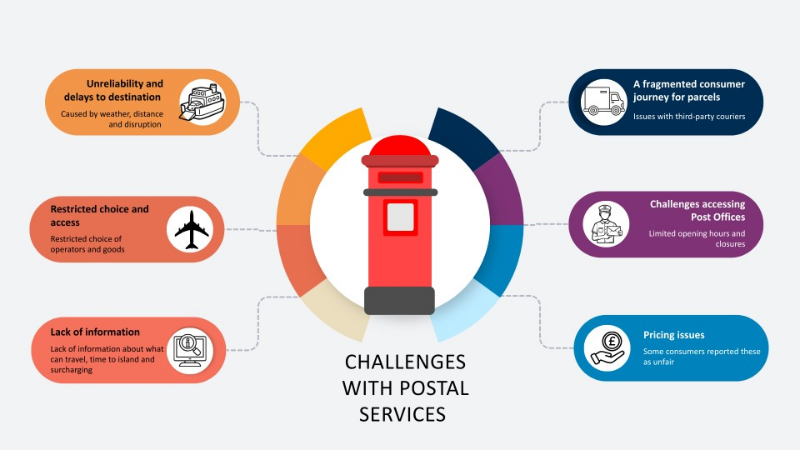
Figure 1: The challenges participants identified with their postal services
What participants want from postal services
Residents are clear that solutions must be fair, reliable, locally appropriate, and must not reduce existing services. They value Royal Mail’s Universal Service Obligation and want improvements that strengthen, not weaken, the role of both Royal Mail and the Post Office.
Consumer Scotland proposed a set of possible ideas to generate discussion about what participants wanted from postal services. High‑support ideas included:
- Caps on parcel surcharges
- Quality of Service postcode‑area standards
- Community‑run or mobile post offices
- Clear upfront information on delivery times, restrictions, and surcharges
Innovations such as drone delivery and print‑and‑send models were viewed with caution due to weather limitations, privacy concerns, and questions about practicality.
Conclusion
Island postal services underpin social connection, small businesses, island economies, and access to essential services. While many challenges are inherent to geography, other issues are related to structural issues or gaps in existing design of services.
Island residents want fair treatment, reliable services, and transparency rather than parity with mainland delivery speeds. A combination of improved transparency, clear consumer information and community‑aligned innovation can deliver a more equitable postal service for Scotland’s island communities.
Consumer Scotland recommendation to improve fairness and transparency, deliver key service standards, assess innovations and engage with communities
- Clearer Consumer Information on Third‑Party Parcel Delivery: parcel operators, retailers and consumer bodies should work together to provide clear, accessible and consistent information about consumers’ rights and responsibilities when parcels are delivered through a third-party haulier or courier.
- Transparent parcel surcharges: Enforcement bodies, regulators, parcel operators, retailers and consumer organisations should work together to ensure parcel surcharges are transparent and fair for rural and island communities. As part of this process, exploration should be given to the practicalities and potential consumer benefits and challenges involved in a range of possible interventions to limit the level of surcharges paid by island consumers.
- Transparent delivery time information: Parcel operators and retailers should ensure that they comply with relevant consumer legislation by providing clear, prominent and upfront information about delivery times, including any specific delivery time information for consumers in Scotland’s islands, before the point of sale.
- Postcode Area Quality of Service Standards: Ofcom should to revisit its decision regarding a minimum Postcode Area level Quality of Service standard for island communities. Consumer Scotland would be pleased to work with Ofcom and Royal Mail to help design an appropriate, tailored QoS islands postcode area target that recognise the operational logistical challenges faced by Royal Mail.
- Resolutions to local disruption: Ofcom should review whether current complaints and Quality of Service data can quickly identify prolonged, localised postal disruption. Ofcom should work with Royal Mail and consumer groups to ensure the system is responsive to detect, flags and resolve local disruption at an early stage, reducing consumer harm.
- Post office provision: The Department of Business and Trade and Post Office Ltd should ensure the implementation of the future vision for Post Office delivers good outcomes for rural and island consumers including protecting access to essential postal services and complementing existing branches with expanded services, where required, such as mobile, community-run provision or parcel lockers.
- Postal lockers: Post Office and Royal Mail should undertake a targeted pilot of parcel lockers in larger island towns to test their operational and economic viability before wider rollout. The pilot should assess whether lockers can act as effective consolidation points across multiple carriers, generate additional parcel volumes rather than displacing existing services. It should also evaluate potential unintended consequences, including service fragmentation and risks of undermining existing Post Office branches. Findings from the pilot should inform any future expansion, ensuring lockers complement rather than weaken the wider postal network and deliver clear benefits to island communities.
- Community engagement: Postal operators should put in place and publish a clear community engagement strategy when deploying new technologies, including drone technology, to support postal deliveries in local communities
2. Background
Islands and consumers in Scotland
Island context
Scotland has 94 inhabited islands with a combined population of 103,000[1]. Island regions include Orkney, Shetland, na-Eileanan an Iar (Western isles), the Inner Hebrides, Argyll islands and Arran, Bute and the Cumbraes. Population levels range from 7 to 21,000 with a median population of 192.[2] The Islands (Scotland) Act 2018 (Section 1) defines an island as a ‘naturally formed area of land that is surrounded on all sides by the sea ignoring artificial structures e.g., bridges and is above water at high tide’.
National Islands Plan
The Scottish Government published a second National Islands Plan in February 2026 which provides a framework for action to improve outcomes for island communities.[3] Under an overarching population retention and attraction theme, the Plan features seven strategic objectives, including objectives relating to:
- Economy, Education and Skills
- Poverty and Social Justice
- Empowered Communities and Culture
Reliable and affordable postal services play an important role in supporting many of the strategic objectives under the new National Island Plan. The Implementation Route Map published alongside the Plan provides more details on timescales and delivery partners for each of the commitments featured in the document.[4]
Among these actions is a commitment by the Scottish Government to engage with the UK Government, Royal Mail, Post Office, Ofcom and parcel delivery companies to ‘ensure island communities and businesses can access essential services, including banking and equitable postal and delivery services’[5]. The Plan highlights that this action will be informed by the recommendations from Consumer Scotland’s research and analysis on island postal services.
Island characteristics and variationThere is significant variation in the characteristics of island communities. Scottish Government (2024) identified a typology of island classification which describe key characteristics of islands. The differences in island types may influence the experience of postal services and consumer needs.
The most highly populated islands are:
- Lewis, Harris & connected isles (population 21,574)
- Mainland Shetland & connected isles (population 19,882)
- Mainland Orkney & connected isles (population 18,480)
- Skye (population 10,008) – noting Skye is connected to the mainland via a bridge
Figure 2 Scottish islands - Source: Scottish Government 2023
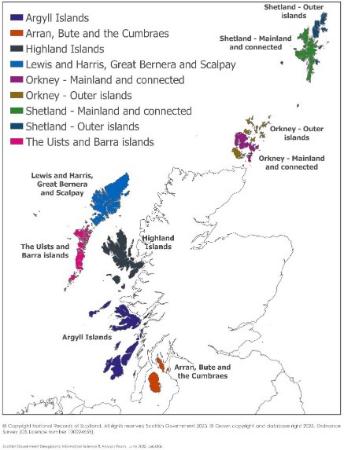
This report focuses on Na h‑Eileanan an Iar, Orkney and Shetland, but many of the issues identified are likely to resonate across Scotland’s wider island communities. While themes may be shared, each island has distinct characteristics and experiences, and findings should be interpreted with sensitivity to local context and variation.
The context for postal services in island communities
Scotland’s island communities often have the most fragile postal services across the UK, with post taking longer to reach island communities.[6] There are several reasons for this including geographic remoteness from the rest of the UK and challenges with weather, ferry, and air disruption which can significantly slow delivery times.
Key factors that provide important context for understanding consumers experiences of and priorities for postal services in the islands include the following:
Greater complexity in the journey of post to islands
Postal items destined for Scotland’s island communities follow a more complex journey than those sent to most mainland locations. This complexity arises from reliance on multiple transport modes, transit through sorting offices on the mainland and more risk of disruption across multiple points in the journey. Most mail follows the following journey:
- Post typically travels from local collection points to a regional or national sorting office
- Mail is sorted and transported onwards to the islands either via flight or further road transport and ferry.
- Following ferry or air transport, mail must then pass through further local sorting processes and finally be delivered by local delivery teams.
- For smaller islands, this may include additional ferries to reach the end destination
Each of these transitions introduces additional steps and risks of delay or loss. Post to island areas is heavily dependent on transport infrastructure that is uniquely constrained in island contexts.
Ferries and flights operate to fixed timetables, with limited capacity and subject to weather or mechanical disruption. Geographic remoteness adds further complexity: routes to some islands require multi‑leg journeys, inter‑island connections or handovers to very small local delivery teams covering large rural areas.
Weaker QoS protection for Orkney, Shetland and na-h Eileanan an Iar
The Universal Service Obligation (USO) is the legal requirement that Royal Mail must provide a basic, affordable postal service to every address in the UK, no matter how remote. It is set out in the Postal Services Act 2011 and the Universal Postal Service Order. Quality of Service (QoS) standards define how quickly and reliably Royal Mail must deliver certain types of post as part of that universal service. These standards are set and enforced by Ofcom, the postal regulator. Across the UK (including the islands), the national target is 90% for First Class mail to be delivered within one day and 95% of Second Class mail to be delivered within three days. Alongside the national targets, Royal Mail is also required to deliver 87% of First Class mail within one day for each individual postcode area. There are sixteen postcode areas in Scotland [7].
If Royal Mail fails to meet its Quality of Service standards, Ofcom has the power to investigate and fine the company accordingly. This has resulted in cumulative fines of £37.1 million over the past three years as shown in table 1.
Table 1 shows the fines to Royal Mail for poor performance against Quality of Service standards
|
Year |
Amount |
|---|---|
|
2022/23 |
£5.6 million[8] |
|
2023/24 |
£10.5 million[9] |
|
2024/25 |
£21 million[10] |
Within the Postcode Area Quality of Service (QoS) standards for First Class post, three major island regions: Orkney, Shetland and na-h Eileanan an Iar are exempt from the postcode area level targets.[11] Royal Mail’s performance when delivering to the islands is included when it is being assessed against the national QoS targets. However, the three island areas only comprise a very small proportion of the UK population therefore it is highly unlikely that Royal Mai’s performance in delivering to these areas will have any meaningful bearing on its performance against the national QoS targets. While Royal Mail reports publicly on its postcode area level performance to Orkney, Shetland and na-h Eileanan an Iar, and Ofcom monitors these numbers, the current system appears to provide limited incentives to Royal Mail to improve service levels in island regions, leaving consumers there with weaker protections than those in other areas.[12].
Previous Consumer Scotland analysis of Royal Mail’s Quality of Service data found an inverse correlation between Quality of Service and remoteness from the mainland and a large difference between islands performance and the UK average[13].
Additionally, survey research conducted by Consumer Scotland in 2025 found that 17% of those in the Highlands and Islands reported Royal Mail rarely met target timeframes which compared with 8% of those in Central Scotland/Mid Scotland and Glasgow and 6% of those in Glasgow, Lothian and West Scotland and a rural average of 8%.
Chart 1
The First Class Quality of Service performance for First Class received by island postcode against the UK target and UK average
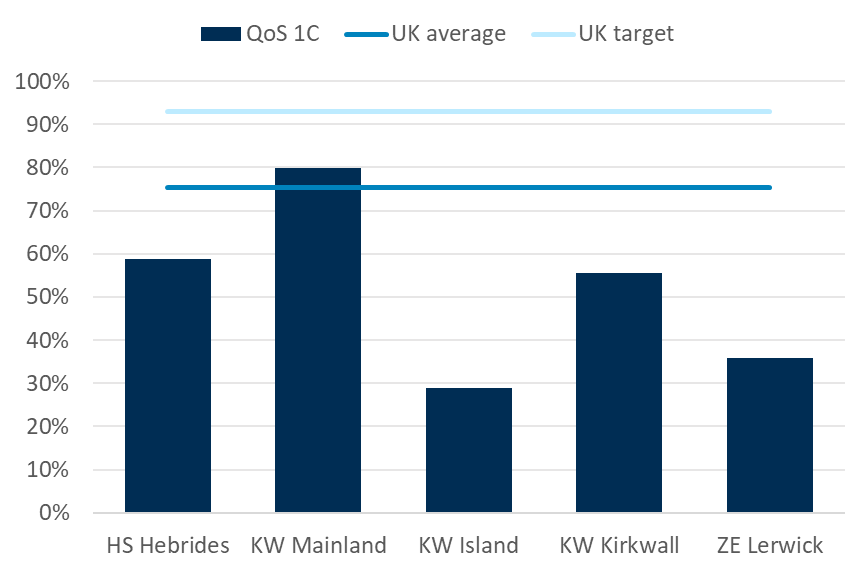
Source: Quarterly Quality of Service & Complaints Report, Quarter 3 2025/26
Surcharging and slower than advertised delivery
Any Universal Service Obligation (USO) parcel products are subject to universal ‘one-price-goes-anywhere’ pricing which means those on islands pay a uniform price in accessing First and Second Class USO products.
For parcels outside of the USO (Royal Mail and other parcel operators), there are no regulatory restrictions on whether they serve the islands at all or whether they apply a surcharge for delivering to island addresses.[14] Many couriers apply additional fees for remote or island deliveries although surcharges vary across couriers. Royal Mail also apply a surcharge to non-USO products including time-bound products (i.e., 24/48 and tracked). Some online retailers do not offer delivery to the islands.
The Competition and Markets Authority have recently provided guidance to businesses on price transparency provisions in the Digital Markets, Competition and Consumers Act 2024.[15] This included guidance on the upfront provision of information on delivery charges which requires retailers and couriers to provide transparent information on surcharges where pricing is variable and where geographic areas incur a surcharge.[16]
Digital Divide and Lack of Alternatives
While digital solutions exist, and there has been a significant progress towards increased connectivity in island communities, persistent connectivity issues in some islands make online alternatives less reliable.[17][18][19][20] This can also mean that businesses and individual consumers may be more heavily dependent on physical post for trade and communication.
Digital disruption
Due to the location and inclement weather, those living on islands can be more likely experience outages related to weather or subsea cable challenges. At the time of fieldwork, the Northern Isles experienced widespread internet outage due to Storm Amy and damage to the SHEFA-2 subsea cable.[21] In na h-Eileanan an Iar, damage to the Tiree-Tobermory cable also resulted in connectivity loss.[22][23] Reports included island consumers being without internet access for 3-4 weeks in some cases in both Shetland and Tiree.[24][25][26] This may increase reliance on other communication methods including post.
Small business consumers and postal services
Scotland’s islands support a range of small businesses including agriculture and marine, tourism, crofting (small scale agricultural units which are often on a tenancy basis), tourism and heritage and craft businesses.[27] In 2023, the islands contributed £3 billion to Scotland’s Gross Value Added (GVA).[28] These businesses are vital for rural and island economies – and many still actively rely on post for some or all of their business.
Heritage businesses play an important role in Scotland’s economy and in its cultural heritage. Examples include traditional Harris Tweed products, Stornoway black pudding, gin and whisky distilleries, Fair Isle knitwear, wool and woven products, and more baked goods and confectionary.[29][30][31] Many of these products are marketed globally as part of Scotland’s cultural heritage and run by small businesses.[32] Many of these businesses rely heavily on postal services for both sourcing raw materials and shipping finished goods to customers across the UK and overseas.
These businesses can be disproportionately impacted by postal challenges including: delivery delays and disruption to production and shipping schedules, unreliable postal service impacting on consumer reviews, high surcharges increasing production costs, and restricted access to certain goods and services.
Delays and surcharges affect supply chains and customer satisfaction, making it harder for island businesses to compete with mainland counterparts. They may also create challenges to small businesses’ ability to maintain their operations.
Case study 1: Damage to the SHEFA-2 subsea cable
Damage to the SHEFA-2 subsea cable during October 2025 caused significant disruption across Shetland and Orkney[33][34]. Consumer Scotland and Thinks Strategy and Insights staff were present due to fieldwork.
Participants in the research reported that:
- The shutdown impacted home internet, phones and mobile signal across whole areas of Shetland and Orkney and meant many people were unable to do their jobs
- The shutdown impacted Post Offices, some of which, participants reported, had to close because they could not offer many of their services
- It meant both landlines and mobiles were not working and devices showed a warning that 999 would not be contactable in case of emergency
- The shutdown impacted local health services causing missed hospital appointments, cancelled tests and making video consultations impossible. Participants reported that local NHS services had to put a back up plan in place to reach people through the postal service
Participants also expressed concern that they had seen two significant internet shutdowns in the past year.
3. Scope of research and methodology
Scope and aims
Consumer Scotland commissioned research to examine postal services, including Post Office, parcels and letters in three island regions: Na h-Eileanan an Iar, Orkney and Shetland. These areas were selected as they are not covered by the Postcode Area level Quality of Service targets that Royal Mail is required to meet for all other postcode areas.
The aim of the research was to gather robust evidence on the key issues for consumers and small businesses living on Na h-Eileanan an Iar, Orkney and Shetland Islands in in relation to postal services. The main of objectives of the research were:
- To understand how consumers and small businesses living in island communities currently experience postal services
- To use a co-design approach to identify potential solutions, including place-based approaches, to support improvements in consumers’ and small businesses’ experiences of postal services in island communities in Scotland
While the research focused on these three island regions, many of the issues identified are likely to be relevant across Scotland’s wider island communities. However, it is important to recognise that each island has its own distinct characteristics, including distance from mainland, connectedness and geography, meaning experiences and priorities may differ across locations.
Methodology
Consumer Scotland commissioned Thinks Insight and Strategy to undertake qualitative research to achieve an in-depth understanding of the key issues faced by consumers in island communities. Participants included both individual consumers and small businesses as well as invited stakeholders who represented local organisations.
The research used multiple methods to engage those living in mainland island regions and those on more distant islands.
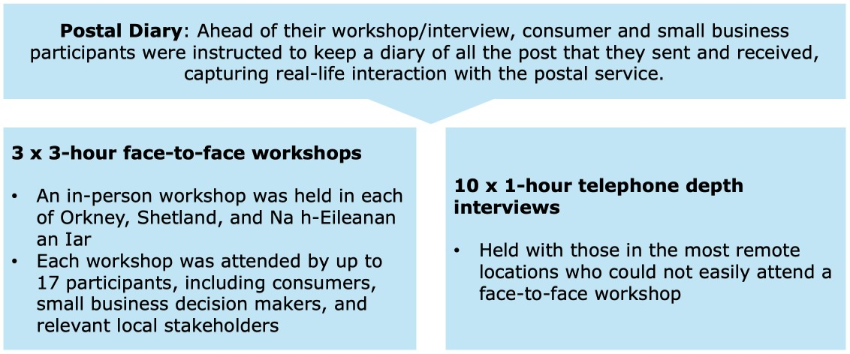
Postal diaries
Participants were asked to complete a week-long postal diary, as a pre-task, prior to their participation in the workshop or interviews. This allowed participants to consider their real-world use of post prior to the sessions and to reflect on their postal habits. Stakeholder organisations were not asked to complete this task.
Workshops
Three-hour, in-person workshops were held in Orkney, Shetland and Na h-Eileanan an Iar.
The workshops were also attended by a Consumer Scotland team member alongside the Thinks research team to provide additional information on postal services as required.
The workshops were split into two key areas of focus:
- Current experiences of postal services: What is working well, the primary challenges and participants’ view of the cause of these challenges.
- Co-created policy options: the second part of the workshop asked participants to consider different policy options to improve postal use on the islands. Workshop attendees were invited to provide feedback on different options, reflect on how they would meet their needs and their community and propose their own ideas
Interviews
Interviews were conducted via telephone for those living on islands more distant from the main island of the region. Ten telephone interviews were conducted with a combination of individual consumers and small businesses. The rationale was to include the perspective of those living further from the island ‘mainland’. The interviews took the same approach as the workshops but in a one-to-one setting.
Figure 3 shows the approach taken for the research
Sample
Consumer Scotland and Thinks (research provider) engaged with 46 postal users from across the islands in this research. Of these 46 participants:
36 took part in person and 10 from smaller islands took part in telephone interviews
30 were individual consumers who use post; and 16 were decisionmakers for small businesses that relied on parcel services;
In addition, 8 stakeholders representing local organisations reliant on post took part in the in-person workshops. The organisations represented by stakeholders included local councils, local service providers, community organisations and trade organisations. This took the total number of participants to 54
The sample design ensured that there was representation across a broad range of characteristics including gender, disability, age and socioeconomic status. Additionally, the sample only included participants who confirmed they used postal services regularly to send or receive important letters or packages.
4. Findings
Consumer Scotland has published the full research report by Thinks Insight and Strategy.
What is working well
Many participants spontaneously reported they are pleased that post services work at all considering that they live in places that they consider both rural and ‘remote’ and their distance from the Scottish mainland.
There are key areas where participants felt that postal services are working well in the islands.
Keeping the islands connected: post plays a key role in connecting the islands even when it isn’t working as well as it could or should. This includes:
- Providing access to a broader range of goods and services than they could access physically on the islands
- Playing an essential role in keeping residents connected to others within and outwith the islands, especially older people who may not have access to internet
- Reducing travel burdens for those living further from the main island towns in particular, who appreciate the ability to buy goods without long and complicated journeys
- Providing an essential service for small businesses, who recognise that they often would not be able to operate without postal services, both to access vital goods and services for production, and to distribute their own goods
Universal Royal Mail coverage: participants are grateful to have universal coverage from Royal Mail even when they live on small islands. They report finding the mail system straightforward to use, with a regular service. Sending letters is seen as an easy process with a good spread of post boxes across islands. While there were concerns about rising cost of stamps, Royal Mail is seen as relatively affordable compared to couriers offering comparable services.
Royal Mail staff and postal workers: participants feel a strong appreciation for their postal workers and the work that they do. The recognise postal workers’ contribution to overcome challenges (postal or otherwise) that islanders experience. Many people have had the same postal worker for years and are on very good terms with them.
Some post gets there faster than expected: generally, participants expected post to take a long time to arrive. However, some providers get post to the islands relatively quickly which participants are pleasantly surprised by. They reported that Royal Mail can sometimes get smaller items delivered in a couple of days and some online retailers can get larger items delivered at speed. One of the ways that participants reported accessing faster delivery speeds and cheap delivery is via paying a monthly subscription with an online operator rather than surcharge.
One interview participant said: “If it's coming through Amazon Prime or whatever, it tends to come within a day to five days, kind of tops for most things. But for Orkney, I think that's pretty reasonable because you tend to, when you're ordering from other companies, you tend to assume that you've got to leave a minimum of five days.” – Interview participant, Orkney
Key challenges and issues for island postal services
Figure 6 shows the summary of challenges with postal service including a fragmented consumer journey for parcels, challenges accessing post offices, pricing issues, lack of information, restricted choice and access, and unreliability and delays to destination.
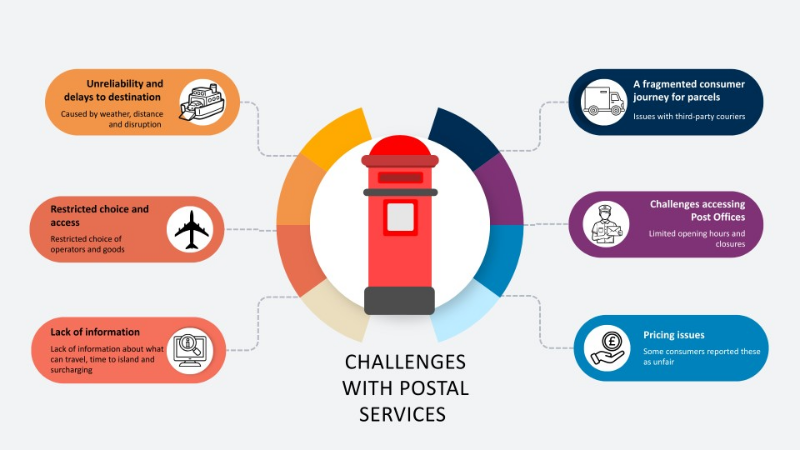
- Unreliability and delays in post arriving to destination
- Restricted choice and access to operators and goods
- Limited information
- A fragmented consumer journey
- Pricing issues, including cost increases and surcharges
- Access to post offices
Key issue 1: Unreliability and delays in post arriving to destination
There are a variety of issues which can cause delays to postal deliveries to island communities. Participants in our research regarded some of the reasons for these delays to be understandable or acceptable, but some other factors which can contribute to delays were seen as less acceptable.
In particular, participants are understanding of postal delays primarily caused by weather disruption and transport disruption. This includes strong winds, fog, storms which create challenges for flights and ferries – and flooding which mean post cannot be delivered to people’s homes.
However, delays caused by sorting office issues (particularly in central sorting offices) or by local staffing issues were seen as less acceptable.
Participants raised concerns that they believed the route by which Royal Mail delivers post to the islands via mainland sorting offices has changed, and their perception and experience is that delays in receiving their mail have increased since these changes were implemented.
Participants were generally very tolerant and understanding.
A workshop participant, from Shetland said: "It depends on how long it takes for the for the boat to actually arrive, how long it's closed for. Because sometimes it can add three or four days on which if you're waiting for something that can be too late, especially when you've got a backlog at the post office."
A small business interview participant from Orkney said: "I always say to customer, you know, around about seven days delivery, because then I kind of cover myself a bit, but a few times it's been a little bit later, but there has been weather in between, which has delayed or stopped flights. So, you have to allow that when you live on an island, that that will happen.”
Additionally, in some cases, participants reported that they didn’t always have information that they needed when they experienced delays or disruption:
A workshop participant from Orkney said: "We need] messages about where a parcel is if it's delayed, to let you know. Because often folk have no idea, parcel just doesn't turn up and then no idea why. And that can go on for weeks."
A small business workshop participant said: "It's very difficult to get in touch with Royal Mail to find out what something is. You've got the tracking thing, if you go through the AI or even the assistant, all they do is check tracking, which you. could do yourself."
Case study 2: Disruption in an island community
Participants reported that Royal Mail staffing issues led to changes to the route that postal workers took. It became much longer than it had been previously and it seemed unrealistic to participants that one person could cover the entire round.
The combined staffing issues and route changes led to a view amongst participants that letters and parcels were becoming stuck in the sorting office. Residents in this community reported that they only received occasional deliveries across multiple months, which meant that their post sometimes took over three weeks to arrive. This impacted people’s parcels, as well as important health letters.
Collective efforts from the local community to raise the issue with Royal Mail and work to a resolution were unsuccessful. Eventually, residents organised for the community hall to be opened and for Royal Mail to drop off lorry loads of the parcels that were still in the sorting office. Local residents then came to sort through and collect their packages.
"[My wife] is disabled and we live in the disaster area of post in [community]. We didn’t get any post for six weeks and missed hospital appointments and things, so that was quite bad."
The cases outlined here appear to highlight a potential gap in existing monitoring frameworks. Consumers can raise individual complaints about items of mail which are delayed or not delivered, although it is noted that the onus for doing this sits with the sender rather than the recipient, which may have implications for how effectively the system identifies multiple complaints that occur within a local area. The example in the above case study also highlights that there can be longer, systemic and significant disruption in a community that is unlikely to have a significant impact on Quality of Service standards. Therefore, there may be a case for considering the potential for additional mechanisms beyond individual complaints or QoS results that can enabled localised disruption to be effectively identified and addressed.
Key issue 2: Consumers on islands have restricted choice and access to operators and goods
Postal services do generally open up more choice in a range of goods and services to consumers than those available locally. However, some retailers and operators don’t deliver to the islands which can restrict the wider level of choice of goods available to domestic consumers, while restricting business opportunities for small business consumers on the islands due to more limited access to production materials .
Case study 3: restricted choice
Emily* lives in Lerwick and likes the convenience of shopping online, particularly for items that are harder to source on the island.
She regularly buys and sells plants online and recently tried to make an order for a set of specialist plant pots from a small business that she has supported for a long time.
The postage fee for this order was £4.99 to anywhere on the Scottish mainland, but £24.99 to Shetland. It's not clear to Emily why this markup was necessary, given it was a lightweight order that should not have been hard to transport.
Emily ended up making the same purchase significantly cheaper on Amazon, not able to justify the additional cost despite wanting to support the small business.
"Postage to anywhere on the mainland was £4.99, postage to Shetland was £24.99... I had to get them off Amazon. It was devastating because I would have loved to support the small business, but for an extra £20?"
Participants said that they prioritised shopping from brands or businesses that they know will deliver to islands – particularly those that deliver quickly and cheaply.
Additionally, participants also noted that there were restrictions on what they could order to the islands due to flight restrictions which meant they had difficulty sourcing some goods.
A Shetland workshop participant said: "We get complaints from time to time from consumers [on the island] about restrictions on what can and can't go through the post. People say they’ve been told companies can’t send such and such that I wanted to order because they're not allowed to post it." –
Key issue 3: Lack of information about delivery to the islands
Participants reported that many websites and business don’t deliver to the islands even if they advertise UK wide delivery. This presents some key challenges for consumers:
- Participants only find out at the end of a transaction that the retailer or operator doesn’t deliver to their location
- Participants report they think they have successfully purchased something and expect it – only to find out later that the order hasn’t been successful
- Inconsistencies between brands and providers causes confusion
A workshop participant from Orkney said: "As soon as you say KW17 you don't get a parcel posted to here or something like that. So it seems a pe we pay the same but yet we're segregated for the rest and not getting the same service."
A workshop participant from Orkney said: "A lot of the time you lose out on a good deal on something, maybe if it's cheaper to get from somewhere but then it gets to the postal side and they won't send it"
A workshop participant from Shetland said: "So what I do now, if I'm ordering something awkward from a site that I don't know, I phone them and ask, do you deliver to Shetland? How quick can this get to me? And unless they confirm that, then I don't order from them."
A key issue with lack of information is that consumers are not able to access all pertinent information to inform their transactions or choice of parcel operator. This finding points to difficulties in the consumer journey across both retailers and parcel operators to access information to allow them to make an informed choice.
Additionally, Consumer Scotland has recently undertaken scrutiny of parcel operators’ information provision to consumers related to time-bound products. This includes consumers in more rural and remote areas having clear notification before point of sale if an extended delivery time applies to their area and/or if certain time-bound mail products (e.g for 24/48 hour delivery) are not available in their area. On this basis, we have engaged directly with parcel operators to assess whether consumers have sufficient information prior to sale on restrictions and exemptions due to remoteness from main delivery routes.
Case study 4: Digital Markets, Competition and Consumers Act 2024
The Digital Markets, Competition and Consumers Act 2024 (DMCCA) is a significant reform to UK digital markets, competition, regulation, and consumer protection[35]. It was enacted in May 2024 and introduces new regulatory tools including strengthening consumer protection for misleading practices such as drip pricing or lack of transparency around pricing and services (e.g., hidden fees and clear, upfront information)[36].
Island consumers are the most likely to experience some slower delivery speeds for certain time-bound postal products and, therefore, not receive them in the standard delivery timeframes[37].
Under the DMCCA’s consumer protection provisions, operators must take particular care to avoid misleading omissions or the failure to provide material information within an invitation to purchase (section 227)[38]. This includes ensuring that any service exclusions, delivery expectations, and potential delays are clearly and prominently disclosed upfront. Doing so supports compliance with the Act while helping maintain transparency and consumer trust. The protections apply to contracts between businesses and consumers and do not extend to small business consumers.
Key issue 4: Consumers face a fragmented consumer journey through the use of local couriers with unclear consumer protection and information
As noted earlier in this report, consumers may receive non-Royal Mail parcels through subcontracted local couriers or through private arrangement for transport from the mainland. In cases of private arrangement, this can mean there is greater access to goods through workarounds and delivery to hauliers who then provide onward transport to the islands. However, in these cases, it can be unclear where the responsibility for consumer protection lies, if a parcel is damaged or lost during the journey.
Where coverage is in place, participants reported that local couriers form a key part of the supply chain, as they are subcontracted by parcel operators to deliver on the islands themselves. This means that the miles from the mainland depot to the island are serviced by the same local courier companies regardless of the original delivery company. Smaller islands, in particular, may only be serviced by one local delivery driver who delivers all parcels except those delivered through Royal Mail.
While most mail makes similar journeys (and passed over to a local courier on the mainland (usually Aberdeen or Inverness), there are two important mechanisms that are used to deliver mail to couriers:
- Major parcel operators subcontract the island delivery through a third party. In these instances, parcel operators (such as Evri) may subcontract the island delivery to a local courier service. This means that the parcels are handed over to a third-party after they have made the majority of the mainland journey.
- Consumers organise the island delivery themselves: In circumstances where a parcel operator does not deliver to the islands (or where surcharging is very expensive), island consumers may arrange the island delivery themselves. The practicalities of this solution involve arranging delivery to a haulier depot (usually Aberdeen or Inverness) via either the parcel operator or the retailer. From here, the consumer enters an additional arrangement with the haulier to bring the goods via ferry and then distribute via local courier.
Participants reported challenges in understanding who was responsible for a parcel and at point.
A workshop participant from Shetland said: "That’s the battle. It's up to you to find out who's responsible, so you spend all your time phoning the person that sent it or the haulier."
A workshop participant from Orkney said: “It takes a long time, when it gets to their depot in Inverness or Aberdeen. It then seems to take a long time to get from there to Orkney. And then when it gets to there, it then takes another day for them Depot.”
As a result of markets not serving them as they needed, some participants also reported relying on more informal routes such as friends and neighbours to transport goods and services.
While these informal arrangements can work in practice, they point to a clear market failure. They place additional effort and inconvenience on friends and family, risk creating tension within communities, and rely on delivery routes with no formal accountability or consumer protection, leaving consumers exposed if goods are delayed, lost or damaged.
Case study 5: What is the legal position if the consumer uses a haulier or courier company?
When a consumer buys goods from an online retailer (this is called a distance contract[*]), it automatically includes a term requiring the trader to deliver the goods to the consumer, unless both sides agree to a different arrangement[†].
Under this type of contract, the goods remain the retailer’s responsibility and risk until they come into the physical possession of either:
the consumer, or
· someone the consumer has specifically nominated to receive the goods[‡].
In practice this means that if a consumer contracts with an online retailer for the goods to be delivered to their home address then that the retailer will remain liable for any problems with the delivery even if the problem has been caused by the courier.[§]
Since some online retailers will not deliver to the islands - consumers who participated in this research told us they sometimes have to arrange for the goods to be sent to a haulier / courier (‘carrier’) on the mainland. When they do so they enter a separate contract with the haulier/ courier for the goods to be transported to the islands. This can add additional cost and delay delivery.
It also will mean that legally the online retailer is only liable for any problems up to the point of delivery to the mainland courier.[**]
A problem may arise, therefore, if the goods that finally arrive at the island consumer’s home are damaged. Under the Consumer Rights Act 2005 the haulier / courier will be liable if they failed to use reasonable care and skill[††] but this can be difficult to establish. The courier company may claim that the damage must have occurred before the goods reached them and is the responsibility of the online retailer. The online retailer may claim that the problem is due to the courier. Since the consumer must prove legally who is liable this can be difficult to do, requiring considerable time and effort.
Key issue 5: Increasing cost and parcel surcharging feel unclear and unfair
Participants across all islands reported that surcharges to deliver parcels to the islands could cost from £10-20 to £50 for larger items or more complex journeys. There is currently only a requirement for geographic uniformity for pricing within USO products (i.e., certain parcel services via Royal Mail). Variation in charging according to location is at the parcel operator’s discretion for all other parcel delivery products, whether delivered by Royal Mail or other parcel operators.
Although participants were aware of why surcharges were applied – particularly the distance that parcels needed to travel – they still felt significant frustration and incurred negative impacts as a result of these extra costs . Experiences and challenges included:
Higher costs, impacting on disposable incomes, and in some cases having to forgo a purchase
- Feeling they were penalised for where they lived.
- Having to do ‘mental maths’ to make sure they account for surcharging that some providers put on packages
- Missing out on deals or the net benefit of a deal, as this was effectively cancelled by surcharging
An interview participant from Orkney said: "It was going to be £10 delivery, which I was like, well, it's quite heavy, so fair enough. So, I paid that and then they phoned me up and they said, because of where you live, we're actually going to put a £50 surcharge on that, on top of the £10 they'd already charged and what everyone else has to pay. And at that point I just said no thank you."
a Workshop participant from Shetland said: "So there's several things where I go to order it and it says like posters are £5 and then you try to order to our destination, it goes to £35."
A workshop participant from Na h-Eileanan an Iar said: "The majority of things you order they'll put a charge on because you live on the island, and it's just very unclear. You buy something and then when you look at the postage, the postage can actually cost more than what you buy."
From our previous parcels survey research, Consumer Scotland found nearly one fifth (18%) of adults in Scotland experience surcharges, with those in the Highlands (including islands) disproportionately more likely to experience additional charges (72%). A similar picture was found in this previous research with 91% of those who experienced surcharging saying it puts them off buying things that need to be delivered. Additionally, only 19% said they would pay the surcharge ‘at least often’. From this previous research, these findings would suggest that retailers are losing out on sales in regions where they have contracted parcel operators who apply surcharges. This previous research also found that 58% of consumers agreed that parcel delivery should cost the same regardless of location.
There is an inherent fairness challenge when considering surcharges. Island communities – and those further away from the central parts of the UK – can cost more to serve due to distance travelled, additional transport required and potentially use of third-party couriers. In some cases, operators reduce their offering to the islands – either restricting products (such as DPD and EVRi offering reduced products) or not serving them.
Any changes to how surcharges are determined may impact on the bills of other consumers – effectively a cross-subsidy which reallocates costs from one group of consumers to another. There is not an easy answer to determine the fairest approach. However, our findings clearly demonstrate that island consumers find the current charging arrangements unfair and it can materially shape their purchasing decisions.
Key challenge 6: difficulties in accessing post offices
Opening hours
The biggest challenge faced by participants around post office access related to opening hours. Particularly in smaller and very rural areas, post offices may only be open for a few hours during the week and at inconvenient times.
Post offices that are ‘co-located’ (i.e., run within a small business such as a local shops) tend to be open for longer hours although participants reported that the Post Office opening hours can be unpredictable and rely on shopkeeper goodwill.
Post Office closure
Participants also experienced challenges around rural post office closures. On smaller islands, post offices are often attached to smaller shops which sometimes shut down or reduce their offering. However, these were localised issues – and generally participants felt that if consumers were able to travel then they could get access to a post office.
Franchising concerns
For those living in Kirkwall and Stornoway, there was a general concern about the franchising of the post office in both areas. Participants reported concern that this might imply a future closure or change of location or opening hours.
“The one problem that we do have is the people that bought the local post office, which would give me a sort of like 20, 25-minute walk to the post office, he actually shut the whole shop down. […] Now for people to get the other post office on the mainland, you have to get a bus into town which is like an hour and then for like for an hour you’re kicking around and then getting the bus back. So, it’s like three hours, three hours, if you have to go to the post office.” – Interview participant, Shetland
Case study 6: Post office access
Alice* lives in a smaller island, managing a small collection of livestock and producing artwork of her surroundings.
Alice regularly used the postal service to send packages, both personally and for her small business selling artwork and wool from her sheep. She always used Royal Mail to do this, as it can be difficult getting couriers to collect packages from such a remote location.
Her local post office has recently cut its afternoon opening hours, which can be challenging for Alice due to her responsibilities with her animals in the mornings. With the next closest post office a 30-mile round trip, and her post office being the only place locally where it is possible withdraw cash, this reduction presents a significant challenge to Alice's ability to go about her daily life and to manage her business.
"Now it closes at 12:00... when you've got livestock, you're rushing around making sure everything is fed and watered... by the time I've finished all that, the post office is closed."
In February 2026, the UK Government published its response to the Future of the Post Office Green Paper, setting out a long‑term vision designed to secure a modern, financially resilient Post Office network. Central to this announcement was a commitment to retain a minimum of 11,500 Post Office branches across the UK, underpinned by ongoing government subsidy to support uncommercial but socially essential rural and island branches. These commitments are vital for island communities, particularly the Government’s decision to maintain the branch network and continue subsidy funding to safeguard essential services for communities that depend most heavily on the Post Office.
The UK Government has also committed to minimum branch standards which have yet to be fully defined. It will be important for the UK Government and Post Office to ensure that the needs of consumers in island regions (and in more rural or distant areas) are considered in the development of these minimum branch requirements.
Overall impacts of postal issues
When examined collectively, the challenges described above can present a difficult and often fragmented consumer journey for island residents in Scotland who rely on the postal system.
Key consumer impacts include:
Higher mental load and time requirements
Participants generally have to spend much more time considering the logistics of postal services than their fellow consumers on the mainland. Participants were generally well informed about the routes their post took as a result. Key issues that participants have to think about include:
- identifying and selecting the most cost-effective delivery option, which can be far more complex than it is for consumers on the mainland
- closely tracking packages to be alert to any delays or issues
- calling providers and planning logistics
- recruiting friends, family and neighbours to bring goods from the mainland when they visit
"As soon as you put your postcode it jumps from £6 to £15 to £16. On a number of occasions we've taken to doing a click and drop delivery option, then arranging our own collection via Royal Mail or a local courier... you arrange a pickup option then arrange for Royal Mail to deliver it." – Workshop participant, Na h-Eileanan an Iar, Small business
Higher costs
Parcel surcharges and more complex delivery routes, which can require the private engagement of local couriers, can lead to increased cost of postal services for island consumers. This is significant, as these consumers are often particularly reliant on postal services to access a wider range of goods and services than may be available to them locally.
An interview participant from Orkney said: "It's basically an island premium I suppose, because it costs more to get things up here, so we end up paying extra."
Participants also complained about the rising cost of postage stamps – a finding mirrored in the research we previously commissioned from Thinks on low-income rural consumers.[39] As stamp prices have risen sharply across the UK, this isn’t specific to island consumers. However, people living in island communities are often more reliant on postal services because digital connectivity can be variable in some areas, essential services frequently still depend on physical mail, and long travel distances make in‑person alternatives far less accessible. This means increases in stamp prices can have a disproportionate effect on their day‑to‑day costs and ability to stay connected[40].
However, participants did note that they had generally receive good value for money from stamps, in particular the single uniform price across the UK, considering the extra travel required.
Lack of choice and reduced access for goods and services
The parcel surcharges applied by some retailers and operators, combined with some retailers not making products available for delivery to islands at all, can restrict the amount of choice of goods available to island consumers compared to those in mainland Scotland.
Participants tended to prioritise shopping from brands they know will deliver quickly and cheaply to the islands. This can make shopping for niche items more challenging and can result in consumers incurring higher costs and having to plan far in advance (i.e., if needing to coordinate with a visit to the mainland).
Greater challenges to accessing essential services
Slow and inconsistent postal services can create issues for consumers on Scotland’s accessing essential services including health, legal and civic services:
Health post: A key area this impacts relates to healthcare letters. Particularly, participants reported that letters often arrive for health-related appointments with very short notice or after the appointment was due. Short-notice appointments are challenging to manage because people need to travel to larger islands or Scottish mainland which is time-consuming and expensive. Last minute appointments also cause pressure on local health and transport teams because there are additional logistics to arrange – particularly for patient transport services or for trips off of the island.
An interview participant from Shetland said: “So there have been some days that I've actually received a hospital appointment through the post on the day that I was meant to go for the appointment.”
Legal post: Although it is sent less frequently, legal post is also impacted by postal challenges because it often needs to be handled physically (i.e., with ‘wet ink’ signatures) and within a specific timeframe.
Civic post: Among participating stakeholders, there were reports about delays to electoral post. This report related to electoral offices experiencing issues sending ballots to islands – especially for unexpected by-elections. One stakeholder highlighted that this process is very expensive to manage as ballots need to be sent first class to ensure they arrive on the islands on time. Delays to first class have meant that ballots don’t arrive to their destination on time.
Impacts on small business consumers
Small business participants appreciate that postal services allow them to buy essential items for their business and to ship products to a broader customer base, across the UK and overseas.
However, small businesses on the islands also reported a range of issues with postal services that can impact on the operation of their business:
- Small business participants reported spending a lot of time tracking down and managing customer concerns when packages are moving slowly. This has implications for business productivity.
- Parcel surcharges can lead to increased costs of production for small business which can result in them having to charge more for goods and services than businesses on the mainland. This can affect their business performance and can also lead to higher prices for local consumers as these costs are passed on.
- If post is delayed this can mean that essential production items don’t arrive on time which can delay business production or mean staff are unable to work for multiple days.
Example: a food and drinks company reported having to wait several day until their packaging arrives to move forwards with production – which can cost the business money.
- Participants reported experiences of items sent to customers taking a long time to be delivered or getting lost on route. This can lead to a negative customer experience. Small business participants also highlighted that their customers often do not fully understand the challenges with postal services that an island-based business might have to navigate. Where the small business is using postal services to send items to consumers then the business is held accountable by their customers for any delay in the delivery even if it is caused by issues outside their control. This can be financially and mentally stressful for small business owners, given the more complex and uncertain nature of island postal services.
- Conversely, when ordering produce for their business, delays in receiving stock via postal service can impact on business revenues.
- Participants reported that important post with legal or regulatory implications may not arrive when expected, which can create risks for the business.
These challenges place an administrative burden on small businesses – requiring time and energy to follow up on issues. Participants noted that negative impacts on small businesses can have a wider community effect. Many small businesses play a central role in their islands’ economies, so difficulties experienced with postal services can have a range of knock-on effects.
Case study 7: Small business impact
Sarah* lives with her husband and sister on one of the smaller islands, from which she maintains a solicitor’s practice.
Sarah finds the postal service to be highly unreliable, with letters she sends and receives consistently delayed, even when she pays for expensive guaranteed delivery.
Sarah therefore avoids using the post for her business as much as she can, preferring to scan and email documents instead. However, as part of her practice she must sometimes send physical 'wet ink' documents, which legally must arrive at their destination by an appointed time. Sarah must factor the likelihood of delays into the sending of these documents, something which takes time and adds a significant mental load to operating her business.
"I have to be very careful I'm not giving an undertaking that they'll get an original document the next day, because I know I won’t be able to honour it... it means I have to think much more carefully and waste time."
How consumers and small businesses manage postal challenges
Across these different challenges, participants reported using a range strategies to mitigate the issues they experienced when using postal services. These strategies included:
- Avoiding using post – using digital alternatives where possible: many participants say they do as many activities as possible online rather than sending and receiving letters. As internet speeds are generally good (although with greater risk of disruption and/or intermittence compared with more urban mainland areas), this is often easier, cheaper and faster.
- Avoiding using post – undertaking mainland visits: another strategy reported by participants is to wait until they visit the mainland to buy the items they need, and to collect them on behalf of friends and family. This means they need to wait longer to buy the items they need.
- Planning ahead: when they do need to use postal services, participants reported having to plan much further in advance than people living on the mainland. In practice, they indicated that this can mean planning at least two weeks ahead to account for slower postal speeds. For business owners, these timescales can prove challenging, result in disruption to production or distribution.
A workshop participant from Shetland said: “In the winter now I order everything like two weeks ahead, if I need it in two weeks, I order it now and if it's any later than that it's a panic."
An interview participant from Na h-Eileanan an Iar said: "I need to think, things generally take two or three weeks to get here, sometimes more. So I've needed to think well in advance just because of the mail. I wouldn’t have to if I was on the mainland."
- Planning around transport: participants also reported planning their use of postal services around timetables for ferries and flights – for example, ordering goods or sending a letter in the morning to have a better chance of getting it on the next ferry or flight.
- Avoiding surcharges: to avoid surcharges, participants reported purchasing ‘off-island’, such as ordering to friends and family’s homes on the mainland. This requires a lot of forward planning and can create long delays. However, these inconveniences are also seen as part of island life.
A workshop participant from Orkney said: “I've just been lucky I suppose, I had to get my bed frame delivered to my mother in law's in Aberdeenshire and then collected it from there"
- Shopping around: participants reported that they prioritised using brands and websites that they know will deliver to the islands – especially if they deliver cheaply. In most cases, participants cited Royal Mail and Amazon as those consistently delivering at lower cost. For more specific items, they may not be able to use providers who offer lower cost or delivery. In these cases, it may mean they miss out on deals or decide to purchase an item that they perceive as offering poorer value for money because it doesn’t have a delivery surcharge. In some cases, they may have to bear the cost of surcharge because of lack of alternatives.
"It just puts me off a transaction. So I had one the other day where it was going to be an extra 30 quid on top of a £60 product to send to Shetland. And I just found another website that would do it for free." - Workshop participant, Shetland
- Paying for a more reliable service: Certain products are regarded by participants as offering reliable service even if they cost more, which can been seen as a way of mitigating unreliable service from less expensive products. These include:
- Paying for a subscription service so they can have free delivery and workaround surcharging
- Using Royal Mail Tracked 48 so they can use the tracking system to check where their post is and when it will arrive. Although the service ‘aims’ to deliver in 48 hours, participants felt they wouldn’t see this and they buy tracked products due to perceived poor reliability of other postal products. For small businesses, this also meant that the purchased tracked products are more expensive and they choose this cost to cover themselves against service failure (i.e., ‘prove’ delivery disruption is not due to their business).
A workshop participant from Na h-Eileanan an Iar said: "That's why we're paying the extra for tracking, so that when it does delay so can say there's the tracking number, look, you can see that I posted it and that's where it"
What do island consumers’ want from postal services?
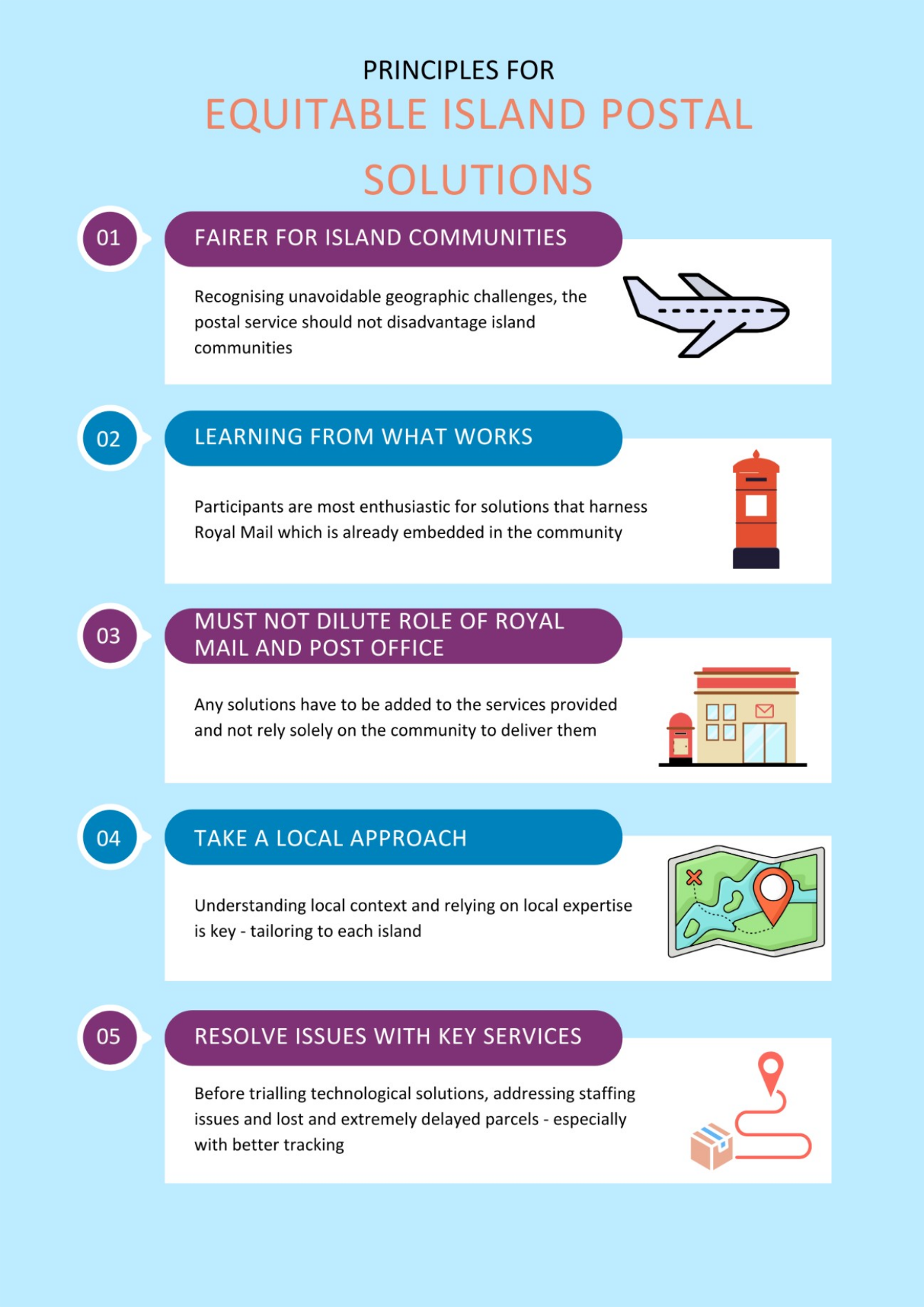
Figure 6 shows participants’ priorities for equitable island postal solutions
Exploring policy solutions
Consumer Scotland in conjunction with Thinks Insight and Strategy developed a number of policy ideas to stimulate discussion and assess what consumers and small businesses in Na h-Eileanan an Iar, Orkney and Shetland might prioritise from any policy, regulatory or operational intervention to improve postal services in island communities. These included ideas across:
- Technology: technological interventions such as drone delivery and remote access kiosks
- Innovation: such as greater adoption of low emission delivery vehicles and initiatives such as ‘print and send’ (as modelled by La Poste)
- Regulatory: proposed interventions tailored to the needs of the islands including a minimum Quality of Service standard at a postcode area (PCA) level and additional initiatives such as a ‘delay repay’ scheme for postal services and a price cap on parcel surcharges
- Market-based: using haulier pick up services (which is already a widespread practice) or mobile Post Office units
- Community-based: such as community run Post Offices
These ideas are not exhaustive but used to explore the key actions that island consumers would prioritise.
Improvements that received strong support from participants
Participants expressed strong enthusiasm for three specific actions:
- a cap on parcel surcharges
- the introduction of Postcode Area level quality of service targets
- more mobile post office units and community-run post offices
Parcel surcharge cap
Participants expressed a general level of enthusiasm about a price cap on parcel surcharges to mitigate the extra charges often applied to parcel deliveries to the islands.
Participants felt that this would be a fairer approach and reduce the negative impacts of surcharges, while some also recognised that there are extra costs involved in delivering the islands and therefore some form of surcharge may be reasonable. Some were also surprised that there wasn’t a cap in place already.
"That's the way that applies to the price of first and second [class] at the moment, we'd be subsidised by the rest of Great Britain. We won’t pay extra, so why not bring it in line." - Workshop participant, Na h-Eileanan an Iar
Quality of Service Postcode Area (PCA) targets
The Quality of Service (QoS) standards that Royal Mail must meet to deliver first and second class post within a certain number of days apply across the whole UK. There are national, UK-wide targets that the company must meet and the regulator Ofcom also sets 118 postcode‑area (PCA) QoS targets, which require Royal Mail to meet required delivery speeds for each postcode area, as well as UK-wide. This provides additional protection for consumers by ensuring that the national target is not reached by the company prioritising easy to deliver to, or densely populated areas, while providing a lower standard of service to more remote or rural areas.
Most participants in the research felt that islands should be included in the postcode area level QoS targets and questioned why they aren’t. Most participants said they would welcome a specific postcode area level QoS standard, tailored for island circumstances. They were realistic about the practical challenges of geography, distance, and weather, and recognised that any standard would need to be lower than for non-island postcode areas. For many participants, having a clear minimum standard felt like a basic fairness issue that would help drive accountability and could play a role in ensuring that island consumers receive a more reliable and appropriate level of service.
However, there was also some caution. A minority of participants worried that Royal Mail might struggle to meet new targets if delays were caused by unavoidable factors such as severe weather or staffing shortages. Some expressed concern that introducing standards without flexibility might put pressure on Royal Mail to reduce services to the islands[‡‡].
A workshop participant from Orkney said: "When you open your can of beans up you don't expect to have half the beans in it just because you live in Orkney."
A workshop participant from Orkney said: "Targets, it makes you think somebody’s doing something. There's lots of people creating targets and lots of people chasing them, but you wonder if it becomes an end in itself and people forget what it takes to actually work."
Mobile post office units and community-run post offices
In many cases, these models are already operational – particularly in smaller islands or rural areas.
Participants generally felt that these models would work well to bring a wider range of services to those who would otherwise struggle to access them. They also saw community benefits and a potential to revitalise communities – for example socially or local businesses. People on smaller islands were most positive about mobile post office units.
Participants did raise challenges that these models put pressure on businesses beyond their primary business. They also cited risks about a lack of privacy in small spaces and communities and had some queries about whether the frequency and opening hours of these models would actually meet the needs of the residents. Participants indicated that they would want reassurance about how issues around distance and convenience would be addressed. For example, whether the location of a mobile service would still require a car to reach. They also had further questions related to whether a mobile unit would be operated by Post Office and offer full services.
A workshop participant said: [§§]"[The island] is actually a really big island, and the villages are very spread, so folks have quite a distance to walk to any central point in a village. We find with the mobile library that you can't just sit in a central point and expect folk come to you, particularly in bad weather. We end up having to go down to individual houses, so [a mobile post office] would have to do that."-
Improvements participants viewed as having potential in the right conditions
Print and Send
This potential action draws on an initiative run by La Poste in France in which certain documents are printed and dispatched more locally avoiding longer travel from the mainland via ferry.
Participants had a lot of questions but struggled to see how it could be implemented in their area. Participants appreciated that post might reach the destination faster and could be useful for certain post such as passport applications or small business invoicing.
However, they also had significant concerns around privacy of post sent through this type of scheme. For example, if it was printed in a shop near them by an acquaintance. They would be reluctant for this type of service to be used for health or financial services. They would also be worried about scams and highlighted the need for protection. Participants also highlighted the importance of the physical nature of certain post such as birthday and Christmas cards which wouldn’t have the same value as a scanned product.
Delay Repay
The idea of a delay repay scheme is similar to that used to compensate for train delays. For rail-based delays, consumers receive compensation for delays over a certain period of time, regardless of who’s responsible for the delay.[41] Beyond islands postal services, this type of scheme may be effective when there is widespread geographical disruption.
A delay-repay scheme could provide consumer redress where there is systemic geographical disruption. This type of scheme may improve performance accountability and drive operational improvements. There is also precedence for this type of activity from other markets, particularly energy and rail.
Case study 8: Ofgem Energy Redress Fund
The Ofgem Energy Redress Fund distributes payments collected from energy companies that have breached regulatory rules. Administered by the Energy Saving Trust, the fund provides grants to registered charities, community interest companies, co‑operatives, and community benefit societies to deliver energy‑related projects across England, Scotland and Wales.
Since its launch in 2018, the scheme has awarded over £206 million to more than 761 projects aimed at helping vulnerable households and reducing carbon emissions.
Funding is generated through voluntary payments from energy firms following enforcement action—for example, licence breaches related to poor billing, customer service failures, or market misconduct.
The idea of delay repay received mixed feedback from participants.
Supportive participants felt that it would put pressure on Royal Mail to meet targets for the islands and work harder to deliver a better service. They were also supportive that it would mean there would be compensation for those impacted by delayed or lost post.
Those who did not support the idea cited that it would likely require a lot of administration for consumers to apply, which they felt would not be worth it for letters sent second class.
Some participants suggested a collective delay repay which meant that the communities who experienced significant challenges receive a lump sum for community of charity projects.
Others had concerns about the fairness of any delay repay system. Some participants also highlighted concerns that it could undermine the service to the islands by having a knock-on impact on funding.
An interview participant from Shetland said: "My impression is Royal Mail's been losing money hand over fist... rather than actually pay compensation for large scale disruption, it's surely better to prevent the large-scale disruption in the first place, which means looking at your systems and making sure that there's sufficient resilience there."
Within the course of considering different policy options, Consumer Scotland identified a number of challenges to the implementation of a delay repay scheme. These include:
- Complaints processes currently lay the responsibility for complaints with the sender – not the recipient – which creates challenges for recipients who experience delays.
- As above, it is the retailer or businesses responsibility to ensure their goods arrive safely and in a timely manner. Complaints are also raised through the retailer or businesses. This creates challenges for identifying the recipient who has limited rights relating to complaints and redress related to the postal service itself.
- High administrative burden due to difficulties with verification. Postal delays can occur at many points, potentially making it difficult to identify where the challenges have been caused within the system.
- Difficulty attributing responsibility – in island communities, the adoption of such a scheme would likely be more complex due to weather and transport-related challenges.
- Unintended consequences: it is unclear whether Royal Mail or other operators would change their behaviour (i.e., altering what services are offered to islands for non-USO products to minimise liability rather than maximise service quality)
- For retailers, delay repay may overlap with existing consumer rights and would likely exclude non-USO products – creating additional complexities in navigating complaints and redress systems.
Unmanned kiosks
Remote access kiosks include postal lockers and other facilities that allow consumers to drop and collect parcels without need for a manned service.
Remote access kiosks were viewed positively by participants because they were regarded as providing consumers with easier access to post without having to travel as far to a post office. Additionally, participants would welcome the accessible and 24/7 nature of kiosks. Participants also highlighted that it would be helpful for receiving post when they aren’t at home – especially those at work.
However, some of those in more rural island regions or smaller islands didn’t think this potential solution would be as useful as their postal workers were always able to get their packages delivered. Some participants also raised concerns about whether kiosks would be accessible to digitally excluded people and those with visual impairments.
There were also concerns that such kiosks could dilute post office services or contribute to post office closures.
Participants – especially those in Shetland – raised additional concerns about how effectively kiosks could function with the challenges of island life such as inclement weather and internet outages.
A workshop participants from Shetland said: "It's going to be good for some people and good for some things, but I suppose it goes back to a lot of people already feel excluded, they don't really feel comfortable using their cards... not necessarily just older folk, a lot of people struggle with technology."
There are a number of potential benefits to provision of more remote kiosks and/or parcel lockers in island areas. These include greater access to parcel drop off and collection which don’t rely on the physical post office to be open.
However, there are a number of costs associated with the provision of postal lockers. In keeping with other challenges of provision of infrastructure, the low population density in the islands increases the per capita cost of providing a service or technology[42][43]. Parcel lockers require upfront investment and site preparation coupled with ongoing operating and maintenance costs. There may be challenges to the business case for provision of parcel lockers in island areas – particularly those outside of the main towns. Connectivity challenges and outages may also create additional challenges to implementation.
In addition, participants also felt that they would not want to see further reduction in the provision of post offices so consideration would need to be given to whether a parcel locker could reduce viability of local post offices that serve consumers who can’t use lockers or need other services.
Potential improvements which were less supported by participants
There were a number of additional ideas which were discussed that participants felt would be unlikely to work effectively.
Hauliers and couriers: many people on the islands already use haulier or community-run pick-ups to get larger goods. There are some challenges in the current system including delays, damage, cost and admin. Participants don’t see this set up as changing.
Participants would rather see an expansion of Royal Mail’s services – particularly for larger goods. Within the context of reduced consumer choice, and an appetite for expanded Royal Mail service, an option would be the provision of a Tracked Universal Service Obligation product. However, work would need to be undertaken by Ofcom to assess the benefits for consumers and the implications for competition.
Drone deliveries: Participants saw the potential application of drone delivery that could be helpful – especially for medical supplies – but worry about daily practicality. They felt that drones could help get post delivered faster – particularly between sorting offices on different islands. They did, however have a number of concerns including:
Frequent poor weather which grounds planes due to fog or high winds. Participants suggested the challenges faced by Royal Mail in the trial between Orkney and Shetland eroded trust in this approach as a viable solution.
Drones might interfere with other essential flying services such as passenger planes and rescue helicopters.
Drones seen as expensive to manufacture and run – especially due to high level of human resources needed. They would prefer any such resources to be working on traditional delivery methods.
A small business workshop participant in Shetland said: "They tried to test it and do press interviews in Orkney, but they had to postpone because the drone hadn't made it. If the drone can’t make it to do press interviews, it’s not making it across the sea! The mail is going to end up missing."
Royal Mail have conducted a number of trials with an aim to overcome the challenges raised by participants.[44] Prior to fieldwork, Consumer Scotland engaged with Royal Mail to understand the purpose and implications of drone use including: function, fit within aviation regulation, human resource requirements, weather challenges and role drones would play. This enabled a more accurate representation of the application of drone technology.
Reticence to adopt new technologies amongst consumers is not limited to drone adoption in island regions. There is a significant existing body of work on ‘socio-technical systems’ which means the interaction between technology and the community or society it serves[45][46]. This includes examples from other utilities – and work on the social acceptability of drones and place-based approaches[47][48].
Recent work from UWE (2025) shows that the governance of drone-based last-mile deliveries in the UK remains uncertain and underdeveloped and highlights the need for stronger collaboration between national and local governments, industry and the public[49]. Key findings also included the need to consider societal factors including public awareness, willingness, perception and equity and social benefits. Further work on the barriers to social acceptability of drone technology for delivery may aid in overcoming obstacles and resistance to uptake.
Within the practical policy and design considerations, community engagement, co-productive approaches to technology adoption and ‘social learning’ are all key to technology adoption. Parcel operators may consider how to work with communities to improve social acceptability of their technologies, such as drones.
Low emissions vehicles: Electric Vehicles to support deliveries are seen as a ‘nice idea’ particularly to address environmental concerns of participants. However, there are concerns about how such vehicles would work with the practicalities of islands geography. For example, the lack of charging locations may mean that vehicles would be unreliable or run out of charge.
A workshop participant from Orkney said: "Electric cars have come a long way but the commercial stuff seems a long way away and the weight, it’s not able to deal with it. The man who came and put a smart meter in for me about six weeks ago, he charged his van, which was only a transit van size, three times between Motherwell and Scrabster. That’s no use to man nor beast.”
5. Conclusion
Overview of improvement priorities for island consumers
Island communities face a unique intersection of postal issues which can create challenges for their day-to-day lives.
Some of these challenges are seen as ‘acceptable’ to island consumers given the issues of distance from mainland, weather and transport .
However, there are a number of areas where participants want to see improvements:
- Solutions that make things fairer for islanders and address disadvantages, such as parcel surcharging
- Continuing to improve on the services that are already working, such as expanding Royal Mail’s coverage as they already deliver consistently and reliably to the islands
- Tailoring solutions to the local context and relying on local expertise before rolling out policy or technological solutions
- Addressing significant issues that can emerge due to more complex logistics in the delivery of post to islands and can result in significant delays experienced by consumers
- Protecting important existing consumer protections, such as the universal service obligation for Royal Mail, and requirements around post office access
- Focusing on inconsistent delivery speeds as a priority because of the impact these have on consumers’ ability to plan deliveries and send mail. While faster deliveries are desirable, improved reliability is regarded as a more important goal
- Focusing on reducing the burden that island consumers currently experience in having to think and plan their use of postal services. Solutions may include improvements to tracking systems and better complaints and refund processes
Research gap
Alongside the evidence highlighted in this report on the postal experiences of consumers and small businesses in Scotland’s island communities, the report also reveals a number of important gaps in the existing evidence base. Addressing these gaps may support policymakers in the further development of actions to improve postal services for island consumers:
- Evidence relating to surcharging, including evidence on the range of surcharging levels which couriers apply across locations, and on the financial impact of surcharging for small business and domestic consumers
- A comprehensive assessment of retailer policies around delivery to Scotland’s islands and the impacts of this on small business and on consumer choice
- A more detailed understanding of workarounds postal consumers use when postal services are not perceived to be able to deliver for them
- More detailed evidence on the different aspects of the postal delivery journey to the islands and the factors contributing to disruption
- Potential gaps in consumer awareness of rights in relation to the use of the haulier/courier network – and gaps in consumer awareness of rights and responsibilities
Recommendations
Consumer Scotland developed recommendations through two complementary approaches:
- Engaging directly with island communities to test and refine potential policy options
- Drawing on the research findings, alongside wider expertise and insights from other markets, to shape evidence‑based recommendations
Figure 7 shows a breakdown of our recommendations under three key themes:
- Consumer fairness and transparency
- Development and delivery of key service standards
- Innovation and technology
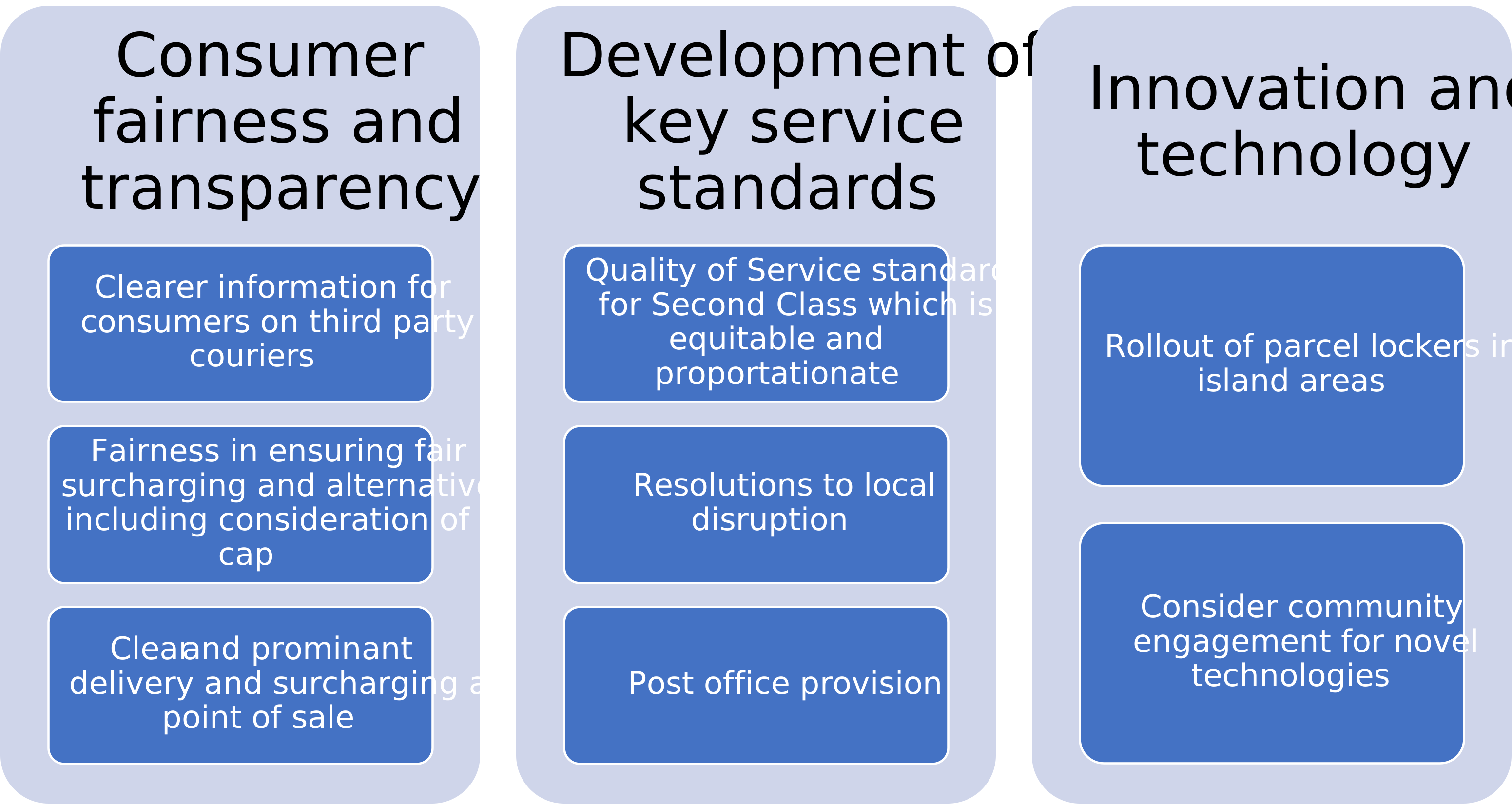
Consumer Scotland recommends
Improve fairness and transparency for island consumers
- Clearer Consumer Information on Third‑Party Parcel Delivery: parcel operators, retailers and consumer bodies should work together to provide clear, accessible and consistent information about consumers’ rights and responsibilities when parcels are delivered through a third-party haulier or courier.
- Transparent parcel surcharges: Enforcement bodies, regulators, parcel operators, retailers and consumer organisations should work together to ensure parcel surcharges are transparent and fair for rural and island communities. As part of this process, exploration should be given to the practicalities and potential consumer benefits and challenges involved in a range of possible interventions to limit the level of surcharges paid by island consumers.
- Transparent delivery time information: Parcel operators and retailers should ensure that they comply with relevant consumer legislation by providing clear, prominent and upfront information about delivery times, including any specific delivery time information for consumers in Scotland’s islands, before the point of sale.
Development and delivery of key service standards
- Postcode Area Quality of Service Standards: Ofcom should to revisit its decision regarding a minimum Postcode Area level Quality of Service standard for island communities. Consumer Scotland would be pleased to work with Ofcom and Royal Mail to help design an appropriate, tailored QoS islands postcode area target that recognise the operational logistical challenges faced by Royal Mail.
- Resolution to local disruption: Ofcom should review whether current complaints and Quality of Service data can quickly identify prolonged, localised postal disruption. Ofcom should work with Royal Mail and consumer groups to ensure the system is responsive to detect, flags and resolve local disruption at an early stage, reducing consumer harm.
- Post office provision: The Department of Business and Trade and Post Office Ltd should ensure the implementation of the future vision for Post Office delivers good outcomes for rural and island consumers including protecting access to essential postal services and complementing existing branches with expanded services, where required, such as mobile, community-run provision or parcel lockers.
Innovation in postal services
- Postal lockers: Post Office and Royal Mail should undertake a targeted pilot of parcel lockers in larger island towns to test their operational and economic viability before wider rollout. The pilot should assess whether lockers can act as effective consolidation points across multiple carriers, generate additional parcel volumes rather than displacing existing services. It should also evaluate potential unintended consequences, including service fragmentation and risks of undermining existing Post Office branches. Findings from the pilot should inform any future expansion, ensuring lockers complement rather than weaken the wider postal network and deliver clear benefits to island communities.
- Community engagement: Postal operators should put in place and publish a clear community engagement strategy when deploying new technologies, including drone technology, to support postal deliveries in local communities.
6. Endnotes
[*] The Consumer Contract (Information, Cancellation and Additional Charges) Regulations 2013 – Regulation 5
[†] Consumer Rights Act 2015 Section 28
[‡] Section 29 (2)
[§] Small businesses are only able to rely on the provisions in the Consumer Rights Act if they can show that they are an individual (e.g. a sole trader) acting for purposes that are wholly or mainly outside that individual's trade, business, craft or profession. Otherwise they will have to use general contract law where the protection is lower.
[**] Section 29(3) and (4)
[††] Section 49
[‡‡] It is important to note that Royal Mail are required to maintain delivery under the Universal Service Obligation.
[§§] Island removed to ensure participant anonymity
[1] Scottish Government (2022) Scotland’s Census 2022 - Demography and migration
[2] Scottish Government (2024) 5 Exploring individual factors: population, local amenities, and ferry connections - Scottish Islands Tlogy: overview 2024
[3] Scottish Government (2026) Connectivity - National Islands Plan
[4] Scottish Government (2026) National Islands Plan
[5] Scottish Government (2026) National Islands Plan
[6] Royal Mail (2026) Quarterly Quality of Service & Complaints Report
[7] AB, DD, DG, EH, FK, G, HS, IV, KA, KW, KY, ML, PA, PH, TD, ZE
[8] Ofcom (2023) Royal Mail fined £5.6m for missing delivery targets
[11] Royal Mail (2026) Quarterly Quality of Service & Complaints Report
[12] Royal Mail (2026) Quarterly Quality of Service & Complaints Report
[13] Consumer Scotland (2025) Consumer Scotland response to Ofcom’s consultation on the future of the postal service
[14] Ofcom (2025) Protecting the postal service for the future
[15] CMA (2025) Unfair Price transparency
[16] CMA (2025) Unfair Price transparency
[17] Ofcom (2025) Connected Nations 2025
[18] Scottish Governement (2025) 9 Digital Connectivity - Scottish Islands Data Overview (2025) - gov.scot
[19] Scottish Government (2025) 9 Digital Connectivity - Scottish Islands Data Overview
[20] Scottish Government (2026) Connectivity - National Islands Plan
[21] Scottish Parliament (2025)Storm Amy saw communications go...: 7 Oct 2025: Scottish Parliament debates - TheyWorkForYou
[22] The Herald (2025) Internet cut off on Tiree after Storm Amy damages cable | The Herald
[23] Shetland Liberal Democrats (2025) Wishart pushes Scottish Government on island resilience following Storm Amy - Shetland Liberal Democrats
[24] The National (2025) Tiree was left stranded and ignored with no answers for weeks | The National
[25] The National (2026) MPs warned over 'dangerous' Scottish islands connectivity outages | The National
[26] The Shetland Times (2026) More than 20 Shetlanders complained about communication issues in 2025
[27] Scottish Government (2026) National Islands Plan
[28] Scottish Government (2025) Supporting documents - Businesses in Scotland: 2025
[29] Harris Tweed Authority (2026) The Home of Harris Tweed® | Harris Tweed Authority
[30] Charles Macleod (2026) Charles Macleod - Stornoway Black Pudding
[31] The Croft House (2019) The evolution of Fairisle knitting - a history – The Croft House
[32] Scottish Government (2025) Supporting documents - Businesses in Scotland: 2025
[33] BBC News (Oct 2025) Shetland internet disruption to last more than a week - BBC News
[34] Shetland Times (Feb 2026) Major broadband companies ‘absolutely failed’ Shetland in outage response
[35] UK Legislation (2024) Digital Markets, Competition and Consumers Act 2024
[36] Competition and Markets Authority (2025) Price transparency
[37] Royal Mail (2026) Welcome to our UK Parcel services user guide (January 2026)
[38] UK Legislation (2024) Digital Markets, Competition and Consumers Act 2024 (section 227)
[39] Consumer Scotland (2025) Post services for low income rural consumers (HTML) | Consumer Scotland
[40] Consumer Scotland (2025) Post Service for low income rural consumers
[41] Office of Rail and Road (2024) Rail compensation | Office of Rail and Road
[42] OECD/Scottish Executive Conference (2006) (PDF) Delivering services to sparsely populated regions
[45] Newcastle University (n.d.) Socio-Technical Theory - TheoryHub - Academic theories reviews for research and T&L
[46] Manny, L. (2023) Socio-technical challenges towards data-driven and integrated urban water management: A socio-technical network approach
[47] Wang et al. (2023) Societal acceptance of urban drones: A scoping literature review
[48] Paddeu, D., Beyazit, E. (2025). Governing the skies: Priorities and policy pathways for the future of drone deliveries. Policy Briefing. UWE Repository.
[49] Paddeu, D., Beyazit, E. (2025). Governing the skies: Priorities and policy pathways for the future of drone deliveries. Policy Briefing. UWE Repository.