1. Executive Summary
This report presents the findings of a Consumer Scotland survey amongst 1,400 social renters in Scotland. While they are generally happy with the condition of their home, some groups are experiencing significantly lower satisfaction rates, including those limited by a disability or health condition. While most social renters who participated in our research say they report issues they experience to their landlord, many remain unresolved and satisfaction with the way landlords handle issues and complaints is low. Fewer than half of social renters know how to escalate unresolved issues, demonstrating lower awareness than in the private rented sector.
A focus on monitoring landlord performance for a more equitable renting experience, further attention to improving complaints resolution, and work to increase awareness amongst renters across both sectors are key actions to help improve the experience for social renters in Scotland.
In this report we have chosen to primarily use ‘identity first’ language and we refer to disabled consumers rather than consumers with a disability.[1] This language reflects the social model of disability which recognises that people are disabled by society.[2] Any reference to ‘disabled consumers’ includes consumers with a health condition. This includes consumers with physical and / or mental health conditions or illnesses that limit an individual’s ability to carry out day-to-day activities.
Key findings from our research
Most social renters are generally satisfied, but nearly half had recently experienced an issue and satisfaction is lower among key groups
Less satisfied groups include those with a limiting disability or health condition, those who don’t know if they have a housing officer or how to contact them, and those in homes over 10 years old that have not been recently renovated. Energy efficiency and / or heating costs are a key property concern.
There is dissatisfaction with landlord responsiveness to reporting issues as well as complaints handling. Most report issues but only one third were fully resolved | Satisfaction with communication and the speed of complaint resolution were particularly low, and there is a sense that complaints are not being taken seriously. Over 1 in 4 had carried out or funded repairs they felt were their landlord’s responsibility
There is a lack of awareness around how to escalate issues. Fewer than half would know where to go if their issue or complaint is not or not fully addressed, indicating awareness is lower than in the private sector. Under half of those with unresolved issues sought help or advice.
Key recommendations
Based on our findings, we have made a number of recommendations to the Scottish Government and the Scottish Housing Regulator. They are linked to our conclusions in Chapter 3 of this report.
Recommendation 1: Improving outcomes for key groups of renters
Consumer Scotland recommends that the Scottish Government and the Scottish Housing Regulator work with stakeholders to ensure that landlords take appropriate account of the needs of different groups of renters, such as disabled social renters.
- The Scottish Government and the Scottish Housing Regulator should undertake specific engagement with disabled people’s organisations as well as tenant advisers and representative bodies to ensure the needs of disabled social renters are specifically reflected in the Scottish Social Housing Charter’s Equalities Outcome, during its 2026 review.
- The Scottish Housing Regulator should seek to introduce specific indicators for landlords submitting their Annual Return of the Charter (ARC indicators), measuring landlord performance against the needs of disabled social renters.
- The Scottish Housing Regulator should identify tools and measures to help ensure that social landlords better understand and respond to the needs of different groups of social renters, such as disabled social renters.
- To improve outcomes for those who do not know if they have a housing officer, or how to contact them, we recommend that the Scottish Housing Regulator considers whether to issue guidance encouraging landlords to ensure all social renters can easily access a housing officer or named point of contact for their home.
Recommendation 2: How landlords handle reported issues and complaints
Consumer Scotland recommends that the Scottish Housing Regulator monitors landlord performance and undertakes further work to improve outcomes for social renters.
The Scottish Housing Regulator should work with partners to identify and assess:
- Causes of complainants’ dissatisfaction
- Current landlord performance in relation to complaints
- Common reasons for any failures to meet complaint handling standards
- Measures which can be put in place to resolve these.
Recommendation 3: Increasing awareness of complaints procedures
Consumer Scotland recommends that the Scottish Government and the Scottish Housing Regulator work with partners to increase awareness of complaint procedures amongst both social and private renters.
- We recommend that, alongside the implementation of the Housing (Scotland) Act 2025, the Scottish Government commissions a public awareness campaign to ensure private and social renters are aware of their tenancy rights and they know where to seek support on these issues.
- We recommend that the Scottish Government should work with partners, including Consumer Scotland, to improve access to free and early advice to help renters across both the social and private rented sectors resolve issues they are facing. Such work could usefully explore improved signposting, referrals to specialist services, and developing guidance to help streamline the tenant journey.
- The Scottish Housing Regulator should work with landlords and the Scottish Public Services Ombudsman to assess the adequacy of current signposting by landlords to the ombudsman and keep this area under active review.
Recommendation 4: Energy efficiency and the cost of heating the home
Consumer Scotland recommends that the Scottish Government considers how best to address all aspects of fuel poverty affecting social renters during the review of the Fuel Poverty Strategy due to take place in 2026 - continuing with, but going beyond, energy efficiency programmes alone to include consideration of both household incomes and energy prices.
We encourage the Scottish Government both in its implementation of property condition improvements in the Housing (Scotland) Act 2025 and in its review of the Scottish Social Housing Charter to take account of developing policy, priorities and standard setting in relation to accessibility, repairs and maintenance, and energy efficiency.
2. Background
The social rented sector in Scotland
Sector characteristics
Of the 2.7 million occupied dwellings in Scotland, 633,030 are social housing stock.[3] There were 325,477 council dwellings and 307,553 housing association dwellings as of 31st March 2024. While the social rented sector has traditionally dominated the rental market, its size has decreased over recent decades. Between 1999/2000 and 2024, the social rented sector shrunk overall by 80,000 homes while private rental stock increased overall by 200,000.[4] The social rented sector in Scotland is managed by social landlords. These can be either councils, or housing associations and cooperatives (Registered Social Landlords). We refer to the latter as housing associations. Within the sector, there has been a significant shift in sector share over time from councils to housing associations – councils now own 51% of the social homes in Scotland and housing associations 49%.[5]
In terms of property age, 86% of council homes date from 1919-1982 with only 12% built after 1982, while this split is much more even amongst housing associations (47% vs 45%). [6] This suggests that those renting from a council are more likely to live in an older home than those renting from a housing association. While this could help explain some variation in renters’ experiences, throughout our analysis we have controlled for a range of demographic and property characteristics to ensure that these underlying differences are accounted for.
According to the Scottish Household Survey 2024, social rented sector households are significantly more likely to include someone with a “long-term physical or mental health condition or illness” (59%) than those in the private rented sector (27%), owner occupiers (34%) or others, such as those renting from an employer or friend (39%).[7] Those renting socially are also the most likely to report that their home requires adaptations to make it easier to go about their daily activities (21% against 6% in the private rented sector). Only 28% of households in the social rented sector report that that they are managing well financially, against 44% in the private rented sector and 65% of owner occupied households. Compared to private renters, fewer social renters are in full time employment and more are retired. In addition, the Scottish Household Survey found that social renters are more likely to have a household income within the lower income bands than private renters, which may contribute to a lower percentage feeling financially secure.
Social housing standards and exercising tenancy rights
As per the Housing (Scotland) Act 1987, all rental homes in Scotland are subject to the Tolerable Standard, which sets out the minimum requirements for habitation.[8] In 2024, 12-13% of social rented sector homes fell below the standards, and 25% of private sector homes. Before the inclusion of interlinked smoke and heat alarms as a Tolerable Standard criterion 2022, these numbers hovered around 1-3% in each rental sector. This indicates that there remains work to do in both the social rented and private rented sector to fulfil this legal requirement and ensure that these measures are installed to protect renters.
All social homes in Scotland must also meet the Scottish Housing Quality Standard. [9] This is the Scottish Government's main way of measuring the quality of social housing in Scotland. Property inspections carried out by independent surveyors for the Scottish House Condition Survey 2024 found that 41% of the 666 inspected social rented sector homes failed to comply with the Scottish Housing Quality Standard[10] We note that in 2025, analysis of social landlord returns to the Social Housing Regulator suggests that 87% of social homes met the Scottish Housing Quality Standard in 2025. .[11] While private rented homes are not subject to the standard, 58% of properties in that sector failed to meet it in 2024. In both sectors, a key driver of properties failing to meet the standard is that they are insufficiently energy efficient. In the social rented sector 25% of properties do not meet the required standard on energy efficiency while in the private rented sector 35% of properties fall below the Scottish Housing Quality Standard for energy efficiency.[12] We discuss the impact of energy efficiency and the cost of heating the home later in this report.
The Housing (Scotland) Act 2025 seeks to improve standards in both the social and private rented sectors, including new provisions enabling the imposition of strict timescales to investigate and begin repairs when renters report damp and mould.[13] In January 2026, the Scottish Government laid the draft Investigation and Commencement of Repair (Scotland) Regulations 2026 to implement these measures, known as Awaab’s Law.[14] In the social rented sector this will be achieved by amending the Right to Repair Scheme.
Under the Right to Repair scheme, social renters have the right to have small urgent repairs (i.e. to insecure windows/locks/doors, loss of heating, unsafe electrical fittings, blocked toilets, drains and sinks) carried out by their landlord within specific timescales.[15] It covers ‘qualifying repairs’ up to £350, and specifies how many working days the landlord has to carry these out. If the landlord has not started work on the qualifying repair within this timescale, the renter can approach another contractor from the landlord’s list. The scheme also includes compensation arrangements when the landlord fails to meet timescales. It is important to note that when a repair does not qualify under the scheme, this does not mean that the landlord is not obliged to carry it out at all. In the private rented sector, homes are subject to the Repairing Standard, which sets out a basic level of repair that must be met.[16] While our research did not examine compliance with the Right to Repair Scheme, we did test satisfaction with experienced repairs and identified that while most are happy with repairs services overall, timeliness is perceived to be a weak aspect.
When a social renter considers that their landlord has not or not fully resolved a reported issue, or they are otherwise unhappy about their treatment, they can submit a formal complaint to the landlord. Social landlords must comply with the Scottish Public Services Ombudsman’s Model Complaints Handling Procedures:[17]
Stage 1 (Frontline Response) is for simple and straightforward complaints that can be closed within five workings days. The timeline can be extended by an extra five working days in exceptional circumstances. If the complainant remains dissatisfied, they can proceed to stage 2.
Stage 2 (Investigation) entails a more detailed investigation and generally results in a final decision from the landlord within 20 working days. In complex cases, the landlord should proceed straight to the investigations stage.
If the complainant remains dissatisfied with the landlord’s final decision, they have 12 months from when they first knew, to escalate their complaint to the Scottish Public Services Ombudsman or ask someone (i.e. an adviser) to do this on their behalf.[18] The ombudsman uses a four-stage process (assessment and guidance, triage and early decision, preliminary investigation, investigation) to establish whether something has gone wrong. If the Scottish Public Services Ombudsman investigates a complaint, it can make recommendations to the landlord based on the outcome.
In 2024/25 the Scottish Public Services Ombudsman received 953 complaints about social landlords, 496 of which were about housing associations and 457 about councils.[19] Standout issues that social renters complained about were repairs and maintenance which 4 out of 10 complaints accounted for (377), neighbour disputes and anti-social behaviour (159), applications/allocations/transfers/exchanges (73), and damp and mould (71).
Table 1: Number and type of housing complaints the Scottish Public Services Ombudsman received in 2024/25
The Ombudsman received 953 cases about social landlords, of which 52% were about housing associations and 48% about council landlords
Table 1: Number and type of housing complaints the Scottish Public Services Ombudsman received in 2024/25
The Ombudsman received 953 cases about social landlords, of which 52% were about housing associations and 48% about council landlords
| Subject | Housing Associations | Local Authority | Total |
|---|---|---|---|
| Aids and adaptations | 5 | 2 | 7 |
| Applications/allocations/transfers/exchanges | 14 | 59 | 73 |
| Communication/staff attitude/dignity/confidentiality | 22 | 23 | 45 |
| Complaints handling | 10 | 5 | 15 |
| Estate management/open spaces/environment work | 12 | 36 | 48 |
| Homeless persons issues | 1 | 11 | 12 |
| Housing statutory repair notices/HAA area/demolition orders | 0 | 4 | 4 |
| Improvements and renovation | 5 | 6 | 11 |
| Mould/damp | 34 | 37 | 71 |
| Neighbour disputes and anti‑social behaviour | 77 | 82 | 159 |
| Other | 8 | 2 | 10 |
| Out of jurisdiction | 2 | 0 | 2 |
| Policy/administration | 38 | 22 | 60 |
| Pre‑contractual or commercial matters (action post 01/04/2011 only) | 0 | 1 | 1 |
| Rent and/or service charges | 18 | 5 | 23 |
| Repairs and maintenance | 216 | 161 | 377 |
| Shared ownership | 1 | 0 | 1 |
| Sheltered housing and community care | 2 | 1 | 3 |
| Subject unknown | 26 | 0 | 26 |
| Terminations of tenancy | 5 | 0 | 5 |
| Total | 496 | 457 | 953 |
Source: Scottish Public Services Ombudsman Public Services Complaint Statistics 2024/25.
The Scottish Social Housing Charter, monitoring, and regulation
In addition to the above standards, since 2012 social landlords must comply with the Scottish Social Housing Charter. This sets standards in the form of Charter Outcomes that all social landlords should aim to achieve when delivering services. Landlords are responsible for understanding the rights and needs of different customers, and delivering services that recognise and meet these, which may include making reasonable adjustments.[20] The Scottish Housing Regulator monitors landlord progress through the Annual Return of the Charter. Social landlords must also submit Annual Assurance Statements, to confirm compliance with Charter Outcomes and legislative duties, and in case of Registered Social Landlords, governance standards. As the regulator only has a role in the governance and financial management of RSLs, local authorities are not required to confirm in their Annual Assurance Statement that they comply with the Standards of Governance and Financial Management.
The regulator can take action to protect the interests of social renters when it becomes aware of issues, i.e. through an Annual Assurance Statement, or if a concern is raised by renters, the landlord, third parties, or auditors.[21] If a social landlord regularly and repeatedly fails to achieve the regulatory requirements for social housing or does something else that negatively affects a group of social renters, this can also be reported to the regulator as a Serious Concern.[22]
The Charter is published by the Scottish Ministers and is due to be reviewed during 2026, providing the opportunity to improve standards across the social rented sector.
An additional duty applies to councils. The Consumer Duty, introduced through the Consumer Scotland Act 2020, obliges designated public authorities to have regard to a) the impact of those decisions on consumers in Scotland; and b) the desirability of reducing harm to consumers in Scotland when making strategic decisions.[23] Consumer Scotland published guidance and an impact assessment, to help relevant public authorities meet the Consumer Duty. Councils are subject to the duty and as such, must consider the impact on different groups of social renters. While the Consumer Duty does not apply to housing associations, they must ensure they understand and cater to the needs of different groups under the Scottish Social Housing Charter’s Equalities Outcome.
Energy efficiency measures
The Social Housing Charter also requires all social landlords to meet relevant Energy Efficiency and Zero Emission Heat Standards, and the regulator normally monitors performance through specific indicators. Existing evidence clearly shows that homes in the social rented sector are generally more energy efficient and better insulated than those in the private rented and owner-occupied sectors.[24]
However, social renters are also more than twice as likely to be in fuel poverty (49% vs 22%) and extreme fuel poverty (22% vs 11%) than those renting privately. This will have been exacerbated by the rise in energy price rises since 2022 and the significantly lower incomes of households in the social rented sector compared to other tenures. In our findings we discuss that energy efficiency / heating costs are rated as good by only 62% of participants, which may be related to the likelihood of fuel poverty. Given these demographic factors, it is important that homes in the social sector can be heated as efficiently as possible.
The Scottish Government has also committed to introducing a Buildings (Heating and Energy Performance) and Heat Networks (Scotland) Bill early in the 2026-31 parliamentary session, enabling the introduction of new minimum energy performance standards.[25] The installation of energy efficiency measures should lead to reduced energy consumption and lower bills.
More widely, however, it is clear that there are a range of financial and practical challenges to the delivery of insulation and heating system upgrades, while simpler, less expensive improvements have very largely been completed. While it is critical that physical improvement works continue, it is also important that the UK and Scottish Governments consider what more can be done to improve household incomes and improve access to lower energy prices in the social rented sector.
The review of Scotland’s Fuel Poverty Strategy, due to take place in 2026, provides an opportunity to consider the support needed in an integrated way, building on good practice examples already in place across the sector.
Our Fairer Rental Market work
We commissioned this research as part of Consumer Scotland’s programme of work called A Fairer Rental Market. We aim to gather evidence and identify policy solutions aimed at reducing harm to consumers who rent, increasing consumer confidence, and advancing fairness across the social and private rented sectors. Our first A Fairer Rented Market publication was our scoping study Consumer challenges in the private and social rented sectors, in November 2024.[26] In October 2025 we published our qualitative research study A Fairer Rental Market: Exercising tenancy rights in Scotland’s private rented sector.[27]
Our review of existing research identified a need for more evidence on the experiences of social renters, how those vary across characteristics of social renters, and how those compare with renters in the private rented sector.[28] To better understand the experiences of social renters in Scotland and to identify where policy and practice could improve to benefit those across both sectors, we identified the need to:
- Gather quantitative evidence on the renting experience of social renters, to identify what affects satisfaction levels and where improvement may be needed
- Compare our evidence with similar recent surveys of private tenants, to identify disparities in outcomes across tenure types in order to support targeted advocacy to improve outcomes in each sector
Following a pilot, the survey was conducted online and by telephone amongst 1,402 social renters between July and September 2025. Participants were asked about their experiences and satisfaction with the following topics:
- General satisfaction with the social housing landlord;
- Communication with the social housing landlord;
- Property conditions and standards;
- Issues, complaints and rights;
- Accessibility and security of tenure;
- Thoughts for improvement;
- Property and tenancy details.
About Consumer Scotland
Our purpose is to improve outcomes for current and future consumers, and our strategic objectives are:
- To enhance understanding and awareness of consumer issues by strengthening the evidence base;
- To serve the needs and aspirations of current and future consumers by inspiring and influencing the public, private and third sectors;
- To enable the active participation of consumers in a fairer economy by improving access to information and support.
Consumer Scotland uses data, research and analysis to inform our work on the key issues facing consumers in Scotland. In conjunction with that evidence base we seek a consumer perspective through the application of the consumer principles of access, choice, safety, information, fairness, representation and redress.
We have a particular focus on three consumer challenges: affordability, climate change mitigation and adaptation, and consumers in vulnerable circumstances.
Consumer principles
The Consumer Principles are a set of principles developed by consumer organisations in the UK and overseas.
Consumer Scotland uses the Consumer Principles as a framework through which to analyse the evidence on markets and related issues from a consumer perspective.
In the context of consumers as social renters, the principles can be applied as follows:
- Access: Do consumers have the opportunity to access affordable tenancies that meet their needs?
- Choice: Do consumers have enough choice about what market to enter and what property they rent?
- Safety: Do social renters receive the support they need to help ensure their homes are well-maintained and free of damp, mould, and other hazards?
- Information: Are consumers made aware of key characteristics and their rights before they sign a tenancy or when they suffer detriment?
- Fairness: Are any groups of social renters experiencing poorer outcomes?
- Representation: Do consumers have a voice when it comes to shaping their housing conditions or rent levels?
- Redress: Are consumers able to access advice and exercise their rights when the property doesn’t meet their needs, when there is an undue increase in rent or other issue that requires resolution?
3. Findings
Overall satisfaction, types of issues, house conditions
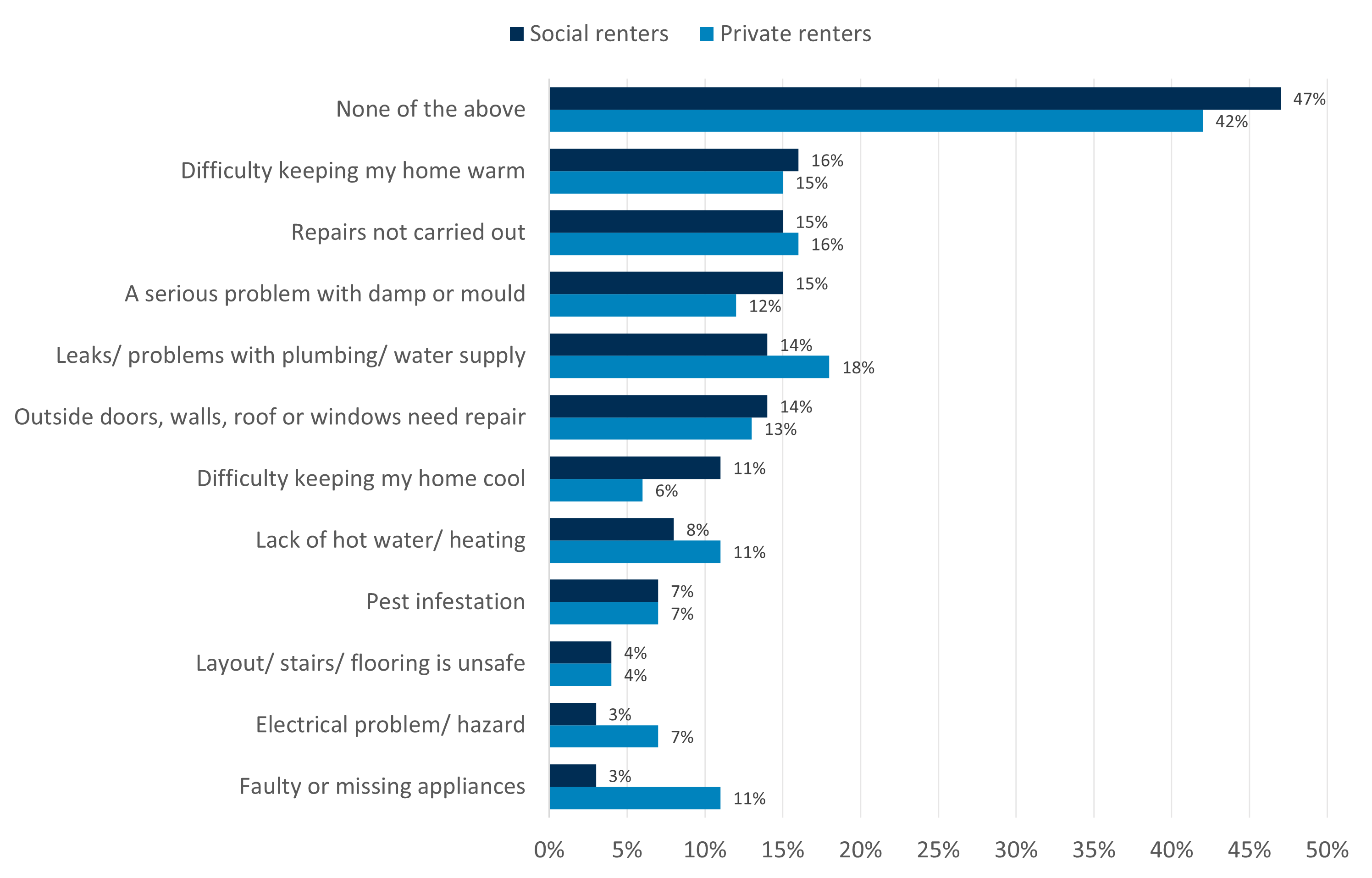
Overall, most participants (74%) were satisfied with their overall renting including the property condition, costs, and their dealings with their landlord. We found that 77% of participants were satisfied with the overall condition of their home. This is not far off the 85% who were satisfied with the quality of their home according to the Scottish Housing Regulator’s National Report in 2025.[29] However, more than half (53%) of participants in our research had experienced a problem with the condition of their property in the last six months. This was slightly lower than the private sector, where 58% of renters reported at least one of these problems in the last six months.[30] This difference persists across income bands, suggesting that it cannot be explained solely by income differences between the two sectors.
Issues such as plumbing problems, electrical hazards, and faulty or missing appliances appear to be less commonly experienced by social renters than those who rent privately. While we do not have comparative figures for the incidence of multiple condition-related problems, they were common in the social rented sector where 54% of respondents who had experienced at least one issue, had experienced multiple.
Chart 1: Social renters are less likely than private renters to have experienced a problem with the condition of their property
Percentage of participants experiencing an issue with the condition of their property in the last six months, by sector
Source: PRS figures taken from Voice of the Tenant survey Wave 2 (2026), p.28
With regard to property conditions overall, Consumer Scotland notes the ongoing work across the social housing sector to determine and implement agreed net zero and energy efficiency standards, as well as a set of practical requirements on social landlords to implement the Investigation and Commencement of Repair (Scotland) Regulations 2026 (Scotland’s version of Awaab’s Law) in October 2026.[31] These measures are under development at the time of publication of this report. They have the potential to improve satisfaction levels with the condition of social housing over time, but it is important that they are reflected in future Scottish Government policy, priorities, and standard setting in relation to accessibility, repairs and maintenance and energy efficiency. In this regard we note that the regulator recently implemented revised damp and mould indicators under the Charter, to be reviewed after May 2026. This review too will need to consider the duties placed upon social landlords from October 2026 onwards.
Repairs and maintenance issues
Participants were generally slightly happier with the overall repairs service (79%) than with aspects of repair responsiveness, such as timeliness (76%) and communication (73%).
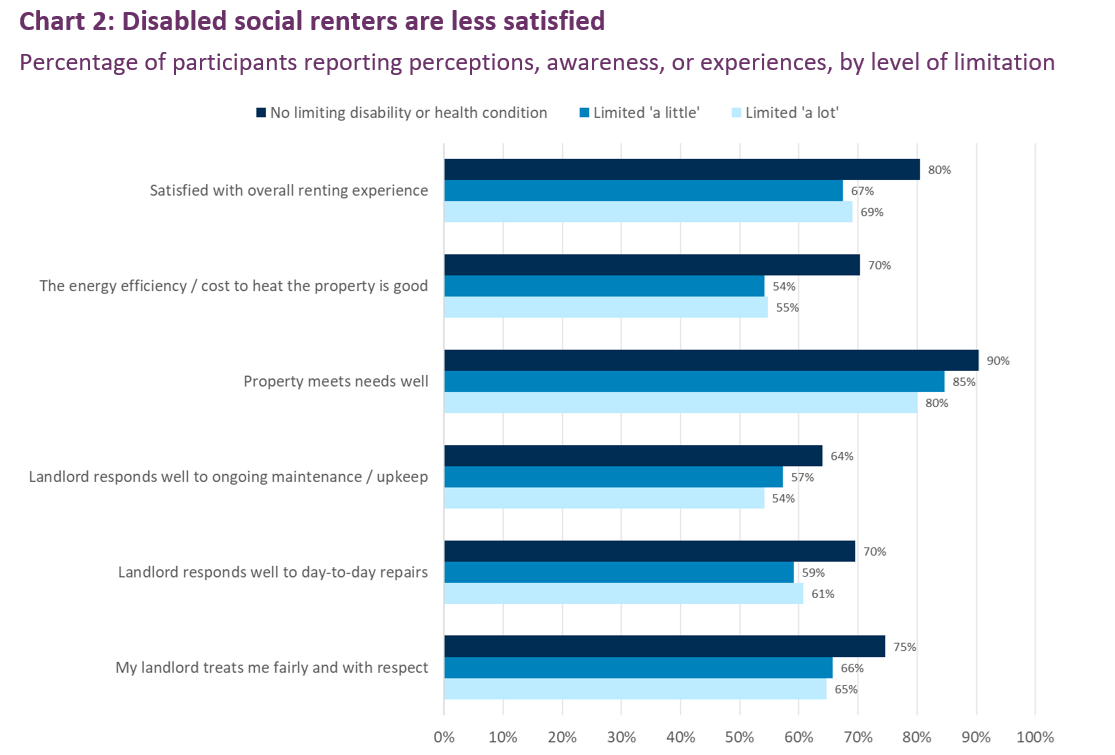
Disabled renters who have disabilities or health conditions that limit them ‘a little’ or ‘a lot’ were less likely to be satisfied with repairs; only 73% and 71% (respectively) were satisfied with the overall repairs service compared with those without (86%).
It may be that that disabled social renters have a greater need for these services, that their repairs and adaptations are less straightforward, or that they feel the impact more keenly given existing vulnerabilities. In any case, this group of social renters clearly reported having a less satisfactory experience.
Those in homes over 10 years old which have not been recently renovated also reported lower satisfaction levels with repairs, with our research finding that 66% of these renters were satisfied with the overall repairs service from the landlord, compared with 84% of those in newer properties.
Energy efficiency and heating costs
The majority of social renters are happy with their home, with 77% rating the overall condition as good.
While a majority of participants (62%) also rated the energy efficiency / cost to heat the property as good, this was the weakest aspect of home conditions. Again, the proportion of renters rating this as good was markedly lower amongst disabled renters or those in older, unrenovated properties.
In 2024 Consumer Scotland research found that many disabled consumers have increased energy needs – for example, requiring a warmer home to manage pain or mitigate damp, or needing to run electrical medical, mobility, or assistive technology equipment.[32] Our 2025 Energy Affordability Tracker found that households where a member has a disability or health condition are more likely to find it difficult to afford their energy bills.[33]
Some older homes are likely to be less well insulated and reliant on inefficient heating systems. Energy efficiency and heating costs have been an area of concern across the sector. The lower levels of satisfaction with this aspect may be associated with higher than average levels of fuel poverty amongst social renters.
It is important to understand changes in the drivers of fuel poverty among tenants. Scottish House Condition Survey data show that the social housing sector has significantly higher standards of energy‑efficiency, when compared to other tenures, but at the same time, significantly higher levels of fuel poverty. [34] Analysis in the Survey highlights that experience of fuel poverty in the sector is closely linked to a combination of rising prices and lower household incomes.
Some groups are less satisfied across a range of different measures
In line with the consumer principle of fairness, groups of renters should not be experiencing poorer outcomes based on their own status or that of their home. However, we found differences in satisfaction levels overall and with the condition of homes specifically, related to participants’ age, house type, and disability or health status.
While most participants held positive views, certain groups of social renters were less likely to be satisfied :
- Disabled renters
- Those who do not (know if they) have a housing officer or do not know how to contact them
- Those whose homes were built over 10 years ago and have not been recently renovated
- Those aged 35-44
Further research would be needed to ascertain the full extent of drivers relating to the latter two groups, and we encourage those working in the sector to monitor and take into consideration how outcomes for these renters might be improved.
Disabled social renters are less happy with their home
Nearly 1 in 5 social renters whose lives are limited “a lot” by a disability or health condition said that their home does not meet their needs well (19%), twice as likely as those without such a disability or health condition(9%). Disabled renters also experienced lower satisfaction across a range of other key renting experiences including:
- Home condition
- Landlord responsiveness to repairs and maintenance
- Likelihood of experiencing an issue and
- Landlord relationship
This suggests that they are at risk of experiencing poorer outcomes in general.
Chart 2: Disabled social renters are less satisfied
Percentage of participants reporting perceptions, awareness, or experiences, by level of limitation
Source: Consumer Scotland Social Renters survey (2025)
Our findings suggest that homes may not always be fully meeting the needs of those with greater mobility, accessibility, or health-related requirements. In addition, aspects of the fabric of older unrenovated homes may contribute to poorer energy efficiency, higher heating costs, and lower satisfaction, although further research would be needed to establish to what extent this is the case.
Our research suggests that further measures are needed to ensure landlords understand the experiences of different groups and put in place policies and practices to respond to these needs.
Housing officers and named contacts could play a bigger role
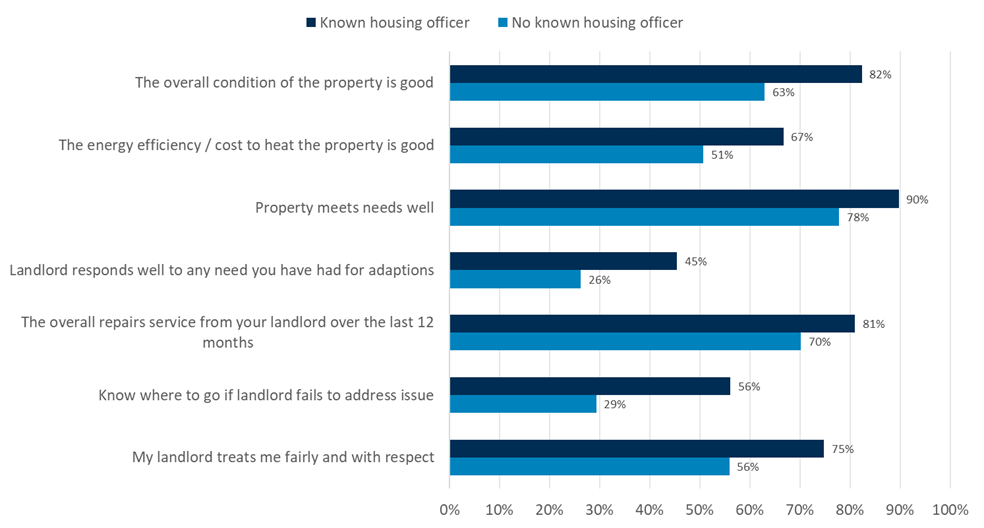
Those participants who knew they had a housing officer and how to contact them reported consistently higher outcomes or satisfaction levels, than those who did not suggesting that tenants find having a housing officer helpful and feel positive about it. Across our research, having such a contact was associated with higher satisfaction and better outcomes. While not all named contacts may be have the title “housing officer” we refer to all such named contacts under this term.
Overall, 71% of participants knew who their housing officer was and how to contact them, 9% did not know how to contact them, 11% did not know if they had one, and 9% did not think they had one. As such, 3 out of 10 appear not to be receiving the full benefits that they might do from having a Housing Officer, either due to this arrangement not being in place or tenants lacking sufficient awareness or understanding of it.
We found that 77% of those who know they have a housing officer and how to contact them rate their landlord’s responsiveness to general contact positively, compared with 57% who do not. We also found that the former were twice as likely to know where to go if their landlord did not fully address an issue or complaint as those who did not (56% vs 29%), which suggests the important role of housing officers in this process.
Chart 3: Those who do not know who their housing officer was or how to contact them report poorer perceptions and outcomes across various measures
Percentage of participants reporting different perceptions, awareness, or experiences, by known housing officer
Source: Consumer Scotland’s Social Renters survey (2025)
During our pilot survey, some focus group participants told us that they associated having a housing officer or named contact with a more personal and accountable service, which they preferred to leaving a voicemail or having to tell their story multiple times when enquiring about progress.
Social landlords are not obliged to ensure that every renter has a housing officer.
Other factors associated with lower satisfaction levels
While 86% of all participants felt that their home was meeting their needs, this is lower amongst those living in homes older than 10 years which have not recently been renovated. This pattern is consistent across a range of indicators including the condition of the home, repair and maintenance, and energy efficiency levels. In particular, those in older homes that have not recently undergone any renovations were less likely to rate various aspects of their home’s condition as good, compared to those in homes that have, and particularly more so to those in homes that were built within the last 10 years.
This group was also one of those less likely to know where to go if their landlord does not resolve an issue or complaint. These findings indicate that initial issues around property quality may be compounded by potentially unsatisfactory landlord responses, and by limited awareness of who to contact when the landlord does not (fully) address an issue.
We recognise that living in a home built over 10 years ago that has not been renovated is associated with lower levels of satisfaction and it may be that these are subject to more and/or challenging repair and maintenance issues. Further research would be required to understand what drives these differences and identify policy solutions.
Landlord responsiveness to reported issues and complaints
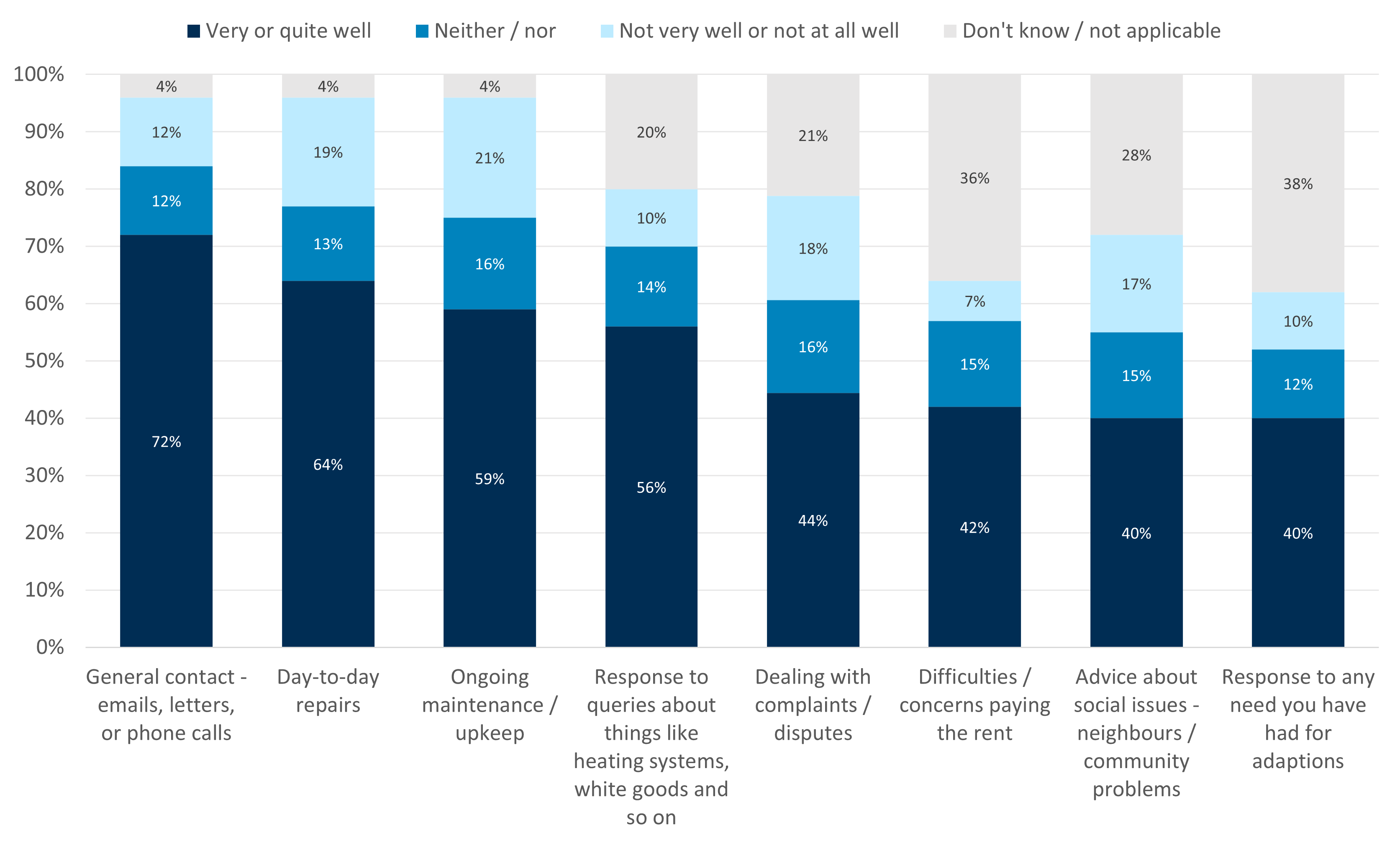
While three-quarters of all participants were satisfied with their landlord’s general communications, satisfaction is lower in relation to how landlords respond to reports of specific issues.
Landlord responsiveness to specific reported issues
Of the 53% of participants who had experienced an issue in the last six months, the majority (83%) had reported it to their landlord. However, only 30% of them considered it fully resolved. We recognise that renters and landlords may have different definitions of what counts as “resolved”. For example, a sector‑wide review from 2023/2024 shows that 88.4% of repairs were completed “right first time”, yet it also found that overall satisfaction with repairs has been trending downward in recent years.[35]
Only 30% of social renters who had reported a problem with their home in the last six months felt that their landlord had fully resolved it, even fewer than the 40% of private renters across all income bands who felt the same.[36]
Only 4 in 10 of all participants considered that their landlord responds well to or helps with difficulties around paying their rent or to requests for advice about social issues, i.e. neighbours and community problems. Similarly, 44% found that their landlord deals well with complaints and disputes. As these are issues many renters do not experience, there were relatively many who answered “don’t know/not applicable”. However, even excluding these, the proportion of participants who rated their landlord’s response to issues of this nature remained low.
Chart 4: Participants generally rate their landlord’s responsiveness well, but less so for dealing with complaints and disputes, and advice about social issues
Extent to which renters feel their landlord responds well
Source: Consumer Scotland Social Renters survey, B1. How well, or not, does your landlord respond or help you with the following...? N = 1,402
Over 1 in 4 have self-managed and funded repairs
While over half (59%) of social renters said they always report issues to their landlord, a substantial minority do not. When we asked why, around one in five (19%) would decide to fix the problem themselves, while 15% would feel the issue was not serious or urgent enough to report. A further 12% doubt that reporting would lead to any action.
Over a quarter of participants (28%) had paid for or repaired something themselves that they believed should have been covered by their landlord. This is particularly common amongst higher-income households, those living in older unrenovated properties, those aged 18-54 and those from a non-White British background.
Existing evidence shows that private renters often have concerns about the impact of reporting issues on landlord relationships, being a ‘good tenant’, and fear of eviction.[37] We found that such fears were much less common amongst social renters, indicating a significantly higher sense of security of tenancy. This may be influenced by a more robust regulatory framework and protections. Consumer Scotland research into the private rented sector has found that while individual journeys vary, private renters are generally likely to manage repair and maintenance issues themselves and only take action when issues are exacerbated - for example, where they experience health impacts.[38] Further research might establish what drives social renters to move from self-managing to reporting their issues. An increased understanding of these trigger points may help to understand how renters across both sectors might be motivated to report issues as soon as they occur.
The Scottish Social Housing Charter includes a specific Communications Outcome, obliging landlords to put in place measures ensuring renters can easily communicate with them and understand how and why it makes decisions and the services it provides. This includes making it easy for social renters to make complaints and provide feedback, and clarifying how it has acted in response to this. Our findings suggest that while the Charter may be effective in encouraging good standards around general communication, there is more to be done to improve landlord communication around issues and complaints.
Landlords could improve their handling of complaints
Nearly 1 in 5 (18%) participants had made a complaint to their landlord in the preceding 12 months and fewer than half of them were satisfied with any aspect of how this was handled. Key drivers of dissatisfaction were the speed of resolution, a lack of updates, a sense that the landlord did not take their complaint seriously, and the landlord’s approach to handling the complaint.
Participants who had made a complaint to their landlord in the preceding 12 months were overwhelmingly dissatisfied with all aspects of complaints handling and satisfaction rates were low across the board. Across all categories, between 34% and 47% were dissatisfied and satisfaction levels were between 30% and 45%.Of the 18% who had raised a complaint with their landlord in the preceding 12 months, only 33% were satisfied with their landlord keeping them up to date on these and 44% were dissatisfied. Such experiences may colour the perception of the eventual outcome.
Chart 5: Fewer than half were satisfied with their landlord’s handling of complaints
Of those who have raised a complaint with their landlord in the last 12 months, satisfaction with landlord during process was extremely low and many were dissatisfied
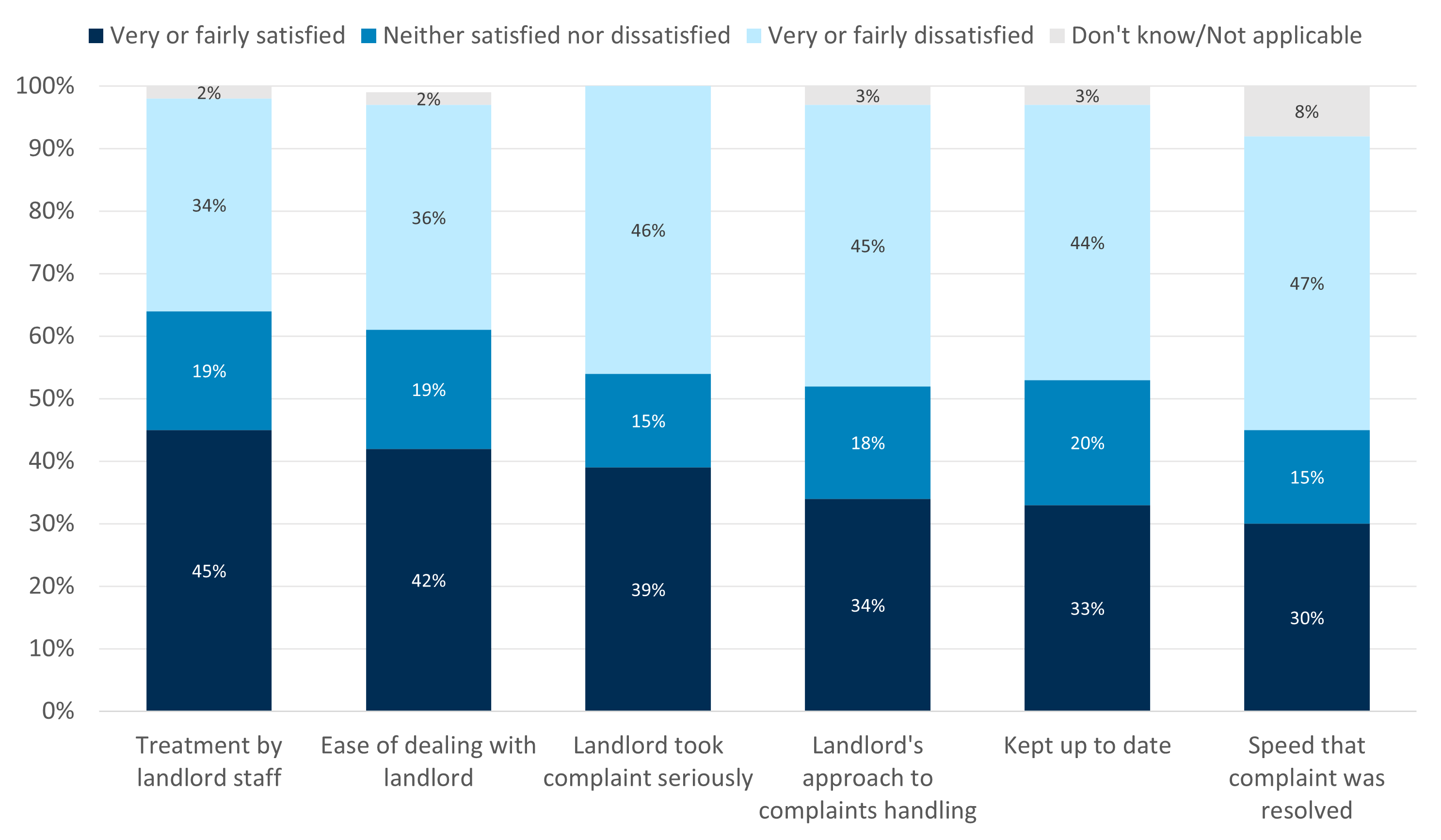
Source: Consumer Scotland Social Renters survey, D17: “Thinking about your most recent complaint, how satisfied or dissatisfied are you...”. N = 253
As satisfaction with complaint handling was one of the lowest rated areas, we also considered whether other data sources indicated potential issues in this area. The timeliness of complaint handling is one area in which landlords are obliged to report in their Annual Return of the Charter, which the Scottish Housing Regulator then analyses.
We note that the Scottish Housing Regulator’s analysis of the 2024/25 Charter Returns found that, on average, 97% of all Stage 1 complaints and 91% of Stage 2 complaints had been responded to in full.[39] While we note that this does not necessarily equate to resolution of the reported issue or a satisfactory outcome for the complainant, these reported percentages suggest that social landlords rarely fail to respond to complaints altogether.
As previously set out, the deadline for landlords to respond to Stage 1 complaints is five working days, and the average response time of housing associations in 2024/25 stayed within this timeframe at four working days. However, councils took eight days on average to respond. While the deadline for Stage 2 response is normally 20 working days, councils took an average of 27 working days, whereas housing associations again stayed within the deadline with an average of 18 working days. The report also found that housing associations are more likely to provide a full response to Stage 2 complaints (94%) than councils (87%).[40]
Outlier figures from the same report show that the maximum time for responding to a Stage 1 complaint in the social rented sector was 55 working days and for Stage 2 this extended to 382 working days.
While generally we found no significant differences between the experiences of those renting from councils and housing associations, we did find that the latter were significantly more likely to be satisfied with how their landlord handled complaints. For example, 55% of housing association renters were satisfied with how they were treated by landlord staff, compared to 35% of council renters. A similar pattern appears across all measures, including ease of dealing with the landlord (53% vs 31%) and the speed of complaint resolution (39% vs 20%).
Overall, the reported performance indicators in this area show that the length of time taken by social landlords to respond to complaints has gradually increased over the past few years, but is generally still compliant.[41] This may suggest a disconnect between complainants’ expectations and formal requirements on social landlords, in line with observations by the ombudsman around timeliness of complaints responses. We therefore note that renters’ awareness of the timeframes for response may be low, which would impact upon expectations and what might be considered an acceptable speed of complaint handling.
Taken together, performance data and the results of our research suggest widespread dissatisfaction with key elements of the complaints process and some variance from the agreed standards. Complaints are taking too long to resolve, renters are unhappy with the way in which they are kept updated, and there is a perception that landlords are not taking their complaints seriously. Too few complaints are resolved to tenants’ satisfaction and they may not be fully resolved at all.
Awareness of advice and redress options for unresolved complaints
Issues around poor complaints handling can be exacerbated by low levels of awareness amongst renters about how they can seek help or escalate their complaints. Fewer than half of participants with unresolved issues sought further help or advice and similar numbers did not know how to seek this, contributing to low resolution levels. Only 48% of participants reported knowing what to do if their landlord fails to address their issue, indicating a significant lack of awareness around how they can seek support to move issues forward. This suggests that awareness is lower amongst social renters than private renters (63%).[42]
Under half (43%) of those social renters who had reported a property condition issue that they considered to be unresolved had sought help or advice, after which 18% considered it fully resolved. Among those who sought advice, most had approached friends or family or elected representatives. Other sources of advice included national advice bodies, tenant representatives or advocacy groups, solicitors or law centres, and the ombudsman. Excluding those who only sought advice from informal channels (friends or family), the percentage of those seeking advice was only 33%.
When we asked participants about their awareness of specific regulatory bodies, rights and standards, 69% said they were aware of at least one of these. Awareness is highest for the Right to Repair Scheme (49%), followed by the Scottish Public Services Ombudsman (44%). Around 4 in 10 know about the Scottish Housing Quality Standard (41%), the Scottish Social Housing Charter (38%), and the Scottish Housing Regulator (37%). Awareness is lowest for the Tolerable Standard (32%). Overall, our findings indicate a substantial lack of awareness of tenancy rights and how to exercise them. The different sets of standards and rights may contribute to difficulty in understanding the full extent of renters’ rights and landlords’ responsibilities. We covered the content and relationship between different sets of regulations in Chapter 1.
In this context we note that awareness of bodies and rights does not necessarily equate to knowing how and when to use them. For example, the ombudsman identified that 139 out of the 971 housing cases it determined in 2024/25 were premature (14%), meaning they had been made before the complainant had exhausted their landlord’s internal complaints handling process. [43]
This suggests a need for some landlords to provide more clarity on all different stages of the internal complaints process and when complainants can escalate to the ombudsman. Other reasons for premature complaints may be frustration with unresolved issues, or a need for improved signposting to the ombudsman, with more information on the process. We are aware that the Scottish Public Services Ombudsman is currently considering wider engagement work to understand how and where awareness might be increased.
What renters do when their issue remains unresolved
Chart 6: Fewer than half sought further help or advice when a reported issue remained unresolved
Percentage of social renters reporting having a problem with the condition of their property in the preceding six months, and whether it was resolved
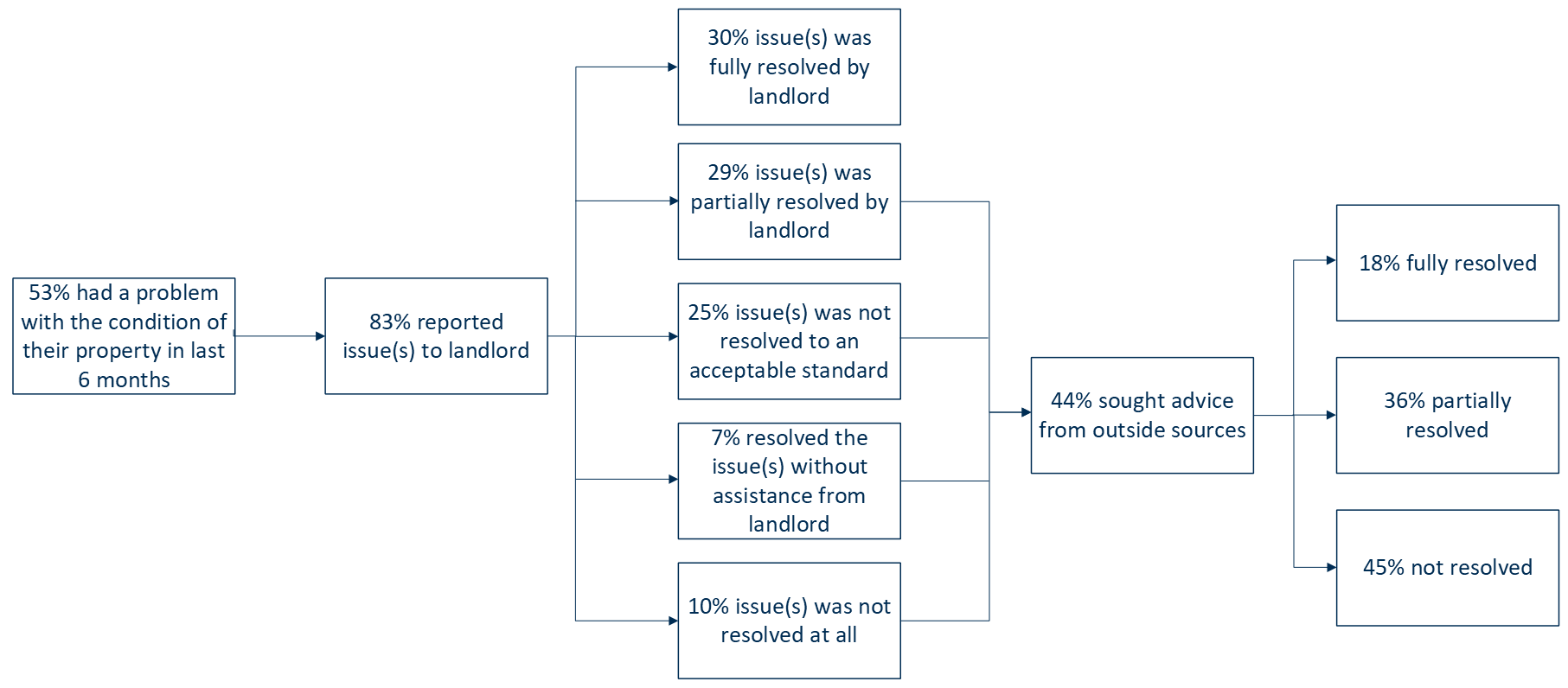
Source: Consumer Scotland’s Social rented sector survey (2025)
While slightly more private renters had experienced a recent problem with their home (58% vs 53%), slightly higher proportions had reported issues to their landlords (90% vs 83%). However, private renters were also more likely to have had their issues resolved fully or partially by their landlord following reporting (91% vs 59%). This finding further suggests a need to improve how social landlords address issues when reported, and how they handle complaints.
Chart 7: 48% of private renters have had their issues fully resolved by their landlord, compared to 30% of social renters
Percentage of private renters reporting having a problem with the condition of their property in the preceding six months, and whether it was resolved
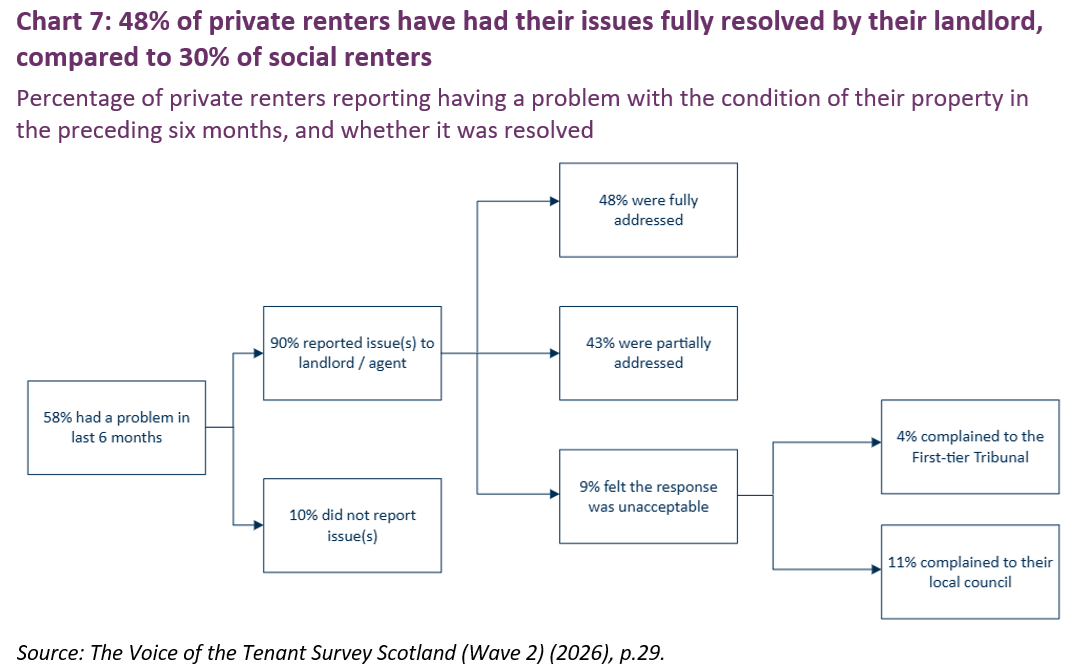
Source: The Voice of the Tenant Survey Scotland (Wave 2) (2026), p.29
While private landlords can be individuals or businesses, a recent survey of over a thousand Scottish landlords suggests that the vast majority (92%) are either private individuals or a couple/family.[44] This may lead to varying levels of knowledge and information provision to private renters, and low awareness of advice and redress options. The lower number of social landlords and their relatively larger size, together with the greater formalisation of complaint processes and the presence of both ombudsman and regulator should, in theory, make it easier to provide consistent information to tenants in the social sector. However, this does not appear to have resulted in better outcomes for social renters in terms of the redress process, with comparably low levels of awareness.
Overall, our findings suggest that a significant proportion of renters across both sectors self-manage and/or fund issues, and rely on informal networks rather than formal support channels. This may be due to the relatively low sense of awareness of how to escalate an issue, and may be compounded by the high levels of dissatisfaction with complaint handling.
In our report on the experience of private renters, we recommended that the Scottish Government improves clarity on existing and new rights and obligations following passage of the Housing (Scotland) Act 2025.[45] Our findings around limited awareness of rights and redress options amongst social renters have reinforced the need for this work across both sectors.
4. Conclusions and Recommendations
Recommendation 1: Improving outcomes for key groups of renters
Our research found that overall, social renters in Scotland are satisfied with their tenancies. Most (74%) were satisfied with their overall renting experience including the property itself, its costs, and dealings with their landlord. However, more than half had experienced a specific issue with property condition in the preceding 6 months and 54% of those had experienced more than one issue.
Not all social renters were achieving the same outcomes. Disabled social renters are consistently more disadvantaged across several aspects of their housing experience. They were more likely to report poor property conditions or problems, and they also tended to receive weaker complaints handling. They were also less likely to have positive relationships with their landlord, and were less confident about where to go for support if problems were not resolved.
The Scottish Social Housing Charter, which sets key outcomes for the sector, is due to be reviewed in 2026. We consider that there should be a strong focus on the operation of the Equalities Outcome within the Charter, as part of this review.
Those participants who knew they had a housing officer and how to contact them reported consistently higher outcomes or satisfaction levels, than those who did not, suggesting that find having a housing officer helpful and feel positive about it. Social landlords are not obliged to ensure that every renter has a housing officer or named point of contact.
We also found that participants living in homes that were over 10 years old that had not recently renovated were consistently less satisfied across a range of measures. It may be that these homes are subject to more and/or challenging repair and maintenance issues, and possibly illustrates the importance of timely refurbishment of very old or poor quality properties. Similarly, we found that satisfaction is generally lower amongst those aged 35-44. However, further research would be required to establish what causes this and whether this can be improved through policy solutions.
We recommend that the Scottish Government and the Scottish Housing Regulator work with stakeholders to ensure that landlords take appropriate account of the needs of different groups of renters, including disabled tenants.
We recommend that the Scottish Government and the Scottish Housing Regulator undertake specific engagement with disabled people’s organisations as well as tenant advisers and representative bodies to ensure the needs of disabled social renters are specifically reflected in the Scottish Social Housing Charter’s Equalities Outcome, during its 2026 review.
The Scottish Housing Regulator should seek to introduce specific indicators for landlords submitting their Annual Return of the Charter (ARC indicators), measuring landlord performance against the needs of disabled social renters.
The Scottish Housing Regulator should identify tools and measures to help ensure that social landlords better understand and respond to the needs of different groups of social renters, such as disabled social renters.
To improve outcomes for those who do not know if they have a housing officer or how to contact them, we recommend that the Scottish Housing Regulator considers whether to issue guidance encouraging landlords to ensure all social renters can easily access a housing officer or named point of contact for their home. In considering this, the SHR should engage with the National Panel, tenant advisers, landlords and other bodies to seek their views on this proposal.
Recommendation 2: How landlords handle reported issues and complaints
While 8 out of 10 participants said they have reported a problem with the condition of their property, most do not feel that their issues are fully resolved by their landlord. Furthermore, a quarter said that, at some point, they had paid for or repaired something that should have been covered by their landlord.
Issues around poor complaints handling can be exacerbated by low levels of awareness about how to seek help or escalate complaints. Fewer than half of participants with unresolved issues sought further help or advice (only a third if we discount those who contacted friends and family). 48% of all participants said they would not know how to seek this, a likely contributor to low resolution levels.
We recommend that the Scottish Housing Regulator monitors landlord performance and undertakes further work to improve outcomes for social renters.
The Scottish Housing Regulator should work partners to identify and assess:
- Causes of complainants’ dissatisfaction
- Current landlord performance in relation to complaints
- Common reasons for any failures to meet complaint handling standards
- Measures which can be put in place to resolve these
Recommendation 3: Increasing awareness of complaints procedures
We recommend that the Scottish Government and the Scottish Housing Regulator work with partners to increase awareness of complaint procedures amongst both social and private renters.
We recommend that, alongside the implementation of the Housing (Scotland) Act 2025, the Scottish Government commissions a public awareness campaign to ensure private and social renters are aware of their tenancy rights and they know where to seek support on these issues.
We recommend that the Scottish Government should work with partners, including Consumer Scotland, to improve access to free and early advice to help renters across both the social and private rented sectors resolve issues they are facing. Such work could usefully explore improved signposting, referrals to specialist services, and developing guidance to help streamline the tenant journey.
The Scottish Housing Regulator should work with landlords and the Scottish Public Services Ombudsman to assess the adequacy of current signposting by landlords to the ombudsman and keep this area under active review.
Recommendation 4: Energy efficiency and the cost of heating the home
Both this research and existing literature have identified energy efficiency and the cost of heating as an issue across the board. In our survey, this dissatisfaction was particularly pronounced amongst disabled social renters and those living in homes over 10 years old that had not been recently renovated.
Energy efficiency in the social housing sector is typically higher than in other tenures as a result of long-standing work towards improvements in the sector. Nevertheless, 25% of social rented homes remain at EPC band D or below, highlighting the importance of continued investment in energy efficiency measures. The Scottish Government is currently considering the detail of a revised Social Housing Net Zero Standard and continues to support the Social Housing Net Zero Heat fund, which will help drive further improvements.
However, Scottish House Condition Survey data shows clearly that, despite energy efficiency improvements and higher standards, there remain significantly higher fuel poverty rates in the social housing sector than in other tenures, driven by a combination of high energy prices and low household incomes.
We recommend that that the Scottish Government considers how best to address all aspects of fuel poverty affecting social renters during the review of the Fuel Poverty Strategy due to take place in 2026 - continuing with but going beyond energy efficiency programmes alone.
We also encourage the Scottish Government both in its implementation the Housing (Scotland) Act 2025 and in its review of the Scottish Social Housing Charter to take account of developing policy, priorities and standard setting in relation to accessibility, repairs and maintenance, and energy efficiency.
5. References
[1] Consumer Scotland (2024). Consumer Scotland’s approach to working with consumers in vulnerable circumstances. Available at: consumer.scot/publications/consumer-scotland-s-approach-to-working-with-consumers-in-vulnerable-circumstances-html.
[2] Inclusion Scotland (2026). The social model of disability. Available at: inclusionscotland.org/get-informed/social-model.
[3] Scottish Government (2025). Housing Statistics for Scotland, 2023-24 An Accredited Official Statistics Publication for Scotland. Available at: www.gov.scot/news/housing-statistics-for-scotland-2023-24-an-accredited-official-statistics-publication-for-scotland.
[4] Scottish Government (2026). Households in Scotland by tenure: Scottish Household Survey 2024. Available at: www.gov.scot/publications/households-in-scotland-by-housing-tenure-scottish-household-survey-2024/documents.
[5] Scottish Government (2025). Housing Statistics 2024: Key Trends Summary. Available at: www.gov.scot/publications/housing-statistics-2024-key-trends-summary/pages/social-housing-stock/.
[6] Scottish Government (2026). Scottish House Condition Survey 2024. Available at: www.gov.scot/publications/scottish-house-condition-survey-2024-key-findings/.
[7] Scottish Government (2026). Households in Scotland by tenure: Scottish Household Survey 2024. Available at: www.gov.scot/publications/households-in-scotland-by-housing-tenure-scottish-household-survey-2024/documents.
[8] Housing (Scotland) Act 1987. Available at: www.legislation.gov.uk/ukpga/1987/26/contents.
[9] Scottish Government (2026). Improving housing standards. Available at: www.gov.scot/policies/social-housing/improving-standards.
[10] Scottish Government (2026). Scottish House Condition Survey 2024. Available at: www.gov.scot/publications/scottish-house-condition-survey-2024-key-findings.
[11] Scottish Housing Regulator (2025). National report on the Scottish Social Housing Charter 2024-25. Available at: www.housingregulator.gov.scot/landlord-performance/national-reports/national-reports-on-the-scottish-social-housing-charter/national-report-on-the-scottish-social-housing-charter-2024-2025.
[12] Scottish Government (2026). Scottish House Condition Survey 2024. Available at: www.gov.scot/publications/scottish-house-condition-survey-2024-key-findings.
[13] Housing (Scotland) Act 2025. Available at: https://www.legislation.gov.uk/asp/2025/13/contents.
[14] The Investigation and Commencement of Repair (Scotland) Regulations 2026 (draft). Available at: www.legislation.gov.uk/sdsi/2026/9780111065099/contents and Scottish Government (2025). Awaab’s Law to come to Scotland. available at www.gov.scot/news/awaabs-law-to-come-to-scotland. Awaab Ishak was a two-year old child who died in December 2020 as a result of a severe respiratory condition, caused by prolonged exposure to black mould in his social rented sector home in England. The home was ruled to have inadequate ventilation and was not equipped for normal day-to-day living activities which led to excess damp and condensation. This law in England was changed to prevent such an event reoccurring and the Housing (Scotland) Act 2025 seeks to implement improvements.
[15] The Scottish Secure Tenants (Right to Repair) Regulations 2002. Available at: https://www.legislation.gov.uk/ssi/2002/316/contents/made.
[16] Scottish Government (2024). Repairing Standard: statutory guidance for private landlords. Available at: www.gov.scot/publications/repairing-standard-statutory-guidance-private-landlords.
[17] Scottish Public Services Ombudsman (2026). Model Complaints Handling Procedures. Available at: https://www.spso.org.uk/the-model-complaints-handling-procedures and How to complain about a public service. Available at: www.spso.org.uk/how-to-complain-about-public-service.
[18] Scottish Public Services Ombudsman (2026). How we handle complaints. Available at: www.spso.org.uk/how-we-handle-complaints and Time limit for making complaints to SPSO. Available at: https://www.spso.org.uk/time-limit-for-making-complaints-to-spso.
[19] Scottish Government (2022). Scottish Social Housing Charter November 2022. Available at: www.gov.scot/publications/scottish-social-housing-charter-november-2022/documents.
[20] Scottish Government (2022). Scottish Social Housing Charter November 2022. Available at: www.gov.scot/publications/scottish-social-housing-charter-november-2022/documents.
[21] Scottish Housing Regulator (2025). Regulatory Framework. Available at: www.housingregulator.gov.scot/for-landlords/regulatory-framework/#section-6.
[22] Scottish Housing Regulator (2025). Complaints and serious concerns - information for tenants and service users of social landlords - December 2025. Available at: www.housingregulator.gov.scot/for-tenants/read-our-factsheets-for-tenants/complaints-and-serious-concerns-information-for-tenants-and-service-users-of-social-landlords-december-2025.
[23] Consumer Scotland (2026) The Consumer Duty. Available at: https://consumer.scot/the-consumer-duty.
[24] Scottish Government (2026). Scottish House Condition Survey 2024. Available at: www.gov.scot/publications/scottish-house-condition-survey-2024-key-findings.
[25] Scottish Government (2025). Draft Buildings (Heating and Energy Performance) and Heat Networks (Scotland) Bill. Available at: www.gov.scot/publications/heat-in-buildings-plans.
[26] Consumer Scotland. (2024). A Fairer Rental Market: Consumer challenges in the private and social rented sectors. Available at: consumer.scot/publications/a-fairer-rental-market-consumer-challenges-in-the-private-and-social-rented-sectors.
[27] Consumer Scotland (2025). A Fairer Rental Market: Exercising tenancy right in Scotland’s private rented sector. Available at: consumer.scot/publications/a-fairer-rental-market-exercising-tenancy-rights-in-scotland-s-private-rented-sector.
[28] SafeDeposits Scotland Charitable Trust (2024). The Voice of the Tenant Survey. Available at: www.safedepositsscotlandtrust.com/post/the-voice-of-the-tenant-survey and Indigo House in association with IBP Strategy and Research (2024). RentBetter Findings. Available at: rentbetter.indigohousegroup.com.
[29] Scottish Housing Regulator (2025). National report on the Scottish Social Housing Charter 2024-25. Available at: www.housingregulator.gov.scot/landlord-performance/national-reports/national-reports-on-the-scottish-social-housing-charter/national-report-on-the-scottish-social-housing-charter-2024-2025.
[30] SafeDeposits Scotland Charitable Trust (2024). The Voice of the Tenant Survey Wave 1. Available at: www.safedepositsscotlandtrust.com/post/the-voice-of-the-tenant-survey.
[31] Scottish Government (2026). Tenants to be better protected from damp and mould. Available at: www.gov.scot/news/tenants-to-be-better-protected-from-damp-and-mould.
[32] Consumer Scotland (2024). Impacts of energy costs on disabled people and people with health conditions. Available at: consumer.scot/publications/impacts-of-energy-costs-on-disabled-people-and-people-with-health-conditions-html.
[33] Consumer Scotland (2025). Insights from the 2025 Energy Affordability Tracker. Available at: consumer.scot/publications/insights-from-the-2025-energy-affordability-tracker.
[34] Scottish Government (2025). Scottish House Condition Survey: Chapter 2 Energy Efficiency. Available at: www.gov.scot/publications/scottish-house-condition-survey-2023-key-findings/pages/2-energy-efficiency.
[35] Scottish Housing News (2024). Repairs improve but tenant satisfaction falls in Scottish social housing. Available at: www.scottishhousingnews.com/articles/repairs-improve-but-tenant-satisfaction-falls-in-scottish-social-housing.
[36] SafeDeposits Scotland Charitable Trust (2024). The Voice of the Tenant Survey Wave 1. Available at: www.safedepositsscotlandtrust.com/post/the-voice-of-the-tenant-survey.
[37] Consumer Scotland (2025). A Fairer Rental Market: Exercising tenancy right in Scotland’s private rented sector. Available at: consumer.scot/publications/a-fairer-rental-market-exercising-tenancy-rights-in-scotland-s-private-rented-sector.
[38] Consumer Scotland (2025). A Fairer Rental Market: Exercising tenancy right in Scotland’s private rented sector. Available at: consumer.scot/publications/a-fairer-rental-market-exercising-tenancy-rights-in-scotland-s-private-rented-sector.
[39] Scottish Housing Regulator (2025). Charter indicators and data by outcomes and standards. Available at: www.housingregulator.gov.scot/landlord-performance/statistical-information.
[40] Scottish Housing Regulator (2025). Charter indicators and data by outcomes and standards 2024/25. Available at: www.housingregulator.gov.scot/landlord-performance/statistical-information.
[41] Scottish Housing Regulator (2025). Charter indicators and data by outcomes and standards 2024/25. Available at: www.housingregulator.gov.scot/landlord-performance/statistical-information.
[42] SafeDeposits Scotland Charitable Trust (2026). The Voice of the Landlord Survey Scotland (Wave 2). Available at: www.safedepositsscotlandtrust.com/_files/ugd/99b051_7e2621ddd956431aa13702cddb21c18c.pdf.
[43]Scottish Public Services Ombudsman (2026). Complaints and enquiries determined by subject and outcome 2024-25. Available at: www.spso.org.uk/sites/spso/files/statistics/EnquiriesComplaintsDeterminedBySubjectAndOutcome2024-25.pdf.
[44] SafeDeposits Scotland Charitable Trust (2026). The Voice of the Landlord Survey Scotland (Wave 2). Available at: www.safedepositsscotlandtrust.com/_files/ugd/99b051_7e2621ddd956431aa13702cddb21c18c.pdf.
[45] Consumer Scotland (2025). A Fairer Rental Market: Exercising tenancy right in Scotland’s private rented sector. Available at: consumer.scot/publications/a-fairer-rental-market-exercising-tenancy-rights-in-scotland-s-private-rented-sector.